Abstract
Pollen was obtained and identified from corbiculae of Trigona williana worker bees over a one year period at the INPA eampus in the city of Manaus. Ranked by numher of pollen grains, the dominant plant familes were: Arecaceae, Melastomataceae, Myrtaceae, Caricaceae, Moraceae and Malpighiaceae. Dominant plant species were Cocos nueifera, Maximiliana martiana, Cassia sp., Cariea papaya, Bellucia grossularioides, Artocarpus incisa and Stachytarpheta cayennensis. Fewer plant species were exploited in the rainy season ihan in the dry season.
Abstract from the paper’s OpenAlex record, shown for indexing and research. Copyright remains with the authors or the publisher. Read at the source ↗
The text the model read, with the source record’s inline markup (italics, sub- and superscripts) rendered and its character entities decoded; quote offsets refer to the raw text.
Claims 6
Claim · model-written summary
Arecaceae, Melastomataceae and Myrtaceae were the dominant plant families in pollen collected by Trigona williana.
- Taxon
- Arecaceae, Melastomataceae, MyrtaceaeMyrtaceaeArecaceaeMelastomataceaee1
- Interactor
- Trigona williana
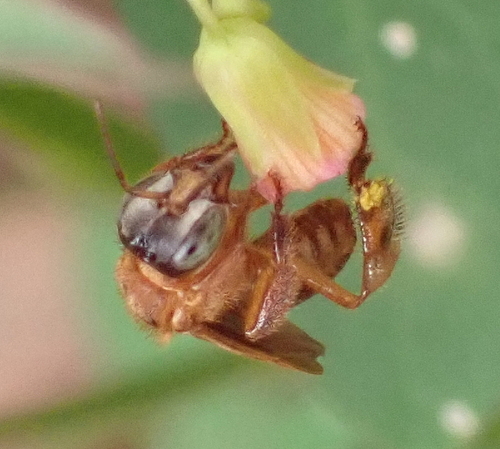
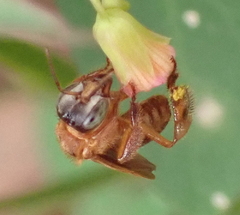 Trigona willianae2pollinator
- Outcome
- pollen grainse1
- Setting
- city of Manause2
Organisms pictured · Representative pictures of the matched species, not figures from the paper.
Verbatim
e1“Ranked by numher of pollen grains, the dominant plant familes were: Arecaceae, Melastomataceae, Myrtaceae, Caricaceae, Moraceae and Malpighiaceae”
e2“Pollen was obtained and identified from corbiculae of Trigona williana worker bees over a one year period at the INPA eampus in the city of Manaus”
Claim · model-written summary
Caricaceae, Moraceae and Malpighiaceae were the dominant plant families in pollen collected by Trigona williana.
- Taxon
- Caricaceae, Moraceae and MalpighiaceaeMoraceaeCaricaceaeMalpighiaceaee1
- Interactor
- Trigona willianaTrigona willianae2pollinator
- Outcome
- pollen grainse1
Organisms pictured · Representative pictures of the matched species, not figures from the paper.
Verbatim
e1“Ranked by numher of pollen grains, the dominant plant familes were: Arecaceae, Melastomataceae, Myrtaceae, Caricaceae, Moraceae and Malpighiaceae”
e2“Pollen was obtained and identified from corbiculae of Trigona williana worker bees over a one year period at the INPA eampus in the city of Manaus”
Claim · model-written summary
Cocos nueifera, Maximiliana martiana and Cassia sp. were dominant plant species in pollen collected by Trigona williana.
Verbatim
e1“Dominant plant species were Cocos nueifera, Maximiliana martiana, Cassia sp., Cariea papaya, Bellucia grossularioides, Artocarpus incisa and Stachytarpheta cayennensis”
Claim · model-written summary
Cariea papaya, Bellucia grossularioides and Artocarpus incisa were dominant plant species in pollen collected by Trigona williana.
Verbatim
e1“Dominant plant species were Cocos nueifera, Maximiliana martiana, Cassia sp., Cariea papaya, Bellucia grossularioides, Artocarpus incisa and Stachytarpheta cayennensis”
Claim · model-written summary
Stachytarpheta cayennensis was a dominant plant species in pollen collected by Trigona williana.
- Taxon
- Stachytarpheta cayennensis
 Stachytarpheta cayennensise1
- Outcome
- Dominant plant speciese1
Organisms pictured · Representative pictures of the matched species, not figures from the paper.

Verbatim
e1“Dominant plant species were Cocos nueifera, Maximiliana martiana, Cassia sp., Cariea papaya, Bellucia grossularioides, Artocarpus incisa and Stachytarpheta cayennensis”
Claim · model-written summary
Fewer plant species were exploited by Trigona williana in the rainy season than in the dry season.
Verbatim
e1“Fewer plant species were exploited in the rainy season ihan in the dry season”