Abstract
Phytocoenotic behaviour of 11 species of boreal vascular plants and mosses is analyzed within the broadleaved-forest zone in comparison with that in different subzones of the boreal-forest zone, based upon the set of 1417 relevés made in European Russia in 1996–2017. The significance of differences in species cover is estimated by means of the one-way ANOVA. The cover of species like Vaccinium myrtillus, V. vitis-idaea, andHylocomium splendens in broadleaved / spruce forests of zonal types is constantly decreasing southwards. On the contrary, the cover of Luzula pilosain Scots pine forests and Pleurozium schreberi and Dicranum polysetum in paludified Norway spruce forests is subject to southward increase. Finally, Oxalis acetosella and Equisetum sylvaticum demonstrate maximae of their cover in forests of zonal types in the southern-boreal and hemiboreal subzones. The dark-coniferous boreal forest “cortege” of species is breaking down into several different floristic elements in the broadleaved-forest zone. These are: “vaccinietal” species p. p. sensu Yu. D. Kleopov (like Vaccinium myrtillus), “quasi-boreal” species sensu V. B. Sochava (Oxalis acetosella, Maianthemum bifolium, Trientalis europaea), hygromesophytes with aged areas (Equisetum sylvaticum), associated species with European-Ancient-Mediterranean nemoral (Luzula pilosa) or East-Asian boreal-montane (Rubus saxatilis) origins. Phytocoenotical behaviour of species is not always different in the intrazonal and the zonal community types but is rather similar in many cases like those of Vaccinium vitis-idaea and Equisetum sylvaticum. The more distinct differences in species positions are found in the extrazonal communities. The statistically proved differences are lacking in phytocoenotical behaviour of Maianthemum bifolium and Trientalis europaea in different zones and subzones due to either florogenetical, or purely methodical reasons, the latter connected with low abundance but high constancy of these species. Disintegration of vegetation “corteges” and individualization of coenotic patterns of species previously growing together are usually observed at the climatically determined (zonal / subzonal or altitudinal) distribution limits.
Abstract from the paper’s OpenAlex record; open copy licensed cc-by. Read at the source ↗
The text the model read, with the source record’s inline markup (italics, sub- and superscripts) rendered and its character entities decoded; quote offsets refer to the raw text.
Claims 15
Claim · model-written summary
Vaccinium myrtillus cover decreases southward in zonal broadleaved and spruce forests.
- Taxon
- Vaccinium myrtillus
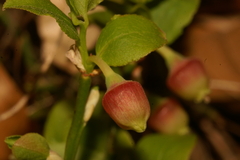 Vaccinium myrtilluse0
- Outcome
- covere0
- Direction
- decreasinge0
- Setting
- broadleaved / spruce forests of zonal typese0
Organisms pictured · Representative pictures of the matched species, not figures from the paper.

Verbatim
e0“The cover of species like Vaccinium myrtillus, V. vitis-idaea, andHylocomium splendens in broadleaved / spruce forests of zonal types is constantly decreasing southwards.”
Claim · model-written summary
V. vitis-idaea cover decreases southward in zonal broadleaved and spruce forests.
- Taxon
- V. vitis-idaea
 Vaccinium vitis-idaeae0
- Outcome
- covere0
- Direction
- decreasinge0
- Setting
- broadleaved / spruce forests of zonal typese0
Organisms pictured · Representative pictures of the matched species, not figures from the paper.

Verbatim
e0“The cover of species like Vaccinium myrtillus, V. vitis-idaea, andHylocomium splendens in broadleaved / spruce forests of zonal types is constantly decreasing southwards.”
Claim · model-written summary
Hylocomium splendens cover decreases southward in zonal broadleaved and spruce forests.
- Taxon
- Hylocomium splendens
 Hylocomium splendense0
- Outcome
- covere0
- Direction
- decreasinge0
- Setting
- broadleaved / spruce forests of zonal typese0
Organisms pictured · Representative pictures of the matched species, not figures from the paper.

Verbatim
e0“The cover of species like Vaccinium myrtillus, V. vitis-idaea, andHylocomium splendens in broadleaved / spruce forests of zonal types is constantly decreasing southwards.”
Claim · model-written summary
Luzula pilosa cover increases southward in Scots pine forests.
- Taxon
- Luzula pilosa
 Luzula pilosae0
- Outcome
- covere0
- Direction
- increasee0
- Setting
- Scots pine forestse0
Organisms pictured · Representative pictures of the matched species, not figures from the paper.

Verbatim
e0“the cover of Luzula pilosain Scots pine forests and Pleurozium schreberi and Dicranum polysetum in paludified Norway spruce forests is subject to southward increase.”
Claim · model-written summary
Pleurozium schreberi cover increases southward in paludified Norway spruce forests.
- Taxon
- Pleurozium schreberi
 Pleurozium schreberie0
- Outcome
- covere0
- Direction
- increasee0
- Setting
- paludified Norway spruce forestse0
Organisms pictured · Representative pictures of the matched species, not figures from the paper.

Verbatim
e0“the cover of Luzula pilosain Scots pine forests and Pleurozium schreberi and Dicranum polysetum in paludified Norway spruce forests is subject to southward increase.”
Claim · model-written summary
Dicranum polysetum cover increases southward in paludified Norway spruce forests.
- Taxon
- Dicranum polysetum
 Dicranum polysetume0
- Outcome
- covere0
- Direction
- increasee0
- Setting
- paludified Norway spruce forestse0
Organisms pictured · Representative pictures of the matched species, not figures from the paper.

Verbatim
e0“the cover of Luzula pilosain Scots pine forests and Pleurozium schreberi and Dicranum polysetum in paludified Norway spruce forests is subject to southward increase.”
Claim · model-written summary
Oxalis acetosella cover peaks in southern-boreal and hemiboreal forests.
- Taxon
- Oxalis acetosella
 Oxalis acetosellae0
- Outcome
- covere0
- Direction
- maximaee0
- Setting
- southern-boreal and hemiboreal subzonese0
Organisms pictured · Representative pictures of the matched species, not figures from the paper.

Verbatim
e0“Oxalis acetosella and Equisetum sylvaticum demonstrate maximae of their cover in forests of zonal types in the southern-boreal and hemiboreal subzones.”
Claim · model-written summary
Equisetum sylvaticum cover peaks in southern-boreal and hemiboreal forests.
- Taxon
- Equisetum sylvaticum
 Equisetum sylvaticume0
- Outcome
- covere0
- Direction
- maximaee0
- Setting
- southern-boreal and hemiboreal subzonese0
Organisms pictured · Representative pictures of the matched species, not figures from the paper.

Verbatim
e0“Oxalis acetosella and Equisetum sylvaticum demonstrate maximae of their cover in forests of zonal types in the southern-boreal and hemiboreal subzones.”
Claim · model-written summary
The dark-coniferous boreal species cortege divides into floristic elements in broadleaved forest.
Verbatim
e0“The dark-coniferous boreal forest “cortege” of species is breaking down into several different floristic elements in the broadleaved-forest zone.”
Claim · model-written summary
V. vitis-idaea has similar phytocoenotic behavior in intrazonal and zonal communities.
- Taxon
- Vaccinium vitis-idaeaVaccinium vitis-idaeae0
- Outcome
- Phytocoenotical behavioure0
- Direction
- similare0
- Setting
- intrazonal and the zonal community typese0
Organisms pictured · Representative pictures of the matched species, not figures from the paper.
Verbatim
e0“Phytocoenotical behaviour of species is not always different in the intrazonal and the zonal community types but is rather similar in many cases like those of Vaccinium vitis-idaea and Equisetum sylvaticum.”
Claim · model-written summary
E. sylvaticum has similar phytocoenotic behavior in intrazonal and zonal communities.
- Taxon
- Equisetum sylvaticumEquisetum sylvaticume0
- Outcome
- Phytocoenotical behavioure0
- Direction
- similare0
- Setting
- intrazonal and the zonal community typese0
Organisms pictured · Representative pictures of the matched species, not figures from the paper.
Verbatim
e0“Phytocoenotical behaviour of species is not always different in the intrazonal and the zonal community types but is rather similar in many cases like those of Vaccinium vitis-idaea and Equisetum sylvaticum.”
Claim · model-written summary
Species positions differ more in extrazonal communities.
Verbatim
e0“The more distinct differences in species positions are found in the extrazonal communities.”
Claim · model-written summary
Maianthemum bifolium showed no statistically proved phytocoenotic differences among zones.
- Taxon
- Maianthemum bifolium
 Maianthemum bifoliume0
- Outcome
- phytocoenotical behavioure0
- Direction
- differences are lackinge0
- Setting
- different zones and subzonese0
Organisms pictured · Representative pictures of the matched species, not figures from the paper.

Verbatim
e0“The statistically proved differences are lacking in phytocoenotical behaviour of Maianthemum bifolium and Trientalis europaea in different zones and subzones”
Claim · model-written summary
Trientalis europaea showed no statistically proved phytocoenotic differences among zones.
- Taxon
- Trientalis europaea
 Lysimachia europaeae0
- Outcome
- phytocoenotical behavioure0
- Direction
- differences are lackinge0
- Setting
- different zones and subzonese0
Organisms pictured · Representative pictures of the matched species, not figures from the paper.

Verbatim
e0“The statistically proved differences are lacking in phytocoenotical behaviour of Maianthemum bifolium and Trientalis europaea in different zones and subzones”
Claim · model-written summary
Vegetation corteges usually disintegrate at climatically determined distribution limits.
Verbatim
e0“Disintegration of vegetation “corteges” and individualization of coenotic patterns of species previously growing together are usually observed at the climatically determined (zonal / subzonal or altitudinal) distribution limits.”