Abstract
An anatomical study was conducted in Stachys acerosa Boiss. is endemic to Zagros Chain Mountains in Iran. In the current study the samples were collected from Oshtorankuh Mountain and examined. Vegetative and reproductive organs anatomically using light microscope. The distinguishing feature of S. acerosa is the presence of sclerenchyma at the angles of the stem. Five types of trichomes - simple nonglandular uniseriate uni- and multicellular, short and long capitate glandular, and glandular peltate trichomes were found on the surface of vegetative and reproductive organs. The leaves are amphistomatic and isobilateral; and the mesophyll is composed of four-layers palisade parenchyma. Two of them present at the upper side and another two layers at lower side and in between palisade layers two-layered spongy parenchyma were existed. The present study shows that the certain anatomical features of Stachys taxa are valuable for species delimitation. Bangladesh J. Bot. 51(2): 325-334, 2022 (June)
Abstract from the paper’s OpenAlex record, shown for indexing and research. Copyright remains with the authors or the publisher. Read at the source ↗
The text the model read, with the source record’s inline markup (italics, sub- and superscripts) rendered and its character entities decoded; quote offsets refer to the raw text.
Claims 5
Claim · model-written summary
Stem angle sclerenchyma distinguishes S. acerosa.
- Taxon
- S. acerosa
 Stachys acerosae0
- Organ / stage
- steme0
- Outcome
- presence of sclerenchyma at the angles of the steme0
Organisms pictured · Representative pictures of the matched species, not figures from the paper.
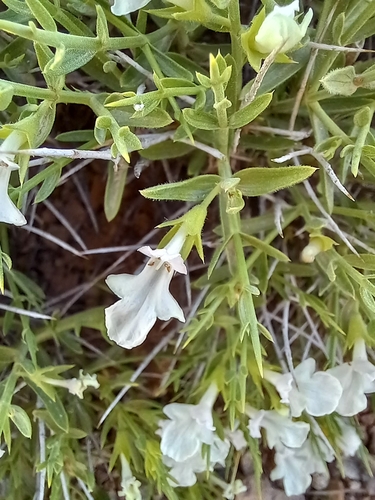
Verbatim
e0“The distinguishing feature of S. acerosa is the presence of sclerenchyma at the angles of the stem”
Claim · model-written summary
Five types of trichomes were found on vegetative and reproductive organs.
- Taxon
- Stachys acerosa Boiss.Stachys acerosat0
- Organ / stage
- vegetative and reproductive organse0
- Outcome
- Five types of trichomes - simple nonglandular uniseriate uni- and multicellular, short and long capitate glandular, and glandular peltate trichomese0
Organisms pictured · Representative pictures of the matched species, not figures from the paper.
Verbatim
e0“Five types of trichomes - simple nonglandular uniseriate uni- and multicellular, short and long capitate glandular, and glandular peltate trichomes were found on the surface of vegetative and reproductive organs”
t0“Stachys acerosa Boiss.”
Claim · model-written summary
Leaves were amphistomatic and isobilateral.
- Taxon
- Stachys acerosa Boiss.Stachys acerosat0
- Organ / stage
- leavese0
- Outcome
- amphistomatic and isobilaterale0
Organisms pictured · Representative pictures of the matched species, not figures from the paper.
Verbatim
e0“The leaves are amphistomatic and isobilateral”
t0“Stachys acerosa Boiss.”
Claim · model-written summary
Leaf mesophyll contained four palisade layers and two spongy layers.
- Taxon
- Stachys acerosa Boiss.Stachys acerosat0
- Organ / stage
- mesophylle0
- Outcome
- four-layers palisade parenchymae0
- Value
- four-layerse0
Organisms pictured · Representative pictures of the matched species, not figures from the paper.
Verbatim
e0“the mesophyll is composed of four-layers palisade parenchyma. Two of them present at the upper side and another two layers at lower side and in between palisade layers two-layered spongy parenchyma were existed”
t0“Stachys acerosa Boiss.”
Claim · model-written summary
Certain anatomical features of Stachys taxa were considered useful for species delimitation.
Not reportedComparator
Verbatim
e0“certain anatomical features of Stachys taxa are valuable for species delimitation”