Abstract
The purpose of the study was to determine the effect of the appropriate and effective application of the L. lecanii fungus and C. odorata L. leaf extract in increasing the mortality of A. gossypii. The study was divided into two stages. The first stage was in vitro test of L. lecanii synergism plus C. odorata L. leaf extract in PDA media with four treatments, namely LK0= L. lecanii 107 conidia.mL-1 plus 0% C. odorata L. leaf extract, LK1= L. lecanii 107 conidia.mL-1 plus 10% C. odorata L. leaf extract, LK2= L. lecanii 107 conidia.mL-1 plus 25% C. odorata L. leaf extract; LK3= L. lecanii 107 conidia.mL-1 plus 40% C. odorata L. leaf extract. The second stage was the toxicity test of the application of L. lecanii suspension and C. odorata L. leaf extract on mortality of A. gossypii. The toxicity test was based on the results of the synergism test, where the addition of C. odorata L. leaf extract to L. lecanii growing media showed incompatible results. Therefore, the toxicity test was carried out separately with five treatments, namely H0= Control (aqua dest); H1= Conidia suspension L. lecanii 107 conidia mL-1; H2= 10% C. odorata leaf extract; H3= 25% leaf extract of C. odorata; H4= 40% C. odorata leaf extract. The results showed that the compatibility test of L. lecanii with leaf extract of C. odorata L. was incompatible and classified as toxic. The addition of C. odorata L. leaf extract in concentrations of 10%, 25%, and 40% could significantly inhibit colony growth, sporulation, and conidia viability of L. lecanii, with a higher level of inhibition as the concentration of C. odorata L. leaf extract, was added. The toxicity test of a separate application of C. odorata L. leaf extract and L. lecanii suspension had a significant effect on mortality of 3rd instar nymph A. gossypii, with the highest mean mortality found in a single application of 40% C. odorata L. leaf extract with an average mortality of 100% at 96 HAA(Hours After Application) observations. Keywords: A. gossypii, C. odorata L. leaf extract, L. lecanii, synergism.
Abstract from the paper’s OpenAlex record; open copy licensed cc-by. Read at the source ↗
The text the model read, with the source record’s inline markup (italics, sub- and superscripts) rendered and its character entities decoded; quote offsets refer to the raw text.
Claims 5
Claim · model-written summary
Chromolaena leaf extract was incompatible with Lecanicillium and toxic in the compatibility test.
- Taxon
- Chili Plantst0
- Interactor
- L. lecanii
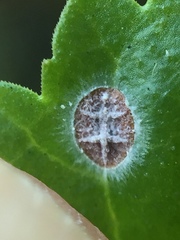 Akanthomyces lecaniie0biocontrol_agent
- Outcome
- compatibility test of L. lecanii with leaf extract of C. odorata L.e0
Organisms pictured · Representative pictures of the matched species, not figures from the paper.
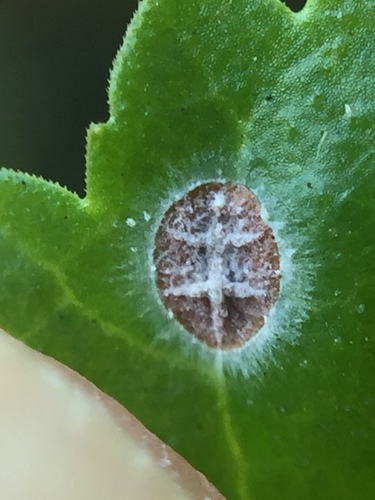
Verbatim
e0“The results showed that the compatibility test of L. lecanii with leaf extract of C. odorata L. was incompatible and classified as toxic.”
t0“Chili Plants”
Claim · model-written summary
Increasing extract concentration significantly inhibited Lecanicillium colony growth.
- Taxon
- Chili Plantst0
- Treatment
- C. odorata L. leaf extract in concentrations of 10%, 25%, and 40%e0
- Interactor
- L. lecaniiAkanthomyces lecaniie0biocontrol_agent
- Outcome
- colony growthe0
- Direction
- inhibite0
Not reportedComparator
Organisms pictured · Representative pictures of the matched species, not figures from the paper.
Verbatim
e0“The addition of C. odorata L. leaf extract in concentrations of 10%, 25%, and 40% could significantly inhibit colony growth, sporulation, and conidia viability of L. lecanii, with a higher level of inhibition as the concentration of C. odorata L. leaf extract, was added.”
t0“Chili Plants”
Claim · model-written summary
Increasing extract concentration significantly inhibited Lecanicillium sporulation and conidia viability.
- Taxon
- Chili Plantst0
- Treatment
- C. odorata L. leaf extract in concentrations of 10%, 25%, and 40%e0
- Interactor
- L. lecaniiAkanthomyces lecaniie0biocontrol_agent
- Outcome
- sporulation, and conidia viability of L. lecaniie0
- Direction
- inhibite0
Not reportedComparator
Organisms pictured · Representative pictures of the matched species, not figures from the paper.
Verbatim
e0“The addition of C. odorata L. leaf extract in concentrations of 10%, 25%, and 40% could significantly inhibit colony growth, sporulation, and conidia viability of L. lecanii, with a higher level of inhibition as the concentration of C. odorata L. leaf extract, was added.”
t0“Chili Plants”
Claim · model-written summary
Separate extract and fungal applications significantly affected third instar aphid mortality.
- Taxon
- Chili Plantst0
- Treatment
- separate application of C. odorata L. leaf extract and L. lecanii suspensione0
- Interactor
- A. gossypii
 Aphis gossypiie0pest
- Second interactor
- L. lecaniiAkanthomyces lecaniie0biocontrol_agent
- Outcome
- mortality of 3rd instar nymph A. gossypiie0
Not reportedComparatorDirection
Organisms pictured · Representative pictures of the matched species, not figures from the paper.

Verbatim
e0“The toxicity test of a separate application of C. odorata L. leaf extract and L. lecanii suspension had a significant effect on mortality of 3rd instar nymph A. gossypii”
t0“Chili Plants”
Claim · model-written summary
The 40% extract alone produced the highest mean aphid mortality, 100% at 96 hours.
- Taxon
- Chili Plantst0
- Treatment
- single application of 40% C. odorata L. leaf extracte0
- Interactor
- Aphis gossypiiAphis gossypiit1pest
- Outcome
- mean mortalitye0
- Direction
- higheste0
- Value
- 100%e0
- Qualifier
- 96 HAA(Hours After Application)e0
Not reportedComparator
Organisms pictured · Representative pictures of the matched species, not figures from the paper.
Verbatim
e0“the highest mean mortality found in a single application of 40% C. odorata L. leaf extract with an average mortality of 100% at 96 HAA(Hours After Application) observations.”
t0“Chili Plants”
t1“Aphis gossypii (Glover)”
The same questions in other papers
botanical · Aphis gossypii · Capsicum (peppers)Results agree
1 paper in the same direction as this paper
- positive
Claims are grouped by organism, treatment and what was measured or targeted. A paper counts as positive when any of its claims in the group is positive.