Abstract
Abstract Upon parasitism, many parasitoids inject symbiotic viruses and venom into their host. Thereby, they modify the hosts physiology including its saliva composition and, in turn, plant perception of herbivory. It has been hypothesised that parasitoids manipulate plant responses to increase their host performance and maximise their own fitness. However, it is still unclear whether parasitoids are under selective pressure to increase plant quality or whether indirect changes in plants due to parasitism are a by‐product of the physiological changes induced in their host. We tested whether the parasitoids Hyposoter ebeninus and Cotesia glomerata manipulate induced plant responses through the host Pieris brassicae caterpillars to increase their own performance . During their entire lifespan, parasitised herbivores were fed with leaf material of Brassica oleracea plants that were left untreated or continuously exposed to feeding by either unparasitised, conspecific or heterospecific parasitised caterpillars. We measured the development time, weight, clutch size and mortality of parasitoids that emerged from caterpillars as proxy for their performance. Both parasitoid species did not perform significantly better when their host was fed with leaves from plants continuously induced by a conspecific parasitoid relative to unparasitised caterpillars. However, parasitoid species asymmetrically affected each other's performance through plant‐mediated interactions. Our results do not support the hypothesis of parasitoids manipulating plant responses for their own benefit, suggesting that indirect plant‐mediated interactions among parasitoids may be a by‐product of host manipulation. However, our work confirms the significance of parasitoid‐induced plant‐mediated interactions in insect communities that to date are still understudied.
Abstract from the paper’s OpenAlex record; open copy licensed cc-by-nc. Read at the source ↗
The text the model read, with the source record’s inline markup (italics, sub- and superscripts) rendered and its character entities decoded; quote offsets refer to the raw text.
Claims 2
Claim · model-written summary
Neither parasitoid performed significantly better on hosts fed leaves induced by conspecific parasitoids than on hosts fed leaves induced by unparasitized caterpillars.
- Taxon
- Brassica oleracea
 Brassica oleraceae1
- Treatment
- plants continuously induced by a conspecific parasitoide0
- Interactor
- Hyposoter ebeninus
 Hyposoter ebeninuse2parasite
- Outcome
- parasitoid speciese0
- Direction
- did not perform significantly bettere0
- Comparator
- unparasitised caterpillarse0
Not reportedSecond interactor
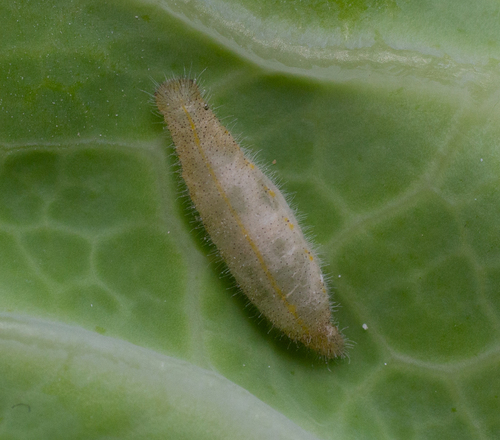
Organisms pictured · Representative pictures of the matched species, not figures from the paper.

Verbatim
e0“Both parasitoid species did not perform significantly better when their host was fed with leaves from plants continuously induced by a conspecific parasitoid relative to unparasitised caterpillars.”
e1“leaf material of Brassica oleracea plants”
e2“parasitoids Hyposoter ebeninus and Cotesia glomerata”
Claim · model-written summary
The two parasitoid species affected each other’s performance asymmetrically through plant mediated interactions.
- Taxon
- Brassica oleraceaBrassica oleraceae1
- Interactor
- Hyposoter ebeninusHyposoter ebeninuse2parasite
- Second interactor
- Cotesia glomerata
 Cotesia glomeratae2parasite
- Outcome
- parasitoid species asymmetrically affected each other's performancee0
Organisms pictured · Representative pictures of the matched species, not figures from the paper.

Verbatim
e0“parasitoid species asymmetrically affected each other's performance through plant‐mediated interactions”
e1“leaf material of Brassica oleracea plants”
e2“Hyposoter ebeninus and Cotesia glomerata”