Abstract
The present study entitled “Efficacy of chemicals against major seed borne pathogens of rice grains” was conducted at College of Post Graduate Studies in Agricultural Sciences, Umiam, Barapani, Meghalaya, with an aim to find out the efficacy of fungicide and antibiotics against major seed borne pathogens of rice grains under in vitro condition. With the help of Agar plate method, 23 seed borne pathogens were isolated from 26 rice varieties collected from Assam and Meghalaya. Pathogens like Curvularia lunata, Fusarium moniliforme, Aspergillus cumulatus, Phoma sorghina, Aspergillus glaucus, Xanthomonas oryzae pv. oryzae and Bipolaris oryzae were found to be the most predominant. Amongst chemicals, Carbendazim was used against the fungal pathogens at 3 different concentrations. Carbendazim @ 0.15% could inhibit the growth of F. moniliforme (73.19%), A. cumulatus (73.07%), P. sorghina (72.16%) and A glaucus (71.84%). Antibiotics chloramphenicol @ 30 µcg and streptocycline @ 1000 ppm showed 4.16 and 1.12 cm inhibition respectively on growth of X. oryzae pv. oryzae
Abstract from the paper’s OpenAlex record; open copy licensed cc-by. Read at the source ↗
The text the model read, with the source record’s inline markup (italics, sub- and superscripts) rendered and its character entities decoded; quote offsets refer to the raw text.
Claims 10
Claim · model-written summary
Agar plate isolation recovered 23 seed-borne pathogens from 26 rice varieties collected from Assam and Meghalaya.
- Taxon
- rice
 Oryza sativae0
- Outcome
- seed borne pathogense0
- Value
- 23e0
- Setting
- Assam and Meghalayae0
Organisms pictured · Representative pictures of the matched species, not figures from the paper.

Verbatim
e0“With the help of Agar plate method, 23 seed borne pathogens were isolated from 26 rice varieties collected from Assam and Meghalaya.”
Claim · model-written summary
Curvularia lunata, Fusarium moniliforme and Aspergillus cumulatus were among the predominant pathogens.
- Taxon
- riceOryza sativat0
- Outcome
- Curvularia lunata, Fusarium moniliforme, Aspergillus cumulatuse0
- Direction
- most predominante0
Organisms pictured · Representative pictures of the matched species, not figures from the paper.
Verbatim
e0“Pathogens like Curvularia lunata, Fusarium moniliforme, Aspergillus cumulatus, Phoma sorghina, Aspergillus glaucus, Xanthomonas oryzae pv. oryzae and Bipolaris oryzae were found to be the most predominant.”
t0“rice”
Claim · model-written summary
Phoma sorghina, Aspergillus glaucus and Xanthomonas oryzae pv. oryzae were among the predominant pathogens.
- Taxon
- riceOryza sativat0
- Outcome
- Phoma sorghina, Aspergillus glaucus, Xanthomonas oryzae pv. oryzaee0
- Direction
- most predominante0
Organisms pictured · Representative pictures of the matched species, not figures from the paper.
Verbatim
e0“Pathogens like Curvularia lunata, Fusarium moniliforme, Aspergillus cumulatus, Phoma sorghina, Aspergillus glaucus, Xanthomonas oryzae pv. oryzae and Bipolaris oryzae were found to be the most predominant.”
t0“rice”
Claim · model-written summary
Bipolaris oryzae was among the predominant seed-borne pathogens.
- Taxon
- riceOryza sativat0
- Outcome
- Bipolaris oryzaee0
- Direction
- most predominante0
Organisms pictured · Representative pictures of the matched species, not figures from the paper.
Verbatim
e0“Bipolaris oryzae were found to be the most predominant”
t0“rice”
Claim · model-written summary
Carbendazim at 0.15% inhibited F. moniliforme growth by 73.19%.
- Taxon
- F. moniliforme
 Fusarium verticillioidese0
- Treatment
- Carbendazim @ 0.15%e0
- Outcome
- growthe0
- Direction
- inhibite0
- Value
- 73.19%e0
Not reportedComparator
Organisms pictured · Representative pictures of the matched species, not figures from the paper.

Verbatim
e0“Carbendazim @ 0.15% could inhibit the growth of F. moniliforme (73.19%), A. cumulatus (73.07%), P. sorghina (72.16%) and A glaucus (71.84%).”
Claim · model-written summary
Carbendazim at 0.15% inhibited A. cumulatus growth by 73.07%.
- Taxon
- A. cumulatusAspergillus cumulatuse0
- Treatment
- Carbendazim @ 0.15%e0
- Outcome
- growthe0
- Direction
- inhibite0
- Value
- 73.07%e0
Not reportedComparator
Verbatim
e0“Carbendazim @ 0.15% could inhibit the growth of F. moniliforme (73.19%), A. cumulatus (73.07%), P. sorghina (72.16%) and A glaucus (71.84%).”
Claim · model-written summary
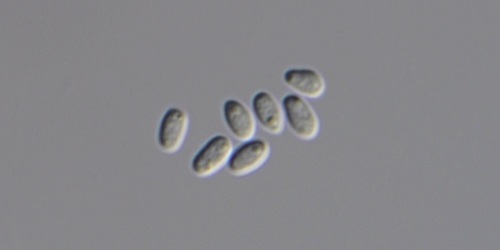
Carbendazim at 0.15% inhibited P. sorghina growth by 72.16%.
- Taxon
- P. sorghina
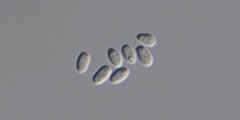 Epicoccum sorghinume0
- Treatment
- Carbendazim @ 0.15%e0
- Outcome
- growthe0
- Direction
- inhibite0
- Value
- 72.16%e0
Not reportedComparator
Organisms pictured · Representative pictures of the matched species, not figures from the paper.
Verbatim
e0“Carbendazim @ 0.15% could inhibit the growth of F. moniliforme (73.19%), A. cumulatus (73.07%), P. sorghina (72.16%) and A glaucus (71.84%).”
Claim · model-written summary
Carbendazim at 0.15% inhibited A glaucus growth by 71.84%.
- Taxon
- A glaucusAspergillus glaucuse0
- Treatment
- Carbendazim @ 0.15%e0
- Outcome
- growthe0
- Direction
- inhibite0
- Value
- 71.84%e0
Not reportedComparator
Verbatim
e0“Carbendazim @ 0.15% could inhibit the growth of F. moniliforme (73.19%), A. cumulatus (73.07%), P. sorghina (72.16%) and A glaucus (71.84%).”
Claim · model-written summary
Chloramphenicol at 30 µcg produced 4.16 cm inhibition of X. oryzae pv. oryzae growth.
- Taxon
- X. oryzae pv. oryzae
 Xanthomonas oryzae pv. oryzaee0
- Treatment
- chloramphenicol @ 30 µcge0
- Outcome
- growth of X. oryzae pv. oryzaee0
- Direction
- inhibitione0
- Value
- 4.16e0
Not reportedComparator
Organisms pictured · Representative pictures of the matched species, not figures from the paper.

Verbatim
e0“Antibiotics chloramphenicol @ 30 µcg and streptocycline @ 1000 ppm showed 4.16 and 1.12 cm inhibition respectively on growth of X. oryzae pv. oryzae”
Claim · model-written summary
Streptocycline at 1000 ppm produced 1.12 cm inhibition of X. oryzae pv. oryzae growth.
- Taxon
- X. oryzae pv. oryzaeXanthomonas oryzae pv. oryzaee0
- Treatment
- streptocycline @ 1000 ppme0
- Outcome
- growth of X. oryzae pv. oryzaee0
- Direction
- inhibitione0
- Value
- 1.12 cme0
Not reportedComparator
Organisms pictured · Representative pictures of the matched species, not figures from the paper.
Verbatim
e0“Antibiotics chloramphenicol @ 30 µcg and streptocycline @ 1000 ppm showed 4.16 and 1.12 cm inhibition respectively on growth of X. oryzae pv. oryzae”