Abstract
The preservation of biodiversity is not at all a luxury. In many developing countries, the reduction in biodiversity caused by the conversion of primary forest to unsustainable agricultural landscapes has increased. Agroforestry provided habitat for various species of wildlife and had significant social and environmental advantages. However, there is a lack of knowledge on the significance of agroforestry in the management and conservation of woody species. The review’s main goal is to emphasize the socioeconomic significance of agroforestry in Ethiopia and the conservation and management of woody species. The most common agroforestry practices are typically carried out in different parts of the country on homegardens, crops, woodlots, and coffee farms. The most typical woody species utilized in agroforestry practices in southern Ethiopia are Cordia africana, Millettia ferruginea, Erythrina brucei, and Olea capensis. In Ethiopia’s northern region, you can find Croton macrostachyus, Vernonia amygdalina, Faidherbia albida, Acacia nilotica, Acacia seyal, and Grewia bicolor. The central highlands of Ethiopia also have Albizia gummifera, Cordia africana, Croton macrostachyus, Ficus vasta, and Vernonia amygdalina. Agroforestry improves the environment and the socioeconomic system by producing tree products such as timber, firewood, food, and building materials (reduce soil erosion, increase soil moisture and fertility, coffee shade, and keep microclimate balance). Woody species in agroforestry are managed through pollarding, thinning, and pruning.
Abstract from the paper’s OpenAlex record; open copy licensed cc-by. Read at the source ↗
The text the model read, with the source record’s inline markup (italics, sub- and superscripts) rendered and its character entities decoded; quote offsets refer to the raw text.
Claims 3
Claim · model-written summary
The most typical woody species used in agroforestry in southern Ethiopia are Cordia africana, Millettia ferruginea, Erythrina brucei and Olea capensis.
- Taxon
- Cordia africana, Millettia ferruginea, Erythrina brucei, and Olea capensis
 Olea capensis
 Cordia africanaMillettia ferruginea
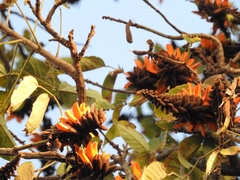 Erythrina bruceie1
- Outcome
- most typical woody species utilized in agroforestry practicese1
- Setting
- southern Ethiopiae1
Organisms pictured · Representative pictures of the matched species, not figures from the paper.


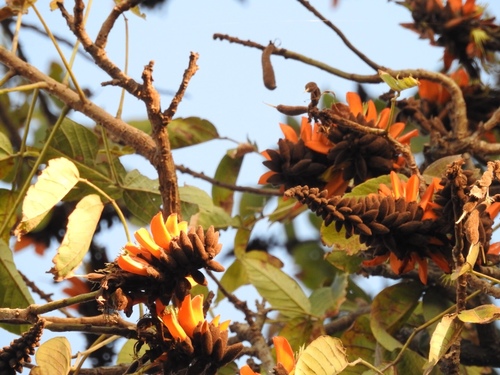
Verbatim
e1“The most typical woody species utilized in agroforestry practices in southern Ethiopia are Cordia africana, Millettia ferruginea, Erythrina brucei, and Olea capensis”
Claim · model-written summary
Agroforestry improves the environment and the socioeconomic system by producing tree products such as timber, firewood, food and building materials.
Verbatim
e2“Agroforestry improves the environment and the socioeconomic system by producing tree products such as timber, firewood, food, and building materials”
Claim · model-written summary
Woody species in agroforestry are managed through pollarding, thinning and pruning.
Verbatim
e3“Woody species in agroforestry are managed through pollarding, thinning, and pruning”