Abstract
Soil is a crucial component for plant growth, as it provides water, nutrients, and mechanical support. Various factors, such as crop cultivation, microflora, nutrient addition, and water availability, significantly affect soil properties. Maintaining soil health is important, and one approach is the introduction of native organisms with multifaceted activities. The study evaluates the effects of introducing these microbes (Trichoderma asperellum strain TAIK1, Bacillus cabrialesii strain BIK3, Pseudomonas putida strain PIK1, and Pseudomonas otitidis strain POPS1) and their consortium, a combination of four bioagents, on soil health, plant growth, and the incidence of stem rot disease caused by Sclerotium oryzae in rice. Upon treatment of soil with the consortium of the four native bioagents mentioned above through seed treatment or soil application, variations/increases in the chemical properties of the soil were observed, viz., pH (8.08 to 8.28), electrical conductivity (EC) (0.72 to 0.75 d S m−1), organic carbon (OC) (0.57 to 0.68 %), available soil nitrogen (SN) (155 to 315 kg/ha), soil phosphorus (SP) (7.87 to 24.91 kg/ha), soil potassium (SK) (121.29 to 249.42 kg/ha), and soil enzymes (urease (0.73 to 7.33 µg urea hydrolyzed g−1 soil h−1), acid and alkaline phosphatase (0.09 to 1.39 and 0.90 to 1.78 µg of p-nitrophenol released g−1 soil h−1), and dehydrogenase (0.14 to 16.44 mg triphenyl formazan (TPF) produced g−1 soil h−1)), compared to untreated soil. Treatment of seeds with the consortium of four native bioagents resulted in a significant increase in plant height (39.16%), the number of panicles (30.29%), and average grain yield (41.36%) over control plants. Under controlled conditions, the bioagent-treated plants showed a 69.37% reduction in stem rot disease. The findings of this study indicate a positive correlation between soil properties (pH, EC, OC, SN, SP, SK, and soil enzymes) and plant growth (shoot and root length, fresh and dry weight) as well as a highly negative association of soil properties with stem rot disease severity. The results suggest that using native bioagents as a management strategy can control stem rot disease and enhance crop productivity, while reducing reliance on chemical management. These findings provide valuable insights into the development of sustainable agricultural practices that maximize productivity by minimizing negative environmental impacts, which promotes soil health, plant growth, and disease management.
Abstract from the paper’s OpenAlex record; open copy licensed cc-by. Read at the source ↗
The text the model read, with the source record’s inline markup (italics, sub- and superscripts) rendered and its character entities decoded; quote offsets refer to the raw text.
Claims 18
Claim · model-written summary
Consortium treatment increased soil pH from 8.08 to 8.28.
- Taxon
- Rice
 Oryza sativat0
- Treatment
- consortium of the four native bioagentse0
- Outcome
- pHe0
- Direction
- increasese0
- Value
- 8.08 to 8.28e0
Not reportedComparator
Organisms pictured · Representative pictures of the matched species, not figures from the paper.

Verbatim
e0“Upon treatment of soil with the consortium of the four native bioagents mentioned above through seed treatment or soil application, variations/increases in the chemical properties of the soil were observed, viz., pH (8.08 to 8.28)”
t0“Rice”
Claim · model-written summary
Consortium treatment increased soil electrical conductivity from 0.72 to 0.75 d S m−1.
- Taxon
- RiceOryza sativat0
- Outcome
- electrical conductivity (EC)e0
- Direction
- increasese1
- Value
- 0.72 to 0.75 d S m−1e0
Not reportedTreatmentComparator
Organisms pictured · Representative pictures of the matched species, not figures from the paper.
Verbatim
e0“electrical conductivity (EC) (0.72 to 0.75 d S m−1)”
e1“variations/increases in the chemical properties of the soil”
t0“Rice”
Claim · model-written summary
Consortium treatment increased soil organic carbon from 0.57 to 0.68%.
- Taxon
- RiceOryza sativat0
- Outcome
- organic carbon (OC)e0
- Direction
- increasese1
- Value
- 0.57 to 0.68 %e0
Not reportedTreatmentComparator
Organisms pictured · Representative pictures of the matched species, not figures from the paper.
Verbatim
e0“organic carbon (OC) (0.57 to 0.68 %)”
e1“variations/increases in the chemical properties of the soil”
t0“Rice”
Claim · model-written summary
Consortium treatment increased available soil nitrogen from 155 to 315 kg/ha.
- Taxon
- RiceOryza sativat0
- Outcome
- available soil nitrogen (SN)e0
- Direction
- increasese1
- Value
- 155 to 315 kg/hae0
Not reportedTreatmentComparator
Organisms pictured · Representative pictures of the matched species, not figures from the paper.
Verbatim
e0“available soil nitrogen (SN) (155 to 315 kg/ha)”
e1“variations/increases in the chemical properties of the soil”
t0“Rice”
Claim · model-written summary
Consortium treatment increased soil phosphorus from 7.87 to 24.91 kg/ha.
- Taxon
- RiceOryza sativat0
- Outcome
- soil phosphorus (SP)e0
- Direction
- increasese1
- Value
- 7.87 to 24.91 kg/hae0
Not reportedTreatmentComparator
Organisms pictured · Representative pictures of the matched species, not figures from the paper.
Verbatim
e0“soil phosphorus (SP) (7.87 to 24.91 kg/ha)”
e1“variations/increases in the chemical properties of the soil”
t0“Rice”
Claim · model-written summary
Consortium treatment increased soil potassium from 121.29 to 249.42 kg/ha.
- Taxon
- RiceOryza sativat0
- Outcome
- soil potassium (SK)e0
- Direction
- increasese1
- Value
- 121.29 to 249.42 kg/hae0
Not reportedTreatmentComparator
Organisms pictured · Representative pictures of the matched species, not figures from the paper.
Verbatim
e0“soil potassium (SK) (121.29 to 249.42 kg/ha)”
e1“variations/increases in the chemical properties of the soil”
t0“Rice”
Claim · model-written summary
Consortium treatment increased soil urease from 0.73 to 7.33 µg urea hydrolyzed g−1 soil h−1.
- Taxon
- RiceOryza sativat0
- Outcome
- ureasee0
- Direction
- increasese1
- Value
- 0.73 to 7.33 µg urea hydrolyzed g−1 soil h−1e0
Not reportedTreatmentComparator
Organisms pictured · Representative pictures of the matched species, not figures from the paper.
Verbatim
e0“urease (0.73 to 7.33 µg urea hydrolyzed g−1 soil h−1)”
e1“variations/increases in the chemical properties of the soil”
t0“Rice”
Claim · model-written summary
Consortium treatment increased acid phosphatase from 0.09 to 1.39 µg of p-nitrophenol released g−1 soil h−1.
- Taxon
- RiceOryza sativat0
- Outcome
- acide0
- Direction
- increasese1
- Value
- 0.09 to 1.39e0
Not reportedTreatmentComparator
Organisms pictured · Representative pictures of the matched species, not figures from the paper.
Verbatim
e0“acid and alkaline phosphatase (0.09 to 1.39 and 0.90 to 1.78 µg of p-nitrophenol released g−1 soil h−1)”
e1“variations/increases in the chemical properties of the soil”
t0“Rice”
Claim · model-written summary
Consortium treatment increased alkaline phosphatase from 0.90 to 1.78 µg of p-nitrophenol released g−1 soil h−1.
- Taxon
- RiceOryza sativat0
- Outcome
- alkaline phosphatasee0
- Direction
- increasese1
- Value
- 0.90 to 1.78 µg of p-nitrophenol released g−1 soil h−1e0
Not reportedTreatmentComparator
Organisms pictured · Representative pictures of the matched species, not figures from the paper.
Verbatim
e0“acid and alkaline phosphatase (0.09 to 1.39 and 0.90 to 1.78 µg of p-nitrophenol released g−1 soil h−1)”
e1“variations/increases in the chemical properties of the soil”
t0“Rice”
Claim · model-written summary
Consortium treatment increased dehydrogenase from 0.14 to 16.44 mg triphenyl formazan produced g−1 soil h−1.
- Taxon
- RiceOryza sativat0
- Outcome
- dehydrogenasee0
- Direction
- increasese1
- Value
- 0.14 to 16.44 mg triphenyl formazan (TPF) produced g−1 soil h−1e0
Not reportedTreatmentComparator
Organisms pictured · Representative pictures of the matched species, not figures from the paper.
Verbatim
e0“dehydrogenase (0.14 to 16.44 mg triphenyl formazan (TPF) produced g−1 soil h−1)”
e1“variations/increases in the chemical properties of the soil”
t0“Rice”
Claim · model-written summary
Seed treatment with the consortium increased rice plant height by 39.16% over control.
- Taxon
- RiceOryza sativat0
- Treatment
- Treatment of seeds with the consortium of four native bioagentse0
- Outcome
- plant heighte0
- Direction
- increasee0
- Value
- 39.16%e0
- Comparator
- control plantse0
Organisms pictured · Representative pictures of the matched species, not figures from the paper.
Verbatim
e0“Treatment of seeds with the consortium of four native bioagents resulted in a significant increase in plant height (39.16%), the number of panicles (30.29%), and average grain yield (41.36%) over control plants.”
t0“Rice”
Claim · model-written summary
Seed treatment with the consortium increased rice panicle number by 30.29% over control.
- Taxon
- RiceOryza sativat0
- Treatment
- Treatment of seeds with the consortium of four native bioagentse0
- Outcome
- number of paniclese0
- Direction
- increasee0
- Value
- 30.29%e0
- Comparator
- control plantse0
Organisms pictured · Representative pictures of the matched species, not figures from the paper.
Verbatim
e0“Treatment of seeds with the consortium of four native bioagents resulted in a significant increase in plant height (39.16%), the number of panicles (30.29%), and average grain yield (41.36%) over control plants.”
t0“Rice”
Claim · model-written summary
Seed treatment with the consortium increased average rice grain yield by 41.36% over control.
- Taxon
- RiceOryza sativat0
- Treatment
- Treatment of seeds with the consortium of four native bioagentse0
- Outcome
- average grain yielde0
- Direction
- increasee0
- Value
- 41.36%e0
- Comparator
- control plantse0
Organisms pictured · Representative pictures of the matched species, not figures from the paper.
Verbatim
e0“Treatment of seeds with the consortium of four native bioagents resulted in a significant increase in plant height (39.16%), the number of panicles (30.29%), and average grain yield (41.36%) over control plants.”
t0“Rice”
Claim · model-written summary
Bioagent-treated rice plants showed 69.37% reduction in stem rot disease under controlled conditions.
- Taxon
- riceOryza sativae1
- Treatment
- bioagent-treatede0
- Interactor
- Sclerotium oryzae
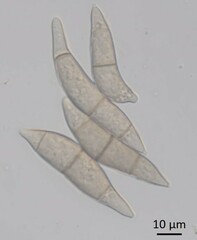 Nakataea oryzaee1pathogen
- Outcome
- stem rot diseasee0
- Direction
- reductione0
- Value
- 69.37%e0
- Setting
- controlled conditionse0
Not reportedComparator
Organisms pictured · Representative pictures of the matched species, not figures from the paper.
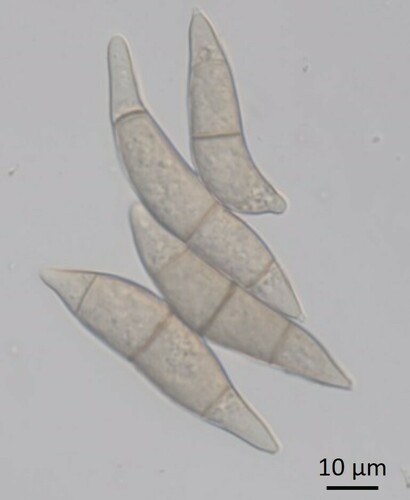
Verbatim
e0“Under controlled conditions, the bioagent-treated plants showed a 69.37% reduction in stem rot disease.”
e1“stem rot disease caused by Sclerotium oryzae in rice.”
Claim · model-written summary
Soil properties correlated positively with rice shoot and root length.
- Taxon
- RiceOryza sativat0
- Organ / stage
- shoot and roote0
- Outcome
- shoot and root lengthe0
- Direction
- positive correlatione0
- Qualifier
- soil propertiese0
Not reportedSetting
Organisms pictured · Representative pictures of the matched species, not figures from the paper.
Verbatim
e0“a positive correlation between soil properties (pH, EC, OC, SN, SP, SK, and soil enzymes) and plant growth (shoot and root length, fresh and dry weight)”
t0“Rice”
Claim · model-written summary
Soil properties correlated positively with rice fresh and dry weight.
- Taxon
- RiceOryza sativat0
- Organ / stage
- shoot and roote0
- Outcome
- fresh and dry weighte0
- Direction
- positive correlatione0
Organisms pictured · Representative pictures of the matched species, not figures from the paper.
Verbatim
e0“a positive correlation between soil properties (pH, EC, OC, SN, SP, SK, and soil enzymes) and plant growth (shoot and root length, fresh and dry weight)”
t0“Rice”
Claim · model-written summary
Soil properties were negatively associated with rice stem rot severity.
- Taxon
- riceOryza sativae1
- Interactor
- Sclerotium oryzaeNakataea oryzaee1pathogen
- Outcome
- stem rot disease severitye0
- Direction
- negative associatione0
Organisms pictured · Representative pictures of the matched species, not figures from the paper.
Verbatim
e0“a highly negative association of soil properties with stem rot disease severity”
e1“stem rot disease caused by Sclerotium oryzae in rice.”
Claim · model-written summary
Authors recommend native bioagents to control stem rot and enhance crop productivity.
- Taxon
- riceOryza sativae1
- Interactor
- Sclerotium oryzaeNakataea oryzaee1pathogen
- Outcome
- control stem rot disease and enhance crop productivitye0
Organisms pictured · Representative pictures of the matched species, not figures from the paper.
Verbatim
e0“using native bioagents as a management strategy can control stem rot disease and enhance crop productivity”
e1“stem rot disease caused by Sclerotium oryzae in rice.”
The same questions in other papers
biocontrol · growth · Oryza sativa (rice)Positive and negative results
15 papers in the same direction as this paper · 1 in the opposite direction
- no effect
- positive
- positive
13 papers more in this group
See all 17 papers →biocontrol · yield · Oryza sativa (rice)Positive and negative results
23 papers in the same direction as this paper · 1 in the opposite direction · 1 reporting no difference from an alternative
- negative
- no effect
- positive
22 papers more in this group
See all 26 papers →Claims are grouped by organism, treatment and what was measured or targeted. A paper counts as positive when any of its claims in the group is positive.