Abstract
Hypericum przewalskii (Hypericum) is a resurgent herb. Hypericin extracted from the same genus, exhibits significant clinical effects and high medicinal value. It has been used in treating AIDS and other medical fields (Song et al., 2005). The plant possesses high ornamental value, strong ecological adaptability, and is a wildflower resource worthy of promotion (Guan et al., 2002; Tan and Zhou, 2014). In August 2022, rust disease caused by a Melampsora species was observed on the leaves of H. przewalskii near the Xianmi Forest Farm in Menyuan, Qinghai Province. Roughly 12% of observed plants were infected. Specimens were examined under a microscope and compared with type specimen descriptions in published literature. Uredinia were found on the undersides of leaves,, scattered, pulverulent, and elliptical, measuring 0.21-0.45mm in length, orange when fresh, yellowing with age, surrounded by the ruptured epidermis mixed with numerous capitate paraphyses. Urediniospores were globose to ellipsoid, containing yellowish, 15.37-20.01×12.73-18.77 µm (mean 17.7-15.8 µm), echinulate, cell walls around 3.6µm. Telial hypophyllous, scattered or aggregated in small irregular groups, subepidermal, 0.3-0.5 mm diam., chestnut-brown when fresh, black with age, teliospores were cylindrical or rod-shaped, colorless to pale yellow, and measured 20.4-31.45×5.76-12.31 μm (mean 25.9-9.1 μm), cell walls around 3.3µm, thick and ranged in color from deep yellow-brown to light brown. A voucher specimen (accession No. QHU194) was deposited in the Department of Agriculture and Animal Husbandry at Qinghai University. DNA was extracted using the CTAB method. PCR amplifications were performed for the internal transcribed spacer (ITS) and large subunit (LSU) rDNA, using specific primer pairs ITS4/ITS5 (Chen 2007) rust and universal primers NL1/NL4 (Liu et al. 2011), respectively. The resulting sequences were assembled and deposited in GenBank (accession nos. OQ676524, OQ678007). Phylogenetic relationships also indicated a high homology between the obtained ITS and LSU sequence was highly homologous to Melampsora sp. (KU641030) and M. gelmii (GU058014). These results further confirmed that the rust fungus collected in Qinghai belongs to Melampsora genus. Based on the morphological characteristics and sequences data, these isolates were identified as M. kusanoi, previously reported on H. gramineum in New Zealand (Dietel P. 1905). Pathogenicity was demonstrated by spraying 5 ml of a suspension of urediniospores (1×10⁴ spores/ml) recovered from infected leaves onto leaves of 10 healthy H. przewalskii, and 10 noninoculated plants served as controls. All plants were maintained in darkness at temperatures of 20 to 25℃ for 2 days and then transferred to a greenhouse at 23℃ and 80% relative humidity, receiving 16 hours of light each day. All the inoculated plants developed characteristic disease symptoms within 8-10 days, the control plants remained symptomless. In this study, the urediospores wall of M. kusanoi was found to be thicker than that reported by Dietel, and we suspect that this may be due to the Qinghai-Tibet Plateau's unique geographical environment. To our knowledge, this is the first report of rust disease on H. przewalskii caused by M. kusanoi in China. Although the severity of disease caused by M. kusanoi in Qinghai is currently minimal, delving into its epidemiology and management in the future is imperative.
Abstract from the paper’s OpenAlex record, shown for indexing and research. Copyright remains with the authors or the publisher. Read at the source ↗
The text the model read, with the source record’s inline markup (italics, sub- and superscripts) rendered and its character entities decoded; quote offsets refer to the raw text.
Claims 5
Claim · model-written summary
Rust infected roughly 12% of observed plants in Qinghai.
- Taxon
- Hypericum przewalskii
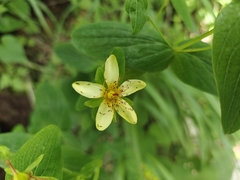 Hypericum przewalskiit0
- Outcome
- observed plants were infectede0
- Value
- 12%e0
Organisms pictured · Representative pictures of the matched species, not figures from the paper.

Verbatim
e0“Roughly 12% of observed plants were infected”
t0“Hypericum przewalskii”
Claim · model-written summary
The collected rust was assigned to Melampsora genus based on molecular results.
- Taxon
- Hypericum przewalskiiHypericum przewalskiit0
- Interactor
- Melampsora
 Melampsorae0pathogen
- Outcome
- rust fungus collected in Qinghai belongs to Melampsora genuse0
Not reportedDirection
Organisms pictured · Representative pictures of the matched species, not figures from the paper.

Verbatim
e0“rust fungus collected in Qinghai belongs to Melampsora genus”
t0“Hypericum przewalskii”
Claim · model-written summary
Morphology and sequence data identified the rust isolates as M. kusanoi.
- Taxon
- Hypericum przewalskiiHypericum przewalskiit0
- Interactor
- M. kusanoiMelampsora kusanoie0pathogen
- Outcome
- isolates were identified as M. kusanoie0
Not reportedDirection
Organisms pictured · Representative pictures of the matched species, not figures from the paper.
Verbatim
e0“Based on the morphological characteristics and sequences data, these isolates were identified as M. kusanoi”
t0“Hypericum przewalskii”
Claim · model-written summary
The urediospore wall of M. kusanoi was thicker than Dietel reported.
- Taxon
- Hypericum przewalskiiHypericum przewalskiit0
- Interactor
- M. kusanoiMelampsora kusanoie0pathogen
- Outcome
- urediospores wall of M. kusanoie0
- Direction
- thickere0
- Comparator
- that reported by Dietele0
Organisms pictured · Representative pictures of the matched species, not figures from the paper.
Verbatim
e0“urediospores wall of M. kusanoi was found to be thicker than that reported by Dietel”
t0“Hypericum przewalskii”
Claim · model-written summary
The authors report the first Chinese occurrence of rust on H. przewalskii caused by M. kusanoi.
- Taxon
- H. przewalskiiHypericum przewalskiie0
- Interactor
- M. kusanoiMelampsora kusanoie0pathogen
- Outcome
- rust diseasee0
- Setting
- Chinae0
Not reportedDirection
Organisms pictured · Representative pictures of the matched species, not figures from the paper.
Verbatim
e0“first report of rust disease on H. przewalskii caused by M. kusanoi in China”