Abstract
In the present investigation, a phyto-sociological study in managed and abandoned waterlogged saline sites of Trans Indo-Gangetic plains was undertaken.It was pilot location study done in Sonipat district, Haryana which falls under severely affected category of the waterlogged and salinity problem.The study area grouped into managed and abandoned sites.In managed sites, the dominant tree was was Eucalyptus Prosopis juliflora planted in block and boundary arrangement.(Mesquite) was dominant tree in abandoned sites without any definite planting pattern and accompanied by low values of shrubs and herbages.(crab grass) showed highest relative Digitaria sanguinalis density (53.0) and relative value index (153.0)with lowest value of both the indices (0.56 and 50.6) in (elephant grass) in Saccharum ravennae managed sites.showed dominance with highest relative density (63.0) and relative value index (163.0)with lowest (14.0 Cyanodon dactylon and 114.0) in (red tamarix) in abandoned sites.Shannon Weiner (0.46) and Simpson (0.58) Indices were higher in managed Tamarix dioica sites than abandoned ones.Higher degree of richness in flora in managed waterlogged saline sites is equally supported by the higher species value of diversity index (0.02) than abandoned (0.01) sites.The results of the investigation advocate that the managed sites can render better services than the abandoned sites on phyto-sociological aspects in waterlogged saline landscapes.Higher species richness in managed sites can be linked to better outcomes from ecological and economic perspectives.
Abstract from the paper’s OpenAlex record, shown for indexing and research. Copyright remains with the authors or the publisher. Read at the source ↗
The text the model read, with the source record’s inline markup (italics, sub- and superscripts) rendered and its character entities decoded; quote offsets refer to the raw text.
Claims 12
Claim · model-written summary
Eucalyptus and Prosopis juliflora dominated managed sites.
- Taxon
- Eucalyptus Prosopis juliflora
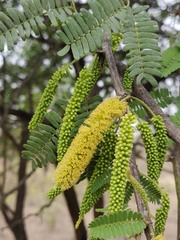 Neltuma juliflorae0
- Outcome
- dominant treee0
- Setting
- managed sitese0
Organisms pictured · Representative pictures of the matched species, not figures from the paper.

Verbatim
e0“In managed sites, the dominant tree was was Eucalyptus Prosopis juliflora planted in block and boundary arrangement.”
Claim · model-written summary
Mesquite dominated abandoned sites.
 Prosopis
Organisms pictured · Representative pictures of the matched species, not figures from the paper.

Verbatim
e0“(Mesquite) was dominant tree in abandoned sites without any definite planting pattern”
Claim · model-written summary
Digitaria sanguinalis had relative density 53.0.
- Taxon
- Digitaria sanguinalis
 Digitaria sanguinalise0
- Outcome
- densitye0
- Direction
- higheste0
- Value
- 53.0e0
Organisms pictured · Representative pictures of the matched species, not figures from the paper.

Verbatim
e0“(crab grass) showed highest relative Digitaria sanguinalis density (53.0) and relative value index (153.0)”
Claim · model-written summary
Digitaria sanguinalis had relative value index 153.0.
- Taxon
- Digitaria sanguinalisDigitaria sanguinalise0
- Outcome
- relative value indexe0
- Direction
- higheste0
- Value
- 153.0e0
Organisms pictured · Representative pictures of the matched species, not figures from the paper.
Verbatim
e0“(crab grass) showed highest relative Digitaria sanguinalis density (53.0) and relative value index (153.0)”
Claim · model-written summary
Saccharum ravennae had lowest managed-site relative density at 0.56.
- Taxon
- Saccharum ravennae
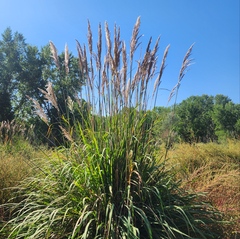 Tripidium ravennaee0
- Outcome
- indicese0
- Direction
- loweste0
- Value
- 0.56e0
- Setting
- managed sitese0
Organisms pictured · Representative pictures of the matched species, not figures from the paper.
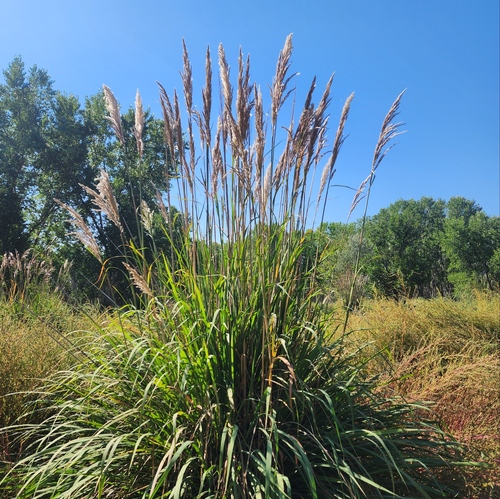
Verbatim
e0“with lowest value of both the indices (0.56 and 50.6) in (elephant grass) in Saccharum ravennae managed sites.”
Claim · model-written summary
Saccharum ravennae had lowest managed-site relative value index at 50.6.
- Taxon
- Saccharum ravennaeTripidium ravennaee0
- Outcome
- indicese0
- Direction
- loweste0
- Value
- 50.6e0
- Setting
- managed sitese0
Organisms pictured · Representative pictures of the matched species, not figures from the paper.
Verbatim
e0“with lowest value of both the indices (0.56 and 50.6) in (elephant grass) in Saccharum ravennae managed sites.”
Claim · model-written summary
Cyanodon dactylon dominated abandoned sites with relative density 63.0.
Verbatim
e0“showed dominance with highest relative density (63.0) and relative value index (163.0)with lowest (14.0 Cyanodon dactylon and 114.0) in (red tamarix) in abandoned sites.”
Claim · model-written summary
Cyanodon dactylon had relative value index 163.0.
Verbatim
e0“showed dominance with highest relative density (63.0) and relative value index (163.0)with lowest (14.0 Cyanodon dactylon and 114.0) in (red tamarix) in abandoned sites.”
Claim · model-written summary
Managed sites had higher Shannon Wiener index of 0.46.
- Taxon
- Tamarix dioica
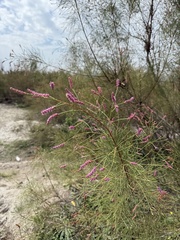 Tamarix dioicae0
- Outcome
- Shannon Weinere0
- Direction
- highere0
- Value
- 0.46e0
- Setting
- managede0
Organisms pictured · Representative pictures of the matched species, not figures from the paper.
Verbatim
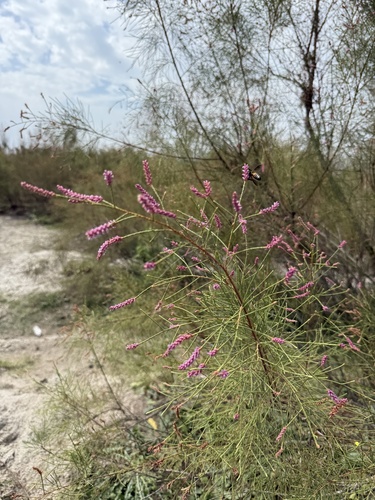
e0“Shannon Weiner (0.46) and Simpson (0.58) Indices were higher in managed Tamarix dioica sites than abandoned ones.”
Claim · model-written summary
Managed sites had higher Simpson index of 0.58.
Organisms pictured · Representative pictures of the matched species, not figures from the paper.
Verbatim
e0“Shannon Weiner (0.46) and Simpson (0.58) Indices were higher in managed Tamarix dioica sites than abandoned ones.”
Claim · model-written summary
Managed sites had higher diversity index of 0.02 versus abandoned 0.01.
 Phyto
Organisms pictured · Representative pictures of the matched species, not figures from the paper.
Verbatim
e0“higher species value of diversity index (0.02) than abandoned (0.01) sites.”
t0“Phyto-sociological”
Claim · model-written summary
Authors conclude managed saline sites can provide better phytosociological services.
Organisms pictured · Representative pictures of the matched species, not figures from the paper.
Verbatim
e0“managed sites can render better services than the abandoned sites on phyto-sociological aspects in waterlogged saline landscapes.”
t0“Phyto-sociological”