Abstract
Parasitoids induce physiological changes in their herbivorous hosts that affect how plants respond to herbivory. The signature of parasitoids on induced plant responses to feeding by parasitized herbivores indirectly impacts insect communities interacting with the plant. The effect may extend to parasitoids and cause indirect interaction between parasitoids that develop inside different herbivore hosts sharing the food plant. However, this type of interactions among parasitoid larvae has received very little attention. In this study, we investigated sequential and simultaneous plant-mediated interactions among two host-parasitoid systems feeding on Brassica oleracea plants: Mamestra brassicae parasitized by Microplitis mediator and Pieris rapae parasitized by Cotesia rubecula. We measured the mortality, development time, and weight of unparasitized herbivores and performance of parasitoids that had developed inside the two herbivore species when sharing the food plant either simultaneously or sequentially. Plant induction by parasitized or unparasitized hosts had no significant effect on the performance of the two herbivore host species. In contrast, the two parasitoid species had asymmetrical indirect plant-mediated effects on each other's performance. Cotesia rubecula weight was 15% higher on plants induced by M. mediator-parasitized hosts, compared to control plants. In addition, M. mediator development time was reduced by 30% on plants induced by conspecific but not heterospecific parasitoids, compared to plants induced by its unparasitized host. Contrary to sequential feeding, parasitoids had no effect on each other's performance when feeding simultaneously. These results reveal that indirect plant-mediated interactions among parasitoid larvae could involve any parasitoid species whose hosts share a food plant.
Abstract from the paper’s OpenAlex record; open copy licensed cc-by. Read at the source ↗
The text the model read, with the source record’s inline markup (italics, sub- and superscripts) rendered and its character entities decoded; quote offsets refer to the raw text.
Claims 6
Claim · model-written summary
Plant induction by parasitized or unparasitized hosts had no significant effect on the performance of Mamestra brassicae and Pieris rapae.
- Taxon
- Brassica oleracea
 Brassica oleraceae0
- Treatment
- Plant induction by parasitized or unparasitized hostse1
- Interactor
- Mamestra brassicae
 Mamestra brassicaee2herbivore
- Second interactor
- Pieris rapae
 Pieris rapaee2herbivore
- Outcome
- performance of the two herbivore host speciese1
- Direction
- no significant effecte1
Not reportedComparator
Organisms pictured · Representative pictures of the matched species, not figures from the paper.


Verbatim
e0“feeding on Brassica oleracea plants”
e1“Plant induction by parasitized or unparasitized hosts had no significant effect on the performance of the two herbivore host species”
e2“Mamestra brassicae parasitized by Microplitis mediator and Pieris rapae parasitized by Cotesia rubecula”
Claim · model-written summary
The two parasitoid species had asymmetrical indirect plant-mediated effects on each other performance.
- Taxon
- Brassica oleraceaBrassica oleraceae0
- Interactor
- Microplitis mediator
 Microplitis mediatore2parasite
- Second interactor
- Cotesia rubecula
 Cotesia rubeculae2parasite
- Outcome
- each other's performancee5
- Direction
- asymmetricale5
Organisms pictured · Representative pictures of the matched species, not figures from the paper.

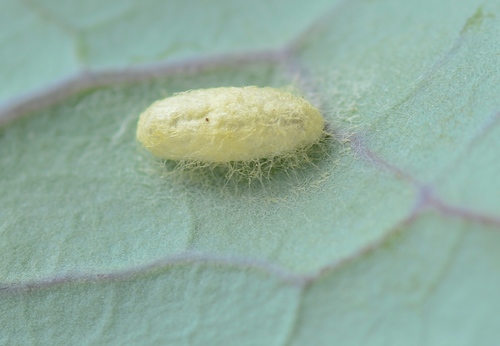
Verbatim
e0“feeding on Brassica oleracea plants”
e2“Mamestra brassicae parasitized by Microplitis mediator and Pieris rapae parasitized by Cotesia rubecula”
e5“In contrast, the two parasitoid species had asymmetrical indirect plant-mediated effects on each other's performance”
Claim · model-written summary
Cotesia rubecula weight was 15% higher on plants induced by M. mediator-parasitized hosts than on control plants.
- Taxon
- Brassica oleraceaBrassica oleraceae0
- Treatment
- plants induced by M. mediator-parasitized hostse3
- Interactor
- Cotesia rubeculaCotesia rubeculae3parasite
- Second interactor
- M. mediatorMicroplitis mediatore3parasite
- Outcome
- Cotesia rubecula weighte3
- Direction
- highere3
- Value
- 15%e3
- Comparator
- control plantse3
Organisms pictured · Representative pictures of the matched species, not figures from the paper.
Verbatim
e0“feeding on Brassica oleracea plants”
e3“Cotesia rubecula weight was 15% higher on plants induced by M. mediator-parasitized hosts, compared to control plants”
Claim · model-written summary
M. mediator development time was reduced by 30% on plants induced by conspecific parasitoids compared with plants induced by its unparasitized host.
- Taxon
- Brassica oleraceaBrassica oleraceae0
- Treatment
- plants induced by conspecific but not heterospecific parasitoidse4
- Interactor
- M. mediatorMicroplitis mediatore4parasite
- Outcome
- M. mediator development timee4
- Direction
- reducede4
- Value
- 30%e4
- Comparator
- plants induced by its unparasitized hoste4
Organisms pictured · Representative pictures of the matched species, not figures from the paper.
Verbatim
e0“feeding on Brassica oleracea plants”
e4“In addition, M. mediator development time was reduced by 30% on plants induced by conspecific but not heterospecific parasitoids, compared to plants induced by its unparasitized host”
Claim · model-written summary
M. mediator development time showed no reduction on plants induced by heterospecific parasitoids.
- Taxon
- Brassica oleraceaBrassica oleraceae0
- Treatment
- heterospecific parasitoidse4
- Interactor
- M. mediatorMicroplitis mediatore4parasite
- Outcome
- M. mediator development timee4
- Comparator
- plants induced by its unparasitized hoste4
Not reportedDirection
Organisms pictured · Representative pictures of the matched species, not figures from the paper.
Verbatim
e0“feeding on Brassica oleracea plants”
e4“In addition, M. mediator development time was reduced by 30% on plants induced by conspecific but not heterospecific parasitoids, compared to plants induced by its unparasitized host”
Claim · model-written summary
Parasitoids had no effect on each other performance when feeding simultaneously, unlike sequential feeding.
- Taxon
- Brassica oleraceaBrassica oleraceae0
- Treatment
- feeding simultaneouslye6
- Outcome
- each other's performancee6
- Direction
- no effecte6
- Comparator
- sequential feedinge6
Organisms pictured · Representative pictures of the matched species, not figures from the paper.
Verbatim
e0“feeding on Brassica oleracea plants”
e6“Contrary to sequential feeding, parasitoids had no effect on each other's performance when feeding simultaneously”