Abstract
Introduction Aspergillus nomiae is known as a pathogenic fungus that infects humans and plants but has never been reported as an entomophagous fungus (EPF) that can provide other functions as an endotype. Methods A strain of EPF was isolated and identified from diseased larvae of Spodoptera litura in a soybean field and designated AnS1Gzl-1. Pathogenicity of the strain toward various insect pests was evaluated, especially the ability to colonize plants and induce resistance against phytopathogens and insect pests. Results The isolated EPF strain AnS1Gzl-1 was identified as A. nomiae ; it showed strong pathogenicity toward five insect pests belonging to Lepidoptera and Hemiptera. Furthermore, the strain inhibited the growth of Sclerotinia sclerotiorum in vitro , a causal agent of soil-borne plant disease. It colonized plants as an endophyte via root irrigation with a high colonization rate of 90%, thereby inducing plant resistance against phytopathogen infection, and disrupting the feeding selectivity of S. litura larvae. Discussion This is the first record of a natural infection of A. nomiae on insects. A. nomiae has the potential to be used as a dual biocontrol EPF because of its ability to not only kill a broad spectrum of insect pests directly but also induce resistance against phytopathogens via plant colonization.
Abstract from the paper’s OpenAlex record; open copy licensed cc-by. Read at the source ↗
The text the model read, with the source record’s inline markup (italics, sub- and superscripts) rendered and its character entities decoded; quote offsets refer to the raw text.
Claims 8
Claim · model-written summary
The insect derived isolate was identified as A. nomiae.
- Taxon
- soybean
 Glycine maxe1
- Material
- AnS1Gzl-1e0
- Interactor
- A. nomiae
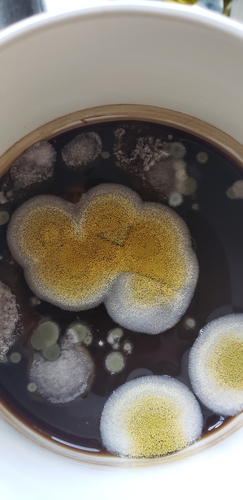
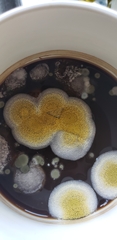 Aspergillus nomiaee0other
- Outcome
- identified as A. nomiaee0
Organisms pictured · Representative pictures of the matched species, not figures from the paper.

Verbatim
e0“The isolated EPF strain AnS1Gzl-1 was identified as A. nomiae”
e1“soybean field”
Claim · model-written summary
The isolate showed strong pathogenicity against five lepidopteran and hemipteran insect pests.
- Taxon
- soybeanGlycine maxe1
- Interactor
- A. nomiaeAspergillus nomiaee2biocontrol_agent
- Outcome
- strong pathogenicity toward five insect pestse0
Organisms pictured · Representative pictures of the matched species, not figures from the paper.
Verbatim
e0“it showed strong pathogenicity toward five insect pests belonging to Lepidoptera and Hemiptera”
e1“soybean field”
e2“identified as A. nomiae”
Claim · model-written summary
The isolate inhibited Sclerotinia sclerotiorum growth in vitro.
- Taxon
- soybeanGlycine maxe1
- Treatment
- the straine0
- Interactor
- Sclerotinia sclerotiorum
 Sclerotinia sclerotiorume0pathogen
- Second interactor
- A. nomiaeAspergillus nomiaee2biocontrol_agent
- Outcome
- growth of Sclerotinia sclerotiorume0
- Direction
- inhibitede0
Not reportedComparator
Organisms pictured · Representative pictures of the matched species, not figures from the paper.

Verbatim
e0“the strain inhibited the growth of Sclerotinia sclerotiorum in vitro”
e1“soybean field”
e2“identified as A. nomiae”
Claim · model-written summary
Root irrigation led to 90% endophytic plant colonization by the isolate.
- Taxon
- soybeanGlycine maxe1
- Treatment
- root irrigatione0
- Interactor
- A. nomiaeAspergillus nomiaee2symbiont
- Outcome
- colonization ratee0
- Direction
- highe0
- Value
- 90%e0
Not reportedComparator
Organisms pictured · Representative pictures of the matched species, not figures from the paper.
Verbatim
e0“It colonized plants as an endophyte via root irrigation with a high colonization rate of 90%”
e1“soybean field”
e2“identified as A. nomiae”
Claim · model-written summary
Endophytic colonization induced plant resistance to phytopathogen infection.
- Taxon
- soybeanGlycine maxe1
- Interactor
- A. nomiaeAspergillus nomiaee2biocontrol_agent
- Outcome
- plant resistance against phytopathogen infectione0
- Qualifier
- inducinge0
Organisms pictured · Representative pictures of the matched species, not figures from the paper.
Verbatim
e0“thereby inducing plant resistance against phytopathogen infection”
e1“soybean field”
e2“identified as A. nomiae”
Claim · model-written summary
The isolate disrupted feeding selectivity of S. litura larvae.
- Taxon
- soybeanGlycine maxe1
- Treatment
- A. nomiaee2
- Interactor
- S. litura
 Spodoptera liturae0pest
- Second interactor
- A. nomiaeAspergillus nomiaee2biocontrol_agent
- Outcome
- feeding selectivity of S. litura larvaee0
- Direction
- disruptinge0
Not reportedComparator
Organisms pictured · Representative pictures of the matched species, not figures from the paper.

Verbatim
e0“disrupting the feeding selectivity of S. litura larvae”
e1“soybean field”
e2“identified as A. nomiae”
Claim · model-written summary
The authors identified this as the first natural insect infection record for A. nomiae.
- Taxon
- soybeanGlycine maxe1
- Interactor
- A. nomiaeAspergillus nomiaee0biocontrol_agent
- Outcome
- first record of a natural infection of A. nomiae on insectse0
Organisms pictured · Representative pictures of the matched species, not figures from the paper.
Verbatim
e0“This is the first record of a natural infection of A. nomiae on insects”
e1“soybean field”
Claim · model-written summary
The authors proposed A. nomiae as a dual biocontrol fungus for insect pests and phytopathogens.
- Taxon
- soybeanGlycine maxe1
- Interactor
- A. nomiaeAspergillus nomiaee0biocontrol_agent
- Outcome
- potential to be used as a dual biocontrol EPFe0
Organisms pictured · Representative pictures of the matched species, not figures from the paper.
Verbatim
e0“A. nomiae has the potential to be used as a dual biocontrol EPF because of its ability to not only kill a broad spectrum of insect pests directly but also induce resistance against phytopathogens via plant colonization”
e1“soybean field”