Abstract
Woody and non-woody plant species conservation is one of the ecosystem services provided by agroforestry (AF) systems across the agricultural landscapes. Little attention has been paid to assessing the conservation of plant diversity in AF systems. This study was, thus, aimed at investigating plant species diversity, structure, and composition of three AF systems in Gedeo zone of south-eastern rift–valley agricultural landscape of Ethiopia. The study was conducted in three agroforestry systems, namely, enset based, coffee–enset based (C–E based AF), and coffee–fruit trees–enset based (C–Ft–E based AF) agroforestry systems. Twenty farms representative of each AF system were randomly selected, and inventory of the floristic diversity was employed in a 10 m × 10 m sample plot per farm. A total of 52 perennial woody and non-woody plant species belonging to 30 families were recorded. Of all species identified, 33 (63.5%) were native, of which two species, namely Millettia ferruginea (Hochst.) Baker and Erythrina brucei Schweinf., were registered as endemic. The highest proportion of native species was recorded in enset based AF (93.3%), and the least were in C–Ft–E based AF (59%). According to the IUCN Red List and local criteria, 13 species were recorded as being of interest for conservation in all AF systems. The woody species Prunus africana was identified as both vulnerable by IUCN Red List and rare for 25% of species that least occur. The Shannon diversity index and richness showed that C–Ft–E based AF systems were significantly different from the two remaining AF systems. However, the species abundance and evenness did not show significant differences between the three AF systems. In general, retaining such numbers of woody and non-woody perennial plant species richness under the AF systems of the present study underlines their potential for biodiversity conservation.
Abstract from the paper’s OpenAlex record; open copy licensed cc-by. Read at the source ↗
The text the model read, with the source record’s inline markup (italics, sub- and superscripts) rendered and its character entities decoded; quote offsets refer to the raw text.
Claims 11
Claim · model-written summary
The systems contained 52 perennial plant species in 30 families.
Verbatim
e0“A total of 52 perennial woody and non-woody plant species belonging to 30 families were recorded.”
Claim · model-written summary
Thirty-three species, or 63.5%, were native.
Verbatim
e0“Of all species identified, 33 (63.5%) were native”
Claim · model-written summary
Millettia ferruginea was recorded as endemic.
- Taxon
- Millettia ferrugineaMillettia ferrugineae0
- Outcome
- endemice0
Verbatim
e0“two species, namely Millettia ferruginea (Hochst.) Baker and Erythrina brucei Schweinf., were registered as endemic.”
Claim · model-written summary
Erythrina brucei was recorded as endemic.
- Taxon
- Erythrina brucei
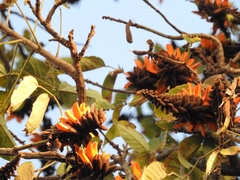 Erythrina bruceie0
- Outcome
- endemice0
Organisms pictured · Representative pictures of the matched species, not figures from the paper.
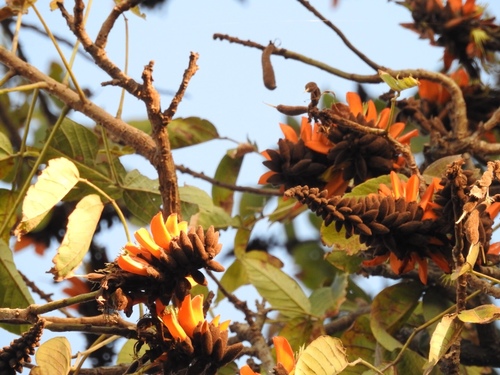
Verbatim
e0“two species, namely Millettia ferruginea (Hochst.) Baker and Erythrina brucei Schweinf., were registered as endemic.”
Claim · model-written summary
Enset-based agroforestry had the highest native-species proportion, 93.3%.
Verbatim
e0“The highest proportion of native species was recorded in enset based AF (93.3%), and the least were in C–Ft–E based AF (59%).”
Claim · model-written summary
Coffee–fruit tree–enset agroforestry had the lowest native-species proportion, 59%.
Verbatim
e0“The highest proportion of native species was recorded in enset based AF (93.3%), and the least were in C–Ft–E based AF (59%).”
Claim · model-written summary
Thirteen species were of conservation interest.
Verbatim
e0“According to the IUCN Red List and local criteria, 13 species were recorded as being of interest for conservation in all AF systems.”
Claim · model-written summary
Prunus africana was assessed as vulnerable and locally rare.
- Taxon
- Prunus africana
 Prunus africanae0
- Outcome
- vulnerable by IUCN Red List and raree0
Organisms pictured · Representative pictures of the matched species, not figures from the paper.

Verbatim
e0“The woody species Prunus africana was identified as both vulnerable by IUCN Red List and rare for 25% of species that least occur.”
Claim · model-written summary
Coffee–fruit tree–enset systems differed significantly from both others in Shannon diversity and richness.
- Taxon
- AF systemse0
- Outcome
- Shannon diversity index and richnesse0
- Comparator
- two remaining AF systemse0
- Setting
- C–Ft–E based AF systemse0
Not reportedDirection
Verbatim
e0“The Shannon diversity index and richness showed that C–Ft–E based AF systems were significantly different from the two remaining AF systems.”
Claim · model-written summary
Species abundance and evenness did not differ significantly among systems.
Verbatim
e0“the species abundance and evenness did not show significant differences between the three AF systems.”
Claim · model-written summary
Authors concluded these agroforestry systems have biodiversity conservation potential.
Verbatim
e0“retaining such numbers of woody and non-woody perennial plant species richness under the AF systems of the present study underlines their potential for biodiversity conservation.”