Abstract
Abstract Background We evaluated site suitability, early survival, and growth performance for Juniperus procera , Olea europaea subsp. cuspidata , Vachellia abyssinica , Hagenia abyssinica , and Afrocarpus falcatus in the urban landscape of Addis Ababa, Ethiopia. Methods The MaxEnt model was used to evaluate site suitability for the 5 indigenous species. For the early survival study, experimental plots were established and 500 seedlings, 100 seedlings for each species, were planted on 2021 July 15 and monitored until 2022 February 30 for a total of 225 days. Silvicultural activities such as mulching, weeding, and watering were conducted. Every 45 days, measurements of height, root collar diameter (RCD), death, damage, wilting, and defoliation were recorded. Results The result of the study indicated that the Addis Ababa area is well to moderately suitable to grow the 5 species. Mean survival rates marginally declined over the course of 225 days, from 99.6% at 45 days after planting to 90.4% at 225 days after planting. Eighteen V. abyssinica seedlings were found to be dead. Wild animals browsed and damaged 45% of O. europaea seedlings. H. abyssinica had the highest growth performance. The study shows that, relative to the other 4 species, V abyssinica had a greater number of wilted, defoliated, and dead seedlings. Conclusion Each of the 5 species had a high rate of early survival and found the urban environment to be suitable. This result will assist in the shift away from planting only exotic tree species in green spaces and encourage the presence of indigenous tree species.
Abstract from the paper’s OpenAlex record, shown for indexing and research. Copyright remains with the authors or the publisher. Read at the source ↗
The text the model read, with the source record’s inline markup (italics, sub- and superscripts) rendered and its character entities decoded; quote offsets refer to the raw text.
Claims 6
Claim · model-written summary
Addis Ababa was modeled as well to moderately suitable for the five tree species.
- Taxon
- Juniperus procera
 Juniperus procerae1
- Outcome
- suitable to grow the 5 speciese0
- Direction
- well to moderately suitablee0
- Setting
- Addis Ababae0
Not reportedComparatorValue
Organisms pictured · Representative pictures of the matched species, not figures from the paper.

Verbatim
e0“the Addis Ababa area is well to moderately suitable to grow the 5 species”
e1“Juniperus procera , Olea”
Claim · model-written summary
Mean seedling survival declined from 99.6% at day 45 to 90.4% at day 225.
- Taxon
- Juniperus proceraJuniperus procerae1
- Outcome
- Mean survival ratese0
- Direction
- declinede0
- Value
- 99.6%e0
- Qualifier
- 90.4% at 225 days after plantinge0
Organisms pictured · Representative pictures of the matched species, not figures from the paper.
Verbatim
e0“Mean survival rates marginally declined over the course of 225 days, from 99.6% at 45 days after planting to 90.4% at 225 days after planting”
e1“Juniperus procera , Olea”
Claim · model-written summary
Eighteen V. abyssinica seedlings died.
- Taxon
- V. abyssinica
 Vachellia abyssinicae0
- Outcome
- seedlings were found to be deade0
- Value
- Eighteene0
Organisms pictured · Representative pictures of the matched species, not figures from the paper.

Verbatim
e0“Eighteen V. abyssinica seedlings were found to be dead”
Claim · model-written summary
Wild animals browsed and damaged 45% of O. europaea seedlings.
- Taxon
- O. europaea
 Olea europaeae0
- Interactor
- Wild animalse0herbivore
- Outcome
- browsed and damagede0
- Value
- 45%e0
Organisms pictured · Representative pictures of the matched species, not figures from the paper.

Verbatim
e0“Wild animals browsed and damaged 45% of O. europaea seedlings”
Claim · model-written summary
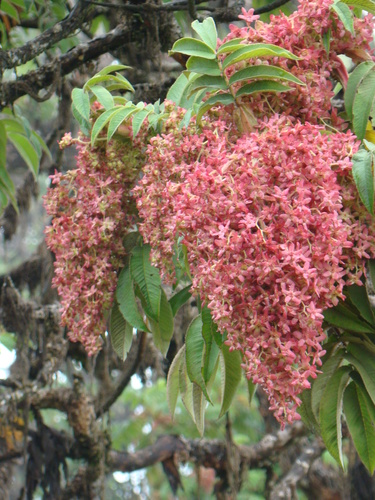
H. abyssinica had the highest growth performance.
- Taxon
- H. abyssinica
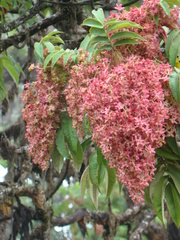 Hagenia abyssinicae0
- Outcome
- growth performancee0
- Direction
- higheste0
Organisms pictured · Representative pictures of the matched species, not figures from the paper.
Verbatim
e0“H. abyssinica had the highest growth performance”
Claim · model-written summary
V abyssinica had more wilted, defoliated and dead seedlings than the other four species.
- Taxon
- V abyssinicaVachellia abyssinicae0
- Outcome
- wilted, defoliated, and dead seedlingse0
- Direction
- greatere0
- Comparator
- the other 4 speciese0
Organisms pictured · Representative pictures of the matched species, not figures from the paper.
Verbatim
e0“relative to the other 4 species, V abyssinica had a greater number of wilted, defoliated, and dead seedlings”