Abstract
The current investigation aimed to assess the incidence and the population fluctuations of the main insect pests and associated predators on sugar beet plants and as well to determine their relation with temperature, relative humidity, precipitation, and mean numbers of leaves per plant at El-Hosinia district, Sharkia Governorate,Egypt during the two successive seasons of 2021/22 and 2022/23. The results revealed that Empoasca decipiens (Paoli) was the most dominant insect pest species constituting 51.72% of the general total numbers of pests. Moreover, it followed by Cicadulina chinai (Gauri), Pegomyia mixta (Vill.), and Myzus persicae (Sulzer), recording 34.61, 11.57, and 2.10%. The major predaceous species were Chrysoperla carnea (Steph.) (61.45%), and Coccinella undecimpunctata L. (38.55%). Statistical analysis proved that the combined effect of the tested ecological factors on the population activity of insect species was ranged from 36.47 to 64.14% in the first season and 56.76 and 92.62% in the second one. These findings would provide valuable knowledge for the researchers, farmers, and breeders of sugar beet in Egypt.
Abstract from the paper’s OpenAlex record; open copy licensed cc-by. Read at the source ↗
The text the model read, with the source record’s inline markup (italics, sub- and superscripts) rendered and its character entities decoded; quote offsets refer to the raw text.
Claims 8
Claim · model-written summary
Empoasca decipiens was the most dominant pest at 51.72% of total pest numbers.
- Taxon
- sugar beet plants
 Beta vulgaris subsp. vulgarise0
- Interactor
- Empoasca decipiens (Paoli)Hebata decipiense1pest
- Outcome
- Empoasca decipiens (Paoli)e1
- Direction
- most dominante1
- Value
- 51.72%e1
- Setting
- El-Hosinia district, Sharkia Governorate,Egypte2
Organisms pictured · Representative pictures of the matched species, not figures from the paper.

Verbatim
e0“sugar beet plants”
e1“Empoasca decipiens (Paoli) was the most dominant insect pest species constituting 51.72% of the general total numbers of pests.”
e2“El-Hosinia district, Sharkia Governorate,Egypt”
Claim · model-written summary
Cicadulina chinai represented 34.61% of pests.
- Taxon
- sugar beet plantsBeta vulgaris subsp. vulgarise0
- Interactor
- Cicadulina chinai (Gauri)e1pest
- Outcome
- Cicadulina chinai (Gauri)e1
- Value
- 34.61e1
Organisms pictured · Representative pictures of the matched species, not figures from the paper.
Verbatim
e0“sugar beet plants”
e1“it followed by Cicadulina chinai (Gauri), Pegomyia mixta (Vill.), and Myzus persicae (Sulzer), recording 34.61, 11.57, and 2.10%.”
Claim · model-written summary
Pegomyia mixta represented 11.57% of pests.
- Taxon
- sugar beet plantsBeta vulgaris subsp. vulgarise0
- Interactor
- Pegomyia mixta (Vill.)e1pest
- Outcome
- Pegomyia mixta (Vill.)e1
- Value
- 11.57e1
Organisms pictured · Representative pictures of the matched species, not figures from the paper.
Verbatim
e0“sugar beet plants”
e1“Pegomyia mixta (Vill.), and Myzus persicae (Sulzer), recording 34.61, 11.57, and 2.10%.”
Claim · model-written summary
Myzus persicae represented 2.10% of pests.
- Taxon
- sugar beet plantsBeta vulgaris subsp. vulgarise0
- Interactor
- Myzus persicae (Sulzer)
 Myzus persicaee1pest
- Outcome
- Myzus persicae (Sulzer)e1
- Value
- 2.10%e1
Organisms pictured · Representative pictures of the matched species, not figures from the paper.

Verbatim
e0“sugar beet plants”
e1“Myzus persicae (Sulzer), recording 34.61, 11.57, and 2.10%.”
Claim · model-written summary
Chrysoperla carnea accounted for 61.45% of major predators.
- Taxon
- sugar beet plantsBeta vulgaris subsp. vulgarise0
- Interactor
- Chrysoperla carnea (Steph.)
 Chrysoperla carneae1biocontrol_agent
- Outcome
- Chrysoperla carnea (Steph.)e1
- Value
- 61.45%e1
Organisms pictured · Representative pictures of the matched species, not figures from the paper.

Verbatim
e0“sugar beet plants”
e1“The major predaceous species were Chrysoperla carnea (Steph.) (61.45%), and Coccinella undecimpunctata L. (38.55%).”
Claim · model-written summary
Coccinella undecimpunctata accounted for 38.55% of major predators.
- Taxon
- sugar beet plantsBeta vulgaris subsp. vulgarise0
- Interactor
- Coccinella undecimpunctata L.
Coccinella undecimpunctatae1biocontrol_agent
- Outcome
- Coccinella undecimpunctata L.e1
- Value
- 38.55%e1
Organisms pictured · Representative pictures of the matched species, not figures from the paper.
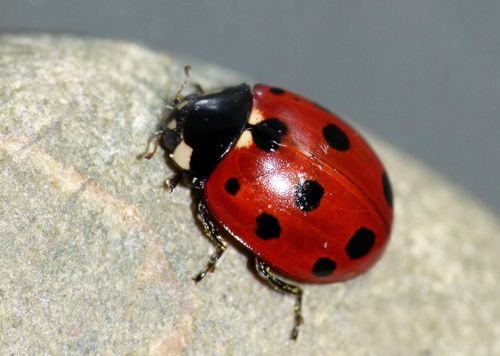
Verbatim
e0“sugar beet plants”
e1“Coccinella undecimpunctata L. (38.55%).”
Claim · model-written summary
Tested ecological factors jointly explained 36.47 to 64.14% of insect population activity in the first season.
- Taxon
- sugar beet plantsBeta vulgaris subsp. vulgarise0
- Treatment
- tested ecological factorse1
- Outcome
- population activity of insect speciese1
- Value
- 36.47 to 64.14%e1
- Qualifier
- first seasone1
Not reportedDirection
Organisms pictured · Representative pictures of the matched species, not figures from the paper.
Verbatim
e0“sugar beet plants”
e1“the combined effect of the tested ecological factors on the population activity of insect species was ranged from 36.47 to 64.14% in the first season”
Claim · model-written summary
Tested ecological factors jointly explained 56.76 to 92.62% of insect population activity in the second season.
- Taxon
- sugar beet plantsBeta vulgaris subsp. vulgarise0
- Treatment
- tested ecological factorse1
- Outcome
- population activity of insect speciese1
- Value
- 56.76 and 92.62%e1
- Qualifier
- second onee1
Not reportedDirection
Organisms pictured · Representative pictures of the matched species, not figures from the paper.
Verbatim
e0“sugar beet plants”
e1“the combined effect of the tested ecological factors on the population activity of insect species was ranged from 36.47 to 64.14% in the first season and 56.76 and 92.62% in the second one.”