Abstract
Lavandula angustifolia Mill., lavender, is an aromatic plant in the Lamiaceae family. Lavender is an important economic plant that is cultivated throughout the world. Previous studies have shown that the primary pollinators of lavender in Europe and North Africa are bee species, specifically Bombus spp. However, similar studies have not been previously performed in North America. The current study, on cultivated population lavender (grown from seed) in Utah (USA), found a diverse community of bees visiting lavender over a 4-week sequential and successive blooming period. The observed and identified bees were distinguished across 8 genera and 12 species, of which 3 were species not native to North America. The most observed bees were Apis mellifera (88.3%), Bombus fervidus (4.2%), and B. huntii (3.7%). To investigate seed production and viability, lavender plants were either caged off and their access withheld from pollinators, or selectively granted access to various pollinators, to determine (1) if lavender is capable of self-pollination, (2) if pollination increases both the seed production rates and seed viability of lavender, and (3) which bee species are the most efficient pollinators of lavender. The findings from this study demonstrate the ecological interactions between pollinators both native and non-native to North America on lavender, a plant native to the Mediterranean region.
Abstract from the paper’s OpenAlex record; open copy licensed cc-by. Read at the source ↗
The text the model read, with the source record’s inline markup (italics, sub- and superscripts) rendered and its character entities decoded; quote offsets refer to the raw text.
Claims 4
Claim · model-written summary
The observed and identified bees were distributed across 8 genera and 12 species, 3 of them not native to North America.
- Taxon
- Lavandula angustifolia
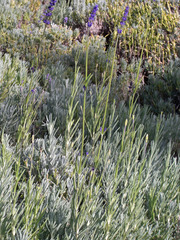 Lavandula angustifoliat0
- Interactor
- beesAnthophilae0pollinator
- Outcome
- observed and identified beese0
- Value
- 8 genera and 12 speciese0
- Qualifier
- of which 3 were species not native to North Americae0
Organisms pictured · Representative pictures of the matched species, not figures from the paper.
Verbatim
t0“Lavandula angustifolia Mill.”
e0“The observed and identified bees were distinguished across 8 genera and 12 species, of which 3 were species not native to North America”
Claim · model-written summary
Apis mellifera made up 88.3% of the observed bee visits to lavender.
- Taxon
- Lavandula angustifoliaLavandula angustifoliat0
- Interactor
- Apis mellifera
 Apis melliferae1pollinator
- Outcome
- most observed beese1
- Value
- 88.3%e1
Organisms pictured · Representative pictures of the matched species, not figures from the paper.

Verbatim
t0“Lavandula angustifolia Mill.”
e1“The most observed bees were Apis mellifera (88.3%), Bombus fervidus (4.2%), and B. huntii (3.7%)”
Claim · model-written summary
Bombus fervidus made up 4.2% of the observed bee visits to lavender.
- Taxon
- Lavandula angustifoliaLavandula angustifoliat0
- Interactor
- Bombus fervidus
 Bombus ferviduse1pollinator
- Outcome
- most observed beese1
- Value
- 4.2%e1
Organisms pictured · Representative pictures of the matched species, not figures from the paper.

Verbatim
t0“Lavandula angustifolia Mill.”
e1“The most observed bees were Apis mellifera (88.3%), Bombus fervidus (4.2%), and B. huntii (3.7%)”
Claim · model-written summary
B. huntii made up 3.7% of the observed bee visits to lavender.
- Taxon
- Lavandula angustifoliaLavandula angustifoliat0
- Interactor
- B. huntii
 Bombus huntiie1pollinator
- Outcome
- most observed beese1
- Value
- 3.7%e1
Organisms pictured · Representative pictures of the matched species, not figures from the paper.

Verbatim
t0“Lavandula angustifolia Mill.”
e1“The most observed bees were Apis mellifera (88.3%), Bombus fervidus (4.2%), and B. huntii (3.7%)”