Abstract
Phytoplasmas, rickettsiae and viruses have been detected in papaya plants with Bunchy Top disease (BT). In 2019, papaya plants with BT-like symptoms were observed in agroecosystems of Colima, Mexico. In order to determine the BT-associated phytoplasmas species or subgroups, asymptomatic and symptomatic plants were collected from papaya agroecosystems in four papaya producer municipalities, as well as papaya-associated weeds and insects. Phytoplasma detection and identification was conducted by PCR, sequencing and phylogenetics of translocase subunit SecA (secA) and 16S ribosomal RNA (16Sr) genes, and PCR-RFLPs in vitro and in silico for 16Sr gene. In papaya, phytoplasma groups 16SrI (subgroup AF), 16SrX, and 16SrXIII were identified in 2.08% (4 out of 192) symptomatic samples. The results of RFLPs in silico analysis showing the presence of 16SrX and 16SrXIII (sub)groups. In papaya-associated weeds and insects, phytoplasmas of group 16SrI (subgroups AF and B) were identified in 1.7% (3 out of 174) and 1.1% (2 out of 185) evaluated samples, respectively. Phytoplasma-carrying weeds were Amaranthus palmeri and Echinochloa colona; positive insects were Micrutalis calva and Balclutha mexicana. It is the first time that phytoplasmas 16SrI-AF, 16SrX y 16SrXIII are associated with Bunchy Top disease of papaya in agroecosystems from Colima, Mexico. Phytoplasmas 16SrX y 16SrXIII are first reported in papaya plants at the world level and in Mexico, respectively. Phytoplasma-carrying weeds and insects are new records as natural reservoirs and potential vectors.
Abstract from the paper’s OpenAlex record, shown for indexing and research. Copyright remains with the authors or the publisher. Read at the source ↗
The text the model read, with the source record’s inline markup (italics, sub- and superscripts) rendered and its character entities decoded; quote offsets refer to the raw text.
Claims 11
Claim · model-written summary
Symptomatic papaya samples contained phytoplasma groups 16SrI-AF, 16SrX and 16SrXIII in 2.08% of samples.
- Taxon
- papaya
 Carica papayae0
- Interactor
- phytoplasma
 Candidatus Phytoplasmae0pathogen
- Outcome
- phytoplasma groups 16SrI (subgroup AF), 16SrX, and 16SrXIIIe0
- Value
- 2.08%e0
Organisms pictured · Representative pictures of the matched species, not figures from the paper.


Verbatim
e0“In papaya, phytoplasma groups 16SrI (subgroup AF), 16SrX, and 16SrXIII were identified in 2.08% (4 out of 192) symptomatic samples.”
Claim · model-written summary
In silico RFLP analysis indicated 16SrX and 16SrXIII subgroups.
- Taxon
- papayaCarica papayat0
- Outcome
- presence of 16SrX and 16SrXIII (sub)groupse0
Organisms pictured · Representative pictures of the matched species, not figures from the paper.
Verbatim
e0“The results of RFLPs in silico analysis showing the presence of 16SrX and 16SrXIII (sub)groups.”
t0“papaya”
Claim · model-written summary
Phytoplasmas 16SrI-AF and B were detected in 1.7% of papaya-associated weed samples.
- Taxon
- weedse0
- Interactor
- phytoplasmasCandidatus Phytoplasmae0pathogen
- Outcome
- phytoplasmas of group 16SrI (subgroups AF and B)e0
- Value
- 1.7%e0
Organisms pictured · Representative pictures of the matched species, not figures from the paper.
Verbatim
e0“In papaya-associated weeds and insects, phytoplasmas of group 16SrI (subgroups AF and B) were identified in 1.7% (3 out of 174) and 1.1% (2 out of 185) evaluated samples, respectively.”
Claim · model-written summary
Phytoplasmas 16SrI-AF and B were detected in 1.1% of papaya-associated insect samples.
- Interactor
- phytoplasmasCandidatus Phytoplasmae0other
- Outcome
- phytoplasmas of group 16SrI (subgroups AF and B)e0
- Value
- 1.1%e0
Organisms pictured · Representative pictures of the matched species, not figures from the paper.
Verbatim
e0“In papaya-associated weeds and insects, phytoplasmas of group 16SrI (subgroups AF and B) were identified in 1.7% (3 out of 174) and 1.1% (2 out of 185) evaluated samples, respectively.”
Claim · model-written summary
Amaranthus palmeri was a phytoplasma-carrying weed, newly recorded as a natural reservoir.
- Taxon
- Amaranthus palmeri
 Amaranthus palmerie0
- Outcome
- Phytoplasma-carryinge0
- Qualifier
- new records as natural reservoirs and potential vectorse1
Organisms pictured · Representative pictures of the matched species, not figures from the paper.

Verbatim
e0“Phytoplasma-carrying weeds were Amaranthus palmeri and Echinochloa colona”
e1“Phytoplasma-carrying weeds and insects are new records as natural reservoirs and potential vectors.”
Claim · model-written summary
Echinochloa colona was a phytoplasma-carrying weed, newly recorded as a natural reservoir.
- Taxon
- Echinochloa colona
 Echinochloa colonae0
- Outcome
- Phytoplasma-carryinge0
- Qualifier
- new records as natural reservoirs and potential vectorse1
Organisms pictured · Representative pictures of the matched species, not figures from the paper.

Verbatim
e0“Phytoplasma-carrying weeds were Amaranthus palmeri and Echinochloa colona”
e1“Phytoplasma-carrying weeds and insects are new records as natural reservoirs and potential vectors.”
Claim · model-written summary
Micrutalis calva was phytoplasma-positive and a newly recorded potential vector.
- Taxon
- Micrutalis calva
 Micrutalis calvae0
- Outcome
- positivee0
- Qualifier
- potential vectorse1
Organisms pictured · Representative pictures of the matched species, not figures from the paper.
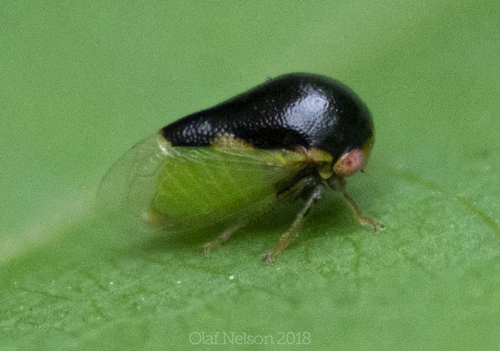
Verbatim
e0“positive insects were Micrutalis calva and Balclutha mexicana.”
e1“Phytoplasma-carrying weeds and insects are new records as natural reservoirs and potential vectors.”
Claim · model-written summary
Balclutha mexicana was phytoplasma-positive and a newly recorded potential vector.
Verbatim
e0“positive insects were Micrutalis calva and Balclutha mexicana.”
e1“Phytoplasma-carrying weeds and insects are new records as natural reservoirs and potential vectors.”
Claim · model-written summary
The association of phytoplasmas 16SrI-AF, 16SrX and 16SrXIII with papaya Bunchy Top was first reported in Colima.
- Taxon
- papayaCarica papayae0
- Interactor
- phytoplasmas 16SrI-AF, 16SrX y 16SrXIIIe0pathogen
- Outcome
- Bunchy Top diseasee0
- Setting
- Colima, Mexicoe0
Organisms pictured · Representative pictures of the matched species, not figures from the paper.
Verbatim
e0“It is the first time that phytoplasmas 16SrI-AF, 16SrX y 16SrXIII are associated with Bunchy Top disease of papaya in agroecosystems from Colima, Mexico.”
Claim · model-written summary
16SrX phytoplasmas were first reported in papaya worldwide.
- Taxon
- papayaCarica papayae0
- Interactor
- 16SrXe0pathogen
- Outcome
- first reportede0
- Qualifier
- at the world levele0
Organisms pictured · Representative pictures of the matched species, not figures from the paper.
Verbatim
e0“Phytoplasmas 16SrX y 16SrXIII are first reported in papaya plants at the world level and in Mexico, respectively.”
Claim · model-written summary
16SrXIII phytoplasmas were first reported in papaya in Mexico.
- Taxon
- papayaCarica papayae0
- Interactor
- 16SrXIIIe0pathogen
- Outcome
- first reportede0
- Setting
- Mexicoe0
Organisms pictured · Representative pictures of the matched species, not figures from the paper.
Verbatim
e0“Phytoplasmas 16SrX y 16SrXIII are first reported in papaya plants at the world level and in Mexico, respectively.”