Abstract
An exploration was conducted in Southern districts of Assam comprising of Karbiyanglong, Dima Hansao, Hailakandi and Karimgunj regions. With diverse agro climate coupled with varied soil and rainfall pattern, these regions are best suited for cultivating tuber crops and play significant role in food security of tribals inhabited. In hilly areas, tuber crops were grown mainly in jhums and in homestead farming, while in plains they are grown in small pockets under mixed cropping. Of the four districts explored, diversity in yam and taro were maximum in Karbianglong and Dima Hasao offering good scope for taxonomic studies. Farmers Interviewed during exploration reported a declining trend in the production and the number of local varieties maintained in individual farms since the past decade. The factors include displacement by other crops, little research attention, drought, short shelf life, shortage and non availability of planting material, limited knowledge among youth and susceptablity to new pests and diseases. In the present mission, a total of eighty nine (89) tuber crop species comprising of thirty five (35) yam, twenty eight (28) taro, eight (8) sweet potato, six (6) xanthosoma, five (5) tapioca, four (4) arrow root, two (2) elephant yam and one species of Stemona were collected. The study revealed that there is ample scope for multi-crop explorations combining crop wild relatives and landraces diversity.
Abstract from the paper’s OpenAlex record, shown for indexing and research. Copyright remains with the authors or the publisher. Read at the source ↗
The text the model read, with the source record’s inline markup (italics, sub- and superscripts) rendered and its character entities decoded; quote offsets refer to the raw text.
Claims 13
Claim · model-written summary
Yam and taro diversity was highest in Karbianglong and Dima Hasao among the four explored districts.
Verbatim
e0“Of the four districts explored, diversity in yam and taro were maximum in Karbianglong and Dima Hasao offering good scope for taxonomic studies”
Claim · model-written summary
Farmers reported a declining trend in tuber crop production and in the number of local varieties kept on their farms.
Verbatim
e1“Farmers Interviewed during exploration reported a declining trend in the production and the number of local varieties maintained in individual farms since the past decade”
e3“a total of eighty nine (89) tuber crop species comprising of thirty five (35) yam, twenty eight (28) taro, eight (8) sweet potato, six (6) xanthosoma, five (5) tapioca, four (4) arrow root, two (2) elephant yam and one species of Stemona were collected”
Claim · model-written summary
Farmers identified displacement by other crops, little research attention, drought, short shelf life and other factors as causes of the tuber crop decline.
Verbatim
e2“The factors include displacement by other crops, little research attention, drought, short shelf life, shortage and non availability of planting material, limited knowledge among youth and susceptablity to new pests and diseases”
e3“a total of eighty nine (89) tuber crop species comprising of thirty five (35) yam, twenty eight (28) taro, eight (8) sweet potato, six (6) xanthosoma, five (5) tapioca, four (4) arrow root, two (2) elephant yam and one species of Stemona were collected”
Claim · model-written summary
A total of 89 tuber crop species were collected during the exploration.
Verbatim
e3“a total of eighty nine (89) tuber crop species comprising of thirty five (35) yam, twenty eight (28) taro, eight (8) sweet potato, six (6) xanthosoma, five (5) tapioca, four (4) arrow root, two (2) elephant yam and one species of Stemona were collected”
Claim · model-written summary
Thirty-five yam species were collected.
Verbatim
e3“a total of eighty nine (89) tuber crop species comprising of thirty five (35) yam, twenty eight (28) taro, eight (8) sweet potato, six (6) xanthosoma, five (5) tapioca, four (4) arrow root, two (2) elephant yam and one species of Stemona were collected”
Claim · model-written summary
Twenty-eight taro species were collected.
- Taxon
- taro
 Colocasia esculentae3
- Outcome
- collectede3
- Value
- twenty eight (28)e3
Organisms pictured · Representative pictures of the matched species, not figures from the paper.

Verbatim
e3“a total of eighty nine (89) tuber crop species comprising of thirty five (35) yam, twenty eight (28) taro, eight (8) sweet potato, six (6) xanthosoma, five (5) tapioca, four (4) arrow root, two (2) elephant yam and one species of Stemona were collected”
Claim · model-written summary
Eight sweet potato accessions were collected.
- Taxon
- sweet potato
 Ipomoea batatase3
- Outcome
- collectede3
- Value
- eight (8)e3
Organisms pictured · Representative pictures of the matched species, not figures from the paper.

Verbatim
e3“a total of eighty nine (89) tuber crop species comprising of thirty five (35) yam, twenty eight (28) taro, eight (8) sweet potato, six (6) xanthosoma, five (5) tapioca, four (4) arrow root, two (2) elephant yam and one species of Stemona were collected”
Claim · model-written summary
Six xanthosoma accessions were collected.
- Taxon
- xanthosoma
 Xanthosomae3
- Outcome
- collectede3
- Value
- six (6)e3
Organisms pictured · Representative pictures of the matched species, not figures from the paper.

Verbatim
e3“a total of eighty nine (89) tuber crop species comprising of thirty five (35) yam, twenty eight (28) taro, eight (8) sweet potato, six (6) xanthosoma, five (5) tapioca, four (4) arrow root, two (2) elephant yam and one species of Stemona were collected”
Claim · model-written summary
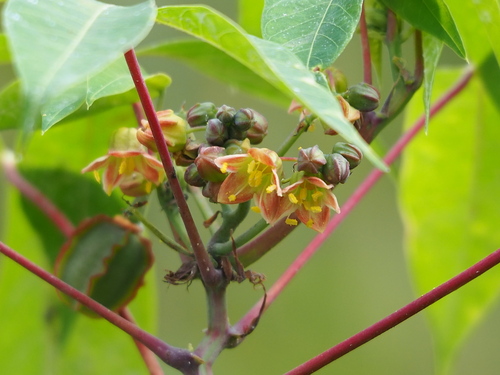
Five tapioca accessions were collected.
- Taxon
- tapioca
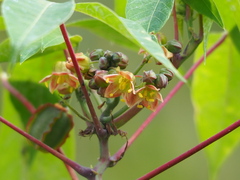 Manihot esculentae3
- Outcome
- collectede3
- Value
- five (5)e3
Organisms pictured · Representative pictures of the matched species, not figures from the paper.
Verbatim
e3“a total of eighty nine (89) tuber crop species comprising of thirty five (35) yam, twenty eight (28) taro, eight (8) sweet potato, six (6) xanthosoma, five (5) tapioca, four (4) arrow root, two (2) elephant yam and one species of Stemona were collected”
Claim · model-written summary
Four arrow root accessions were collected.
Verbatim
e3“a total of eighty nine (89) tuber crop species comprising of thirty five (35) yam, twenty eight (28) taro, eight (8) sweet potato, six (6) xanthosoma, five (5) tapioca, four (4) arrow root, two (2) elephant yam and one species of Stemona were collected”
Claim · model-written summary
Two elephant yam accessions were collected.
- Taxon
- elephant yam
 Amorphophallus konjace3
- Outcome
- collectede3
- Value
- two (2)e3
Organisms pictured · Representative pictures of the matched species, not figures from the paper.

Verbatim
e3“a total of eighty nine (89) tuber crop species comprising of thirty five (35) yam, twenty eight (28) taro, eight (8) sweet potato, six (6) xanthosoma, five (5) tapioca, four (4) arrow root, two (2) elephant yam and one species of Stemona were collected”
Claim · model-written summary
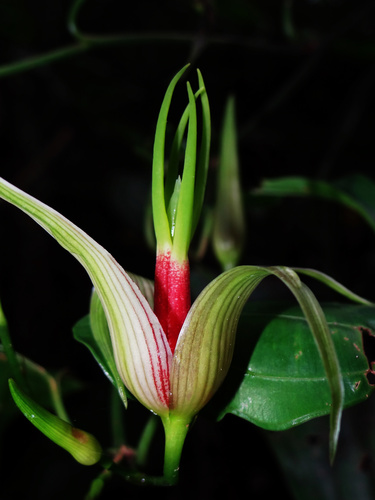
One Stemona species was collected.
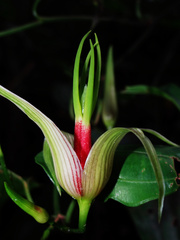 Stemona
Organisms pictured · Representative pictures of the matched species, not figures from the paper.
Verbatim
e3“a total of eighty nine (89) tuber crop species comprising of thirty five (35) yam, twenty eight (28) taro, eight (8) sweet potato, six (6) xanthosoma, five (5) tapioca, four (4) arrow root, two (2) elephant yam and one species of Stemona were collected”
Claim · model-written summary
There is ample scope for multi-crop explorations combining crop wild relatives and landraces diversity.
Verbatim
t0“Root and Tuber Crop Germplasm”
e4“The study revealed that there is ample scope for multi-crop explorations combining crop wild relatives and landraces diversity”