Abstract
The research was carried out in the Aravalli Forests of Nahargarh (NWLS) and Jamwa Ramgarh Wildlife Sanctuaries (JRWLS) of Jaipur, Rajasthan, India. The vegetation structure, composition, biodiversity and plant community types were assessed across the five forest stands viz Nahargarh biological park (S1), Nahargarh Sanctuary (S2) in NWLS and Ramgarh (S3), Raisar (S4), and Digota (S5) of JRWLS, respectively. A total of 164 qaudrats of 20*20 m2 were laid to assess the vegetation data including frequency, basal area, density, importance value index (IVI), biodiversity indices (Shannon-weiner, Simpson, Pielou and Margalef’s) and plant community types. The tree basal area ranged between 18.56 -34.36 m2/ha while stand density was 923-1433 tree/ha. Our study indicated the dominance of family Fabaceae with 20 species and 11 genera with Anogeissus pendula showing the maximum frequency, density, mean basal area and IVI. Further, the agglomerative hierarchal clustering showed five types of plant communities with Anogeissus-Adhatoda as the most widely spread community in these forests. Among the two sanctuaries, species diversity was higher for JRWLS (2.83) than NWLS (2.80). The current study provides important baseline data for forthcoming research on monitoring and preserving these forest’s biological diversity. The significance of present study will provide insight into the structure and variety of tree species in tropical dry deciduous forests.
Abstract from the paper’s OpenAlex record; open copy licensed cc-by. Read at the source ↗
The text the model read, with the source record’s inline markup (italics, sub- and superscripts) rendered and its character entities decoded; quote offsets refer to the raw text.
Claims 7
Claim · model-written summary
Tree basal area ranged from 18.56 to 34.36 m2/ha.
Verbatim
e0“The tree basal area ranged between 18.56 -34.36 m2/ha”
Claim · model-written summary
Stand density ranged from 923 to 1433 trees per hectare.
Verbatim
e0“stand density was 923-1433 tree/ha”
Claim · model-written summary
Fabaceae dominated with 20 species and 11 genera.
Verbatim
e0“dominance of family Fabaceae with 20 species and 11 genera”
Claim · model-written summary
Anogeissus pendula had the maximum frequency, density, mean basal area and IVI.
- Taxon
- Anogeissus pendula
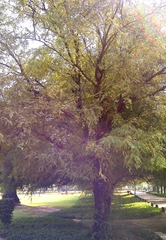 Terminalia pendulae0
- Outcome
- frequency, density, mean basal area and IVIe0
- Direction
- maximume0
Organisms pictured · Representative pictures of the matched species, not figures from the paper.

Verbatim
e0“Anogeissus pendula showing the maximum frequency, density, mean basal area and IVI”
Claim · model-written summary
Clustering distinguished five plant community types.
Not reportedTaxon
Verbatim
e0“agglomerative hierarchal clustering showed five types of plant communities”
Claim · model-written summary
Anogeissus-Adhatoda was the most widely spread community.
Verbatim
e0“Anogeissus-Adhatoda as the most widely spread community”
Claim · model-written summary
Species diversity was higher in JRWLS (2.83) than NWLS (2.80).
Not reportedTaxon
Verbatim
e0“species diversity was higher for JRWLS (2.83) than NWLS (2.80)”