Abstract
St. Petersburg is the largest city in the world north of 60° N. Urban areas neighbor on relatively undisturbed sites with natural south taiga landscapes (about 30% of the city area). The conventionally primary vegetation is represented by spruce, pine and black alder forests, different types of bogs, maritime meadows, coastal-aquatic vegetation. Secondary vegetation includes small-leaved forests and upland meadows. For many years, comprehensive environmental surveys of the city territories have been carried out in St. Petersburg in order to justify the feasibility of creating natural protected areas there. Currently, there are 17 protected areas of regional status in St. Petersburg with a total area of 92 km2. Another 17 territories (about 70 km2) have been surveyed and recognized as having a high conservation value. One of the tasks of geobotanical research is to identify plant communities rare in the city and needing protection. The existence of these communities is due to a number of factors related to the geographical location and history of the city’s development. The conservation value of communities The communities conservation value is based on their rarity and is determined by a number of criteria. Based on these criteria, four categories are proposed: floristic (dominance of a rare species), structural (combinations of structural components formed by species with contrasting ecological-coenotic characteristics), ecotopic (presence of rare ecotopic conditions), rare communities (encountered 1 to 3 times over the entire research). Totally, more than twenty types of rare communities have been identified. The first category includes communities with the species listed in the Red Book of St. Petersburg – Myrica gale, Viola uliginosa and Euphorbia palustris. The second category includes forest communities of Kotlin Island with structural features of the lower layers. The third, largest category includes small-leaved nemoral forb forests, maritime meadows, extrazonal broad-leaved forests and hazel bushes. Their existence is determined by rare ecotopic conditions, which depend on the coastal position and geological and geomorphological features of the city. The fourth category includes old-growth spruce forests, plant communities with rare species Equisetum hiemale and Carex brizoides, and unique for the city ridge-hollow-lake complex on the Sestroretskoye bog. The location within the city, characteristic habitats and dominants of the layers are described for each community. For many types of communities, tables with relevés are provided.
Abstract from the paper’s OpenAlex record, shown for indexing and research. Copyright remains with the authors or the publisher. Read at the source ↗
The text the model read, with the source record’s inline markup (italics, sub- and superscripts) rendered and its character entities decoded; quote offsets refer to the raw text.
Claims 7
Claim · model-written summary
Four categories of rare plant communities were proposed.
Verbatim
e0“four categories are proposed: floristic (dominance of a rare species), structural (combinations of structural components formed by species with contrasting ecological-coenotic characteristics), ecotopic (presence of rare ecotopic conditions), rare communities (encountered 1 to 3 times over the entire research)”
t0“plant communities”
Claim · model-written summary
More than twenty rare community types were identified.
Verbatim
e0“more than twenty types of rare communities have been identified”
t0“plant communities”
Claim · model-written summary
Floristic rare communities include stands dominated by Myrica gale, Viola uliginosa and Euphorbia palustris.
- Taxon
- Myrica gale, Viola uliginosa and Euphorbia palustris
 Myrica gale
 Euphorbia palustris
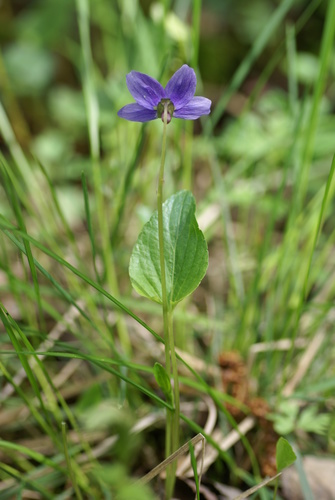
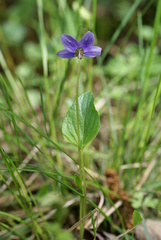 Viola uliginosae0
- Outcome
- communities with the species listed in the Red Book of St. Petersburge0
- Setting
- St. Petersburge0
Organisms pictured · Representative pictures of the matched species, not figures from the paper.


Verbatim
e0“The first category includes communities with the species listed in the Red Book of St. Petersburg – Myrica gale, Viola uliginosa and Euphorbia palustris”
Claim · model-written summary
Structural rarity includes forest communities on Kotlin Island.
Verbatim
e0“The second category includes forest communities of Kotlin Island with structural features of the lower layers”
Claim · model-written summary
The largest ecotopic category includes small-leaved nemoral forb forests, maritime meadows and extrazonal broad-leaved forests.
Verbatim
e0“The third, largest category includes small-leaved nemoral forb forests, maritime meadows, extrazonal broad-leaved forests and hazel bushes”
Claim · model-written summary
The ecotopic category also includes hazel bushes.
Verbatim
e0“The third, largest category includes small-leaved nemoral forb forests, maritime meadows, extrazonal broad-leaved forests and hazel bushes”
Claim · model-written summary
Old-growth spruce forests, communities with Equisetum hiemale and Carex brizoides, and a bog complex make up the fourth category.
Verbatim
e0“The fourth category includes old-growth spruce forests, plant communities with rare species Equisetum hiemale and Carex brizoides, and unique for the city ridge-hollow-lake complex on the Sestroretskoye bog”