Abstract
The sale of cattle presents a significant opportunity to improve livelihoods for smallholder farmers in eastern Indonesia. An opportunity was identified to grow herbaceous forage legumes either in rotation with, or sown within, staple grain crops (maize, rice) to use surplus soil moisture to produce a feed bank for (mostly penned) cattle and potentially increase nitrogen supply to the grain crops. A series of experiments was conducted on Vertisol, Alfisol and Inceptisol soils in lowland and upland districts of eastern Indonesia to identify legumes from 18 taxa suitable for integrated crop-forage systems. Clitoria ternatea and Centrosema pascuorum were found to have best potential for these systems as they established reliably using local methods, consistently ranked highly for herbage yields 2–4 months after sowing and were relatively easy to harvest. Yields were highest on the Vertisol (greatest number of sites) and Inceptisol soils. Lablab purpureus, Macroptilium bracteatum and Mucuna pruriens also ranked high for yield on Vertisol soils. Clitoria ternatea regrew consistently after cutting and forage removal providing potential for extended forage production as growing conditions allow.
Abstract from the paper’s OpenAlex record; open copy licensed cc-by. Read at the source ↗
The text the model read, with the source record’s inline markup (italics, sub- and superscripts) rendered and its character entities decoded; quote offsets refer to the raw text.
Claims 9
Claim · model-written summary
Clitoria ternatea was found to have the best potential among the tested herbaceous legumes for integrated crop-forage systems in eastern Indonesia.
- Taxon
- Clitoria ternatea
 Clitoria ternateae0
- Outcome
- best potential for these systemse0
Organisms pictured · Representative pictures of the matched species, not figures from the paper.

Verbatim
e0“Clitoria ternatea and Centrosema pascuorum were found to have best potential for these systems”
Claim · model-written summary
Centrosema pascuorum was found to have the best potential among the tested herbaceous legumes for integrated crop-forage systems in eastern Indonesia.
- Taxon
- Centrosema pascuorum
 Centrosema pascuorume0
- Outcome
- best potential for these systemse0
Organisms pictured · Representative pictures of the matched species, not figures from the paper.

Verbatim
e0“Clitoria ternatea and Centrosema pascuorum were found to have best potential for these systems”
Claim · model-written summary
Clitoria ternatea consistently ranked highly for herbage yield 2-4 months after sowing.
- Taxon
- Clitoria ternateaClitoria ternateae0
- Outcome
- herbage yieldse1
- Direction
- ranked highlye1
- Qualifier
- 2–4 months after sowinge1
Organisms pictured · Representative pictures of the matched species, not figures from the paper.
Verbatim
e0“Clitoria ternatea and Centrosema pascuorum were found to have best potential for these systems”
e1“consistently ranked highly for herbage yields 2–4 months after sowing”
Claim · model-written summary
Centrosema pascuorum consistently ranked highly for herbage yield 2-4 months after sowing.
- Taxon
- Centrosema pascuorumCentrosema pascuorume0
- Outcome
- herbage yieldse1
- Direction
- ranked highlye1
- Qualifier
- 2–4 months after sowinge1
Organisms pictured · Representative pictures of the matched species, not figures from the paper.
Verbatim
e0“Clitoria ternatea and Centrosema pascuorum were found to have best potential for these systems”
e1“consistently ranked highly for herbage yields 2–4 months after sowing”
Claim · model-written summary
Clitoria ternatea regrew consistently after cutting and forage removal, offering potential for extended forage production.
- Taxon
- Clitoria ternateaClitoria ternateae0
- Outcome
- regrew consistently after cuttinge0
Not reportedDirection
Organisms pictured · Representative pictures of the matched species, not figures from the paper.
Verbatim
e0“Clitoria ternatea regrew consistently after cutting and forage removal”
Claim · model-written summary
Legume yields were highest on the Vertisol and Inceptisol soils.
Verbatim
e0“Yields were highest on the Vertisol (greatest number of sites) and Inceptisol soils”
t0“herbaceous legumes”
Claim · model-written summary
Lablab purpureus also ranked high for yield on Vertisol soils.
- Taxon
- Lablab purpureus
 Lablab purpureuse0
- Outcome
- yielde0
- Direction
- ranked highe0
- Setting
- Vertisol soilse0
Organisms pictured · Representative pictures of the matched species, not figures from the paper.

Verbatim
e0“Lablab purpureus, Macroptilium bracteatum and Mucuna pruriens also ranked high for yield on Vertisol soils”
Claim · model-written summary
Macroptilium bracteatum also ranked high for yield on Vertisol soils.
- Taxon
- Macroptilium bracteatum
 Macroptilium bracteatume0
- Outcome
- yielde0
- Direction
- ranked highe0
- Setting
- Vertisol soilse0
Organisms pictured · Representative pictures of the matched species, not figures from the paper.
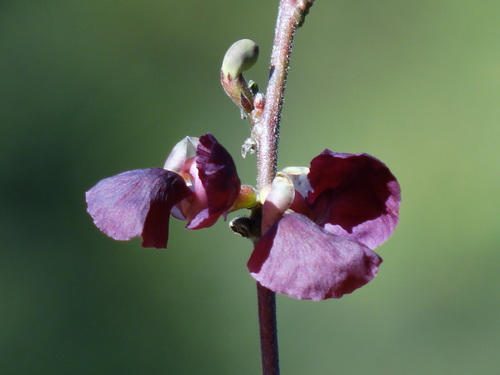
Verbatim
e0“Lablab purpureus, Macroptilium bracteatum and Mucuna pruriens also ranked high for yield on Vertisol soils”
Claim · model-written summary
Mucuna pruriens also ranked high for yield on Vertisol soils.
- Taxon
- Mucuna pruriens
 Mucuna pruriense0
- Outcome
- yielde0
- Direction
- ranked highe0
- Setting
- Vertisol soilse0
Organisms pictured · Representative pictures of the matched species, not figures from the paper.

Verbatim
e0“Lablab purpureus, Macroptilium bracteatum and Mucuna pruriens also ranked high for yield on Vertisol soils”