Abstract
The rise of drug-resistant fungal pathogens has intensified the need for novel antifungal agents. Plants are a significant source, although effective concentrations in extracts are often low. Accurate in vitro assays are essential for validating these compounds. This study uses the micro-colony method, measuring hyphal growth and cell diameter under a microscope with digital imaging, to assess antifungal activity quickly and precisely. We evaluated Origanum onites essential oil and Taraxacum officinale methanol extract against drug-resistant Candida albicans and Aspergillus fumigatus strains. Yeast cell pigmentation was also assessed using image processing tools. To enhance compound penetration, mono and divalent salts (100mM KCl, NaCl, CaCl2) were added to the media. In salt-free media, Origanum onites essential oil inhibited Candida albicans (MIC: 0.3 μl/ml; MFC: 0.03 μl/ml) and Aspergillus fumigatus (MIC: 0.15 μl/ml; MFC: 0.03 μl/ml), while Taraxacum officinale extract was ineffective. Salt stress increased Origanum onites activity against Aspergillus fumigatus (MIC: 0.075 μl/ml) but had minimal impact on Candida albicans. Salt stress enabled Taraxacum officinale extract to inhibit Candida albicans (EC50: 12.71 μg/ml) and reduced its pigmentation dose-dependently without affecting toxicity against Aspergillus fumigatus. These results demonstrate that the micro-colony assay effectively evaluates plant-derived antifungal compounds and detects subtle dose-response variations in pathogenic fungi
Abstract from the paper’s OpenAlex record; open copy licensed cc-by-nc. Read at the source ↗
The text the model read, with the source record’s inline markup (italics, sub- and superscripts) rendered and its character entities decoded; quote offsets refer to the raw text.
Claims 7
Claim · model-written summary
Salt stress increased the antifungal activity of Origanum onites against Aspergillus fumigatus (MIC 0.075 μl/ml).
- Taxon
- Origanum onites
 Origanum onitese1
- Treatment
- Salt stresse1
- Interactor
- Aspergillus fumigatus
 Aspergillus fumigatuse1pathogen
- Outcome
- activitye1
- Direction
- increasede1
- Value
- 0.075 μl/mle1
Not reportedComparator
Organisms pictured · Representative pictures of the matched species, not figures from the paper.


Verbatim
e1“Salt stress increased Origanum onites activity against Aspergillus fumigatus (MIC: 0.075 μl/ml)”
Claim · model-written summary
In salt-free media, Taraxacum officinale extract was ineffective against the tested fungi.
- Taxon
- Taraxacum officinale
 Taraxacum officinalee1
- Interactor
- Candida albicans
 Candida albicanse1pathogen
- Outcome
- Taraxacum officinale extracte1
- Comparator
- In salt-free mediae1
Not reportedDirection
Organisms pictured · Representative pictures of the matched species, not figures from the paper.
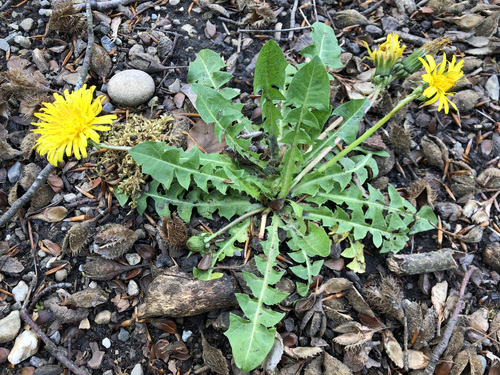

Verbatim
e1“In salt-free media, Origanum onites essential oil inhibited Candida albicans (MIC: 0.3 μl/ml; MFC: 0.03 μl/ml) and Aspergillus fumigatus (MIC: 0.15 μl/ml; MFC: 0.03 μl/ml), while Taraxacum officinale extract was ineffective”
Claim · model-written summary
Salt stress enabled Taraxacum officinale extract to inhibit Candida albicans (EC50 12.71 μg/ml).
- Taxon
- Taraxacum officinaleTaraxacum officinalee1
- Treatment
- Salt stresse1
- Interactor
- Candida albicansCandida albicanse1pathogen
- Outcome
- inhibite1
- Direction
- inhibite1
- Value
- 12.71 μg/mle1
Not reportedComparator
Organisms pictured · Representative pictures of the matched species, not figures from the paper.
Verbatim
e1“Salt stress enabled Taraxacum officinale extract to inhibit Candida albicans (EC50: 12.71 μg/ml)”
Claim · model-written summary
Salt stress reduced Candida albicans pigmentation in a dose-dependent manner.
- Taxon
- Taraxacum officinaleTaraxacum officinalee1
- Treatment
- Salt stresse1
- Interactor
- Candida albicansCandida albicanse1pathogen
- Outcome
- pigmentatione1
- Direction
- reducede1
- Qualifier
- dose-dependentlye1
Not reportedComparator
Organisms pictured · Representative pictures of the matched species, not figures from the paper.
Verbatim
e1“Salt stress enabled Taraxacum officinale extract to inhibit Candida albicans (EC50: 12.71 μg/ml) and reduced its pigmentation dose-dependently”
Claim · model-written summary
Salt-stressed Taraxacum officinale extract did not change toxicity against Aspergillus fumigatus.
- Taxon
- Taraxacum officinaleTaraxacum officinalet0
- Treatment
- Salt stresse1
- Interactor
- Aspergillus fumigatusAspergillus fumigatuse1pathogen
- Outcome
- toxicity against Aspergillus fumigatuse1
- Direction
- without affectinge1
Not reportedComparator
Organisms pictured · Representative pictures of the matched species, not figures from the paper.
Verbatim
t0“Origanum onites Essential Oil and Taraxacum officinale Extract”
e1“Salt stress enabled Taraxacum officinale extract to inhibit Candida albicans (EC50: 12.71 μg/ml) and reduced its pigmentation dose-dependently without affecting toxicity against Aspergillus fumigatus”
Claim · model-written summary
Origanum onites essential oil inhibited Candida albicans in salt-free media (MIC 0.3 μl/ml; MFC 0.03 μl/ml).
- Taxon
- Origanum onitesOriganum onitest0
- Interactor
- Candida albicansCandida albicanse1pathogen
- Outcome
- inhibitede1
- Direction
- inhibitede1
- Value
- MIC: 0.3 μl/mle1
- Comparator
- In salt-free mediae1
Organisms pictured · Representative pictures of the matched species, not figures from the paper.
Verbatim
t0“Origanum onites Essential Oil and Taraxacum officinale Extract”
e1“In salt-free media, Origanum onites essential oil inhibited Candida albicans (MIC: 0.3 μl/ml; MFC: 0.03 μl/ml)”
Claim · model-written summary
Origanum onites essential oil inhibited Aspergillus fumigatus in salt-free media (MIC 0.15 μl/ml; MFC 0.03 μl/ml).
- Taxon
- Origanum onitesOriganum onitest0
- Interactor
- Aspergillus fumigatusAspergillus fumigatuse1pathogen
- Outcome
- inhibitede1
- Direction
- inhibitede1
- Value
- MIC: 0.15 μl/mle1
- Comparator
- salt-free mediae1
Organisms pictured · Representative pictures of the matched species, not figures from the paper.
Verbatim
t0“Origanum onites Essential Oil and Taraxacum officinale Extract”
e1“In salt-free media, Origanum onites essential oil inhibited Candida albicans (MIC: 0.3 μl/ml; MFC: 0.03 μl/ml) and Aspergillus fumigatus (MIC: 0.15 μl/ml; MFC: 0.03 μl/ml)”