Abstract
Objective: Southeast Asia's agricultural diversity is shaped by its varied agro-climatic conditions, including diverse farming practices, rainfall patterns, and soil types. India, in particular, is home to a wide range of Abelmoschus species, which are found in cultivated, semi-wild, and wild varieties. Methods: In this study, four species of the Abelmoschus genus were identified and documented: A. moschatus L., A. manihot L., A. esculentus L., and A. ficulneus L. Data was collected from 280 tribal individuals within the study area. Results: The present study aims to explore the traditional knowledge and utilization of wild and cultivated Abelmoschus fruit vegetables by indigenous communities in the deep tribal pockets of Jiwati Tehsil, Chandrapur district (Maharashtra). Among four species of the Abelmoschus genus, A. esculentus L. (FI-87%) is widely cultivated, while A. manihot L. (FI-59%) and A. moschatus L. (FI-47%) is predominantly wild, with occasional cultivation. In contrast, A. ficulneus L. (FI-48%) remains strictly wild. Fruits from these species are commonly incorporated into vegetable-based meals, serving as a significant dietary component. Conclusion: These fruit vegetables are known for their ethnomedical and pharmacological benefits, including their use in controlling blood sugar levels and improving digestion. Documenting these practices can provide valuable insights into sustainable food sources, medicinal plant conservation, and potential applications in modern healthcare.
Abstract from the paper’s OpenAlex record; open copy licensed cc-by. Read at the source ↗
The text the model read, with the source record’s inline markup (italics, sub- and superscripts) rendered and its character entities decoded; quote offsets refer to the raw text.
Claims 5
Claim · model-written summary
A. esculentus L. was widely cultivated with FI 87%.
- Taxon
- A. esculentus L.
 Abelmoschus esculentuse0
- Outcome
- widely cultivatede0
- Value
- FI-87%e0
Organisms pictured · Representative pictures of the matched species, not figures from the paper.

Verbatim
e0“A. esculentus L. (FI-87%) is widely cultivated, while A. manihot L. (FI-59%) and A. moschatus L. (FI-47%) is predominantly wild, with occasional cultivation.”
Claim · model-written summary
A. manihot L. was predominantly wild with occasional cultivation and FI 59%.
- Taxon
- A. manihot L.
 Abelmoschus manihote0
- Outcome
- predominantly wild, with occasional cultivatione0
- Value
- FI-59%e0
Organisms pictured · Representative pictures of the matched species, not figures from the paper.

Verbatim
e0“A. esculentus L. (FI-87%) is widely cultivated, while A. manihot L. (FI-59%) and A. moschatus L. (FI-47%) is predominantly wild, with occasional cultivation.”
Claim · model-written summary
A. moschatus L. was predominantly wild with occasional cultivation and FI 47%.
- Taxon
- A. moschatus L.
 Abelmoschus moschatuse0
- Outcome
- predominantly wild, with occasional cultivatione0
- Value
- FI-47%e0
Organisms pictured · Representative pictures of the matched species, not figures from the paper.
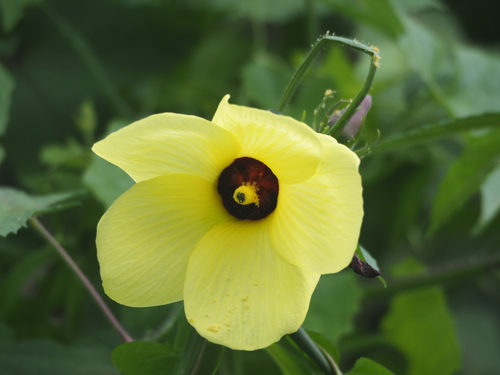
Verbatim
e0“A. esculentus L. (FI-87%) is widely cultivated, while A. manihot L. (FI-59%) and A. moschatus L. (FI-47%) is predominantly wild, with occasional cultivation.”
Claim · model-written summary
A. ficulneus L. remained strictly wild with FI 48%.
- Taxon
- A. ficulneus L.
 Abelmoschus ficulneuse0
- Outcome
- strictly wilde0
- Value
- FI-48%e0
Organisms pictured · Representative pictures of the matched species, not figures from the paper.

Verbatim
e0“In contrast, A. ficulneus L. (FI-48%) remains strictly wild.”
Claim · model-written summary
Fruits of the surveyed Abelmoschus species were commonly eaten as vegetables.
- Taxon
- ABELMOSCHUS
 Abelmoschust0
- Organ / stage
- Fruitse0
- Outcome
- commonly incorporated into vegetable-based mealse0
Organisms pictured · Representative pictures of the matched species, not figures from the paper.

Verbatim
e0“Fruits from these species are commonly incorporated into vegetable-based meals, serving as a significant dietary component.”
t0“ABELMOSCHUS”