Abstract
BACKGROUND: Traditional medicinal plants are central to healthcare, nutrition, and cultural practices in rural Ethiopia, yet ethnobotanical knowledge is underdocumented and increasingly threatened. This study aimed to document medicinal plant diversity, usage, preference, and conservation status in Menz Keya Gebreal District, North Shewa Zone, to inform sustainable management and pharmacological research. METHODS: Data were collected from 80 informants using semi-structured interviews, guided field walks, focus group discussions, and field observations. Quantitative ethnobotanical analyses included Informant Consensus Factor (ICF), Fidelity Level (FL), Relative Frequency of Citation (RFC), Relative Popularity Level (RPL), Rank Order Priority (ROP), Cultural Value Index (CVI), paired and preference ranking, and direct matrix ranking. Similarity with other Ethiopian districts was assessed using Jaccard's and Rahman's indices. Statistical analyses, including t-tests, ANOVA, correlation, and regression, were conducted using R to evaluate variation in knowledge across demographic groups. RESULTS: A total of 121 medicinal plant species from 61 families were documented, with Asteraceae, Fabaceae, and Euphorbiaceae being the most represented. Leaves were the most frequently used plant part, and oral administration was the predominant route of remedy preparation. High ICF values were observed for skin (0.87) and digestive disorders (0.82). Hagenia abyssinica (Bruce) J.F.Gmel., Ocimum lamiifolium Hochst. ex Benth., and Echinops kebericho Mesfin exhibited high FL, RFC, and ROP values, while Clutia abyssinica Jaub. & Spach and Euphorbia abyssinica J.F.Gmel.were prioritized for hepatitis treatment. Major threats to medicinal plants included agricultural expansion, overharvesting, and firewood collection. Ethnobotanical knowledge varied significantly by informant groups (P < 0.05). RSI and JSI revealed both shared and unique knowledge patterns across regions. Knowledge transfer occurred primarily within families, while sacred groves, home gardens, and cultural practices contributed to in situ conservation. CONCLUSION: Menz Keya Gebreal District harbors rich medicinal plant diversity and traditional knowledge, but anthropogenic pressures threaten their persistence. Integrating community-based conservation, sustainable harvesting, pharmacological validation, and youth-focused knowledge preservation is essential to safeguard this ethnobotanical heritage.
Abstract from the paper’s OpenAlex record; open copy licensed cc-by-nc-nd. Read at the source ↗
The text the model read, with the source record’s inline markup (italics, sub- and superscripts) rendered and its character entities decoded; quote offsets refer to the raw text.
Claims 14
Claim · model-written summary
The survey documented 121 medicinal plant species in 61 families.
Verbatim
e0“A total of 121 medicinal plant species from 61 families were documented”
Claim · model-written summary
Asteraceae, Fabaceae and Euphorbiaceae were most represented.
- Taxon
- Asteraceae, Fabaceae, and EuphorbiaceaeFabaceaeEuphorbiaceaeAsteraceaee0
- Outcome
- most representede0
Verbatim
e0“with Asteraceae, Fabaceae, and Euphorbiaceae being the most represented”
Claim · model-written summary
Leaves were the most frequently used plant part.
Not reportedTaxon
Verbatim
e0“Leaves were the most frequently used plant part”
Claim · model-written summary
Oral administration was the predominant remedy route.
- Outcome
- predominant route of remedy preparatione0
Not reportedTaxon
Verbatim
e0“oral administration was the predominant route of remedy preparation”
Claim · model-written summary
Skin disorders had an ICF of 0.87.
Not reportedTaxon
Verbatim
e0“High ICF values were observed for skin (0.87) and digestive disorders (0.82)”
Claim · model-written summary
Digestive disorders had an ICF of 0.82.
Not reportedTaxon
Verbatim
e0“High ICF values were observed for skin (0.87) and digestive disorders (0.82)”
Claim · model-written summary
Three named species had high FL, RFC and ROP values.
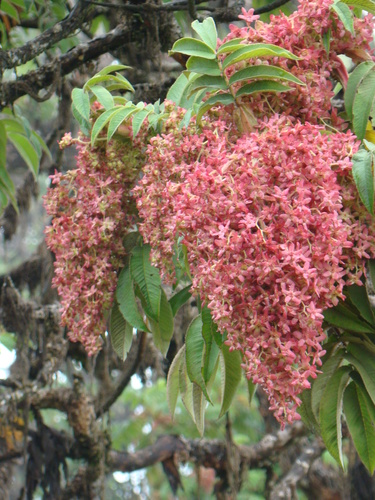
- Taxon
- Hagenia abyssinica
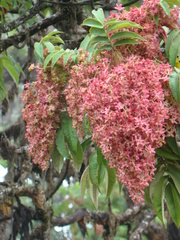 Hagenia abyssinicae0
- Outcome
- high FL, RFC, and ROP valuese0
Organisms pictured · Representative pictures of the matched species, not figures from the paper.
Verbatim
e0“Hagenia abyssinica (Bruce) J.F.Gmel., Ocimum lamiifolium Hochst. ex Benth., and Echinops kebericho Mesfin exhibited high FL, RFC, and ROP values”
Claim · model-written summary
Clutia abyssinica and Euphorbia abyssinica were prioritized for hepatitis treatment.
- Taxon
- Clutia abyssinica
 Clutia abyssinicae0
- Outcome
- prioritized for hepatitis treatmente0
Organisms pictured · Representative pictures of the matched species, not figures from the paper.

Verbatim
e0“Clutia abyssinica Jaub. & Spach and Euphorbia abyssinica J.F.Gmel.were prioritized for hepatitis treatment”
Claim · model-written summary
Agricultural expansion, overharvesting and firewood collection were major threats.
Verbatim
e0“Major threats to medicinal plants included agricultural expansion, overharvesting, and firewood collection”
Claim · model-written summary
Plant knowledge differed significantly among informant groups.
Not reportedTaxon
Verbatim
e0“Ethnobotanical knowledge varied significantly by informant groups (P < 0.05)”
Claim · model-written summary
Regional indices showed shared and unique knowledge patterns.
- Outcome
- both shared and unique knowledge patterns across regionse0
Not reportedTaxon
Verbatim
e0“RSI and JSI revealed both shared and unique knowledge patterns across regions”
Claim · model-written summary
Knowledge transfer occurred mainly within families.
- Outcome
- Knowledge transfer occurred primarily within familiese0
Not reportedTaxon
Verbatim
e0“Knowledge transfer occurred primarily within families”
Claim · model-written summary
Sacred groves, gardens and cultural practices contributed to in situ conservation.
- Outcome
- in situ conservatione0
Not reportedTaxon
Verbatim
e0“sacred groves, home gardens, and cultural practices contributed to in situ conservation”
Claim · model-written summary
Authors recommend conservation, sustainable harvesting, validation and youth knowledge preservation.
- Outcome
- Integrating community-based conservation, sustainable harvesting, pharmacological validation, and youth-focused knowledge preservatione0
Not reportedTaxon
Verbatim
e0“Integrating community-based conservation, sustainable harvesting, pharmacological validation, and youth-focused knowledge preservation is essential”