Abstract
Actinidia chinensis (kiwifruit) is a widely popular fruit prized for its nutritional value and unique flavor. In September 2024, postharvest soft rot symptoms were observed on ‘Jinfeng’ kiwifruits harvested from an orchard in Fengxin, Jiangxi, China (28.34 °N, 114.45 °E). Approximately 5% (15/300) of kiwifruits exhibited similar disease symptoms, progressing from initial peel browning to advanced-stage flesh soft rot, characterized by circular water-soaked lesions with desiccated white centers. For pathogen isolation, lesion margins (5 × 5 mm) were surface-sterilized in 75% ethanol for 30 s, triple-rinsed with sterile distilled water, and cultured on PDA at 25 ℃ for 5 days. Six pure isolate (K2-a to K2-f) were obtained. The colonies were dense and velvety with flat margins and peripheral wrinkles, featuring black centers with white edges, black powdery particles on the surface and yellow radial patterns on the reverse side. Conidiophores were spherical or ellipsoidal, with the entire conidiophores structure (including conidia) measuring 30 to 50 µm in diameter (n=20). The spherical conidia were 3 to 5 µm in diameter (n=50). The morphological characteristics of the isolates corresponded to the characteristics of Aspergillus spp. (Qi 1997). Genomic DNA of the isolates was extracted with a fungi genomic DNA extraction kit (Solarbio, Beijing, China). ITS1/4, BT2a/b and NL1/4 primers were used to amplify the ITS, TUB2 and large subunit ribosomal RNA (LSU) gene (White et al. 1990; Glass and Donaldson 1995). The ITS, TUB2 and LSU sequences of the isolates were deposited in GenBank and showed 97.81% to 100% identity with A. aculeatus. The phylogenetic analysis of ITS-TUB2 and ITS-LSU concatenated sequences showed the six isolates clustered with the A. aculeatus with 100% bootstrap support. To fulfill Koch’s postulates, 15 sterilized kiwifruits were wound-inoculated with spore suspension (10 µl, 106 spores/mL), while other 15 controls kiwifruits wound-inoculated with sterile distilled water, and all kiwifruits incubated at 25 ℃ under 80% RH in a controlled growth chamber. After 5 days, kiwifruits inoculated with spore suspension showed the same symptoms as the origin rot fruits, while the controls had no symptoms. A. aculeatus was reisolated from inoculated kiwifruits and confirmed using the methods described above. Although some Aspergillus species have been utilized for biological control and food fermentation, A. aculeatus has been reported to cause postharvest rots in citrus, peach and grape (Yodsing et al. 2018; Adisa and Fajola 1983; Kong et al. 2018; Tanapichatsakul et al. 2020). To our knowledge, this is the first report of A. aculeatus causing postharvest kiwifruit soft rot in China. This finding expands the known host range of this pathogenic fungus and underscores a potential phytosanitary threat for kiwifruit growers in the region.
Abstract from the paper’s OpenAlex record, shown for indexing and research. Copyright remains with the authors or the publisher. Read at the source ↗
The text the model read, with the source record’s inline markup (italics, sub- and superscripts) rendered and its character entities decoded; quote offsets refer to the raw text.
Claims 4
Claim · model-written summary
About 5% (15/300) of kiwifruits from an orchard in Fengxin, Jiangxi, China showed similar disease symptoms.
- Taxon
- Actinidia chinensis
 Actinidia chinensist0
- Outcome
- exhibited similar disease symptomse1
- Value
- 5% (15/300)e1
- Setting
- Fengxin, Jiangxi, Chinae2
Organisms pictured · Representative pictures of the matched species, not figures from the paper.

Verbatim
t0“Actinidia chinensis”
e1“Approximately 5% (15/300) of kiwifruits exhibited similar disease symptoms”
e2“harvested from an orchard in Fengxin, Jiangxi, China”
Claim · model-written summary
Isolates of the fungus showed 97.81% to 100% sequence identity with A. aculeatus.
- Taxon
- Actinidia chinensisActinidia chinensist0
- Interactor
- A. aculeatus
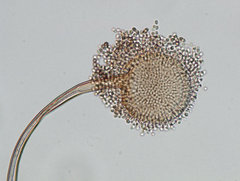 Aspergillus aculeatuse3pathogen
- Outcome
- identitye3
- Value
- 97.81% to 100%e3
Organisms pictured · Representative pictures of the matched species, not figures from the paper.

Verbatim
t0“Actinidia chinensis”
e3“showed 97.81% to 100% identity with A. aculeatus”
Claim · model-written summary
Aspergillus aculeatus was reisolated from inoculated kiwifruits.
- Taxon
- Actinidia chinensisActinidia chinensist0
- Interactor
- A. aculeatusAspergillus aculeatuse7pathogen
- Outcome
- was reisolatede7
Organisms pictured · Representative pictures of the matched species, not figures from the paper.
Verbatim
t0“Actinidia chinensis”
e7“A. aculeatus was reisolated from inoculated kiwifruits”
Claim · model-written summary
This is the first report of A. aculeatus causing postharvest soft rot of kiwifruit in China.
- Taxon
- Actinidia chinensisActinidia chinensist0
- Interactor
- A. aculeatusAspergillus aculeatuse1pathogen
- Outcome
- first reporte1
- Qualifier
- postharvest kiwifruit soft rote1
- Setting
- Chinae1
Organisms pictured · Representative pictures of the matched species, not figures from the paper.
Verbatim
t0“Actinidia chinensis”
e1“this is the first report of A. aculeatus causing postharvest kiwifruit soft rot in China”