Abstract
The genus Trollius L. remains insufficiently studied in Kazakhstan, necessitating comprehensive monitoring of its distribution and population status assessments. In Kazakhstan, this genus is represented by the following five species: T. asiaticus, T. altaicus, T. dschungaricus, T. lilacinus and T. komarovii. Of those, T. altaicus and T. dschungaricus are the most widely distributed. This study focuses on analyzing the population structure of Trollius altaicus and Trollius dschungaricus in relation to varying ecological and geographical conditions within Kazakhstan, along with conducting a comprehensive morphometric assessment. To study plant communities with Trollius L. species, classical geobotanical methods were applied, including the route-reconnaissance method to determine the species’ range and carry out a detailed population survey which involved the assessment of the age structure of populations and species composition of associated vegetation. Population structure analysis showed that the majority of T. altaicus plants were in the generative stage, with the right skewed age spectrum suggesting a decline in population size. Meanwhile, populations of T. dschungaricus were dominated by juvenile and virginal individuals, with the left skewed age spectrum suggesting a high regenerative potential. The morphometric analysis revealed high variability of plant height, number of leaves, flower diameter, diameter of generative bushes, number of basal leaves, and leaf length and width. The obtained results can serve as a basis for developing effective conservation and management strategies for T. altaicus and T. dschungaricus under ongoing climate change and anthropogenic impact. This research demonstrates that a detailed assessment of phenotypic characteristics is vital for formulating preservation frameworks and managing biological resources sustainably.
Abstract from the paper’s OpenAlex record; open copy licensed cc-by. Read at the source ↗
The text the model read, with the source record’s inline markup (italics, sub- and superscripts) rendered and its character entities decoded; quote offsets refer to the raw text.
Claims 3
Claim · model-written summary
T. altaicus populations were predominantly generative and suggested decline.
- Taxon
- T. altaicus
 Trollius altaicuse0
- Organ / stage
- generative stagee0
- Outcome
- right skewed age spectrum suggesting a decline in population sizee0
- Direction
- declinee0
Organisms pictured · Representative pictures of the matched species, not figures from the paper.

Verbatim
e0“the majority of T. altaicus plants were in the generative stage, with the right skewed age spectrum suggesting a decline in population size.”
Claim · model-written summary
T. dschungaricus populations were dominated by juvenile and virginal plants and suggested high regenerative potential.
- Taxon
- T. dschungaricus
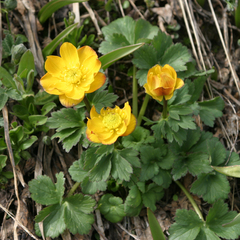 Trollius dschungaricuse0
- Organ / stage
- juvenile and virginale0
- Outcome
- high regenerative potentiale0
- Direction
- highe0
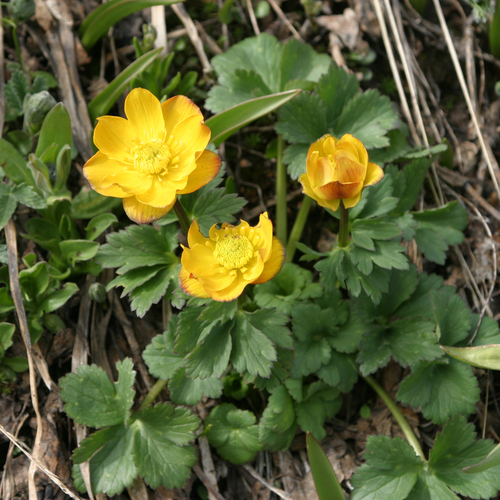
Organisms pictured · Representative pictures of the matched species, not figures from the paper.
Verbatim
e0“populations of T. dschungaricus were dominated by juvenile and virginal individuals, with the left skewed age spectrum suggesting a high regenerative potential.”
Claim · model-written summary
The measured Trollius morphometric traits were highly variable.
- Outcome
- high variability of plant height, number of leaves, flower diametere0
- Direction
- high variabilitye0
Not reportedTaxon
Verbatim
e0“The morphometric analysis revealed high variability of plant height, number of leaves, flower diameter, diameter of generative bushes, number of basal leaves, and leaf length and width.”