Abstract
Ethnoveterinary medicine remains a key component of livestock healthcare in rural Ethiopia, particularly in areas with limited access to modern veterinary services. This study documented ethnoveterinary medicinal plants, associated indigenous knowledge systems, and conservation challenges in Aseko District, Arsi Zone, southeastern Ethiopia, using a bilingual (English-Afaan Oromo) disease classification framework to improve diagnostic clarity and strengthen veterinary relevance. Data were collected from 182 informants across seven purposively selected kebeles representing highland, midland, and lowland agroecological zones. Semi-structured interviews, focus group discussions, guided field walks, preference ranking, direct matrix ranking, and local market surveys were employed following established ethnobotanical methods. Voucher specimens were collected, taxonomically authenticated, and deposited at the Ethiopian Biodiversity Institute (EBI) National Herbarium. A total of 66 ethnoveterinary medicinal plant species belonging to 49 families were documented. Herbs constituted the dominant growth form (42.4%), and most remedies were prepared from fresh plant materials harvested from wild habitats (66.7%). Leaves were the most frequently used plant part (46.5%), followed by roots and bark, while oral administration was the predominant route (67.5%). Gastrointestinal disorders, ecto-/endoparasitic infections, and dermatological diseases together accounted for 68.2% of total use reports. Informant Consensus Factor values ranged from 0.25 to 0.67, with the highest agreement observed for reproductive disorders, indicating relatively strong consensus among informants for specific ailment categories. Preference ranking identified Hagenia abyssinica, Zingiber officinale, and Embelia schimperi as the most preferred species for treating livestock diarrhoea. Despite high plant diversity, dependence on wild habitats combined with agricultural expansion and biomass extraction was identified as a major threat to long-term resource sustainability. The study demonstrates both the resilience and vulnerability of ethnoveterinary knowledge in a biodiverse but increasingly pressured landscape. Strengthening community-based conservation, systematic documentation of indigenous knowledge, and integration of validated ethnoveterinary practices into local livestock healthcare systems are strongly recommended.
Abstract from the paper’s OpenAlex record; open copy licensed cc-by. Read at the source ↗
The text the model read, with the source record’s inline markup (italics, sub- and superscripts) rendered and its character entities decoded; quote offsets refer to the raw text.
Claims 13
Claim · model-written summary
A total of 66 ethnoveterinary medicinal plant species belonging to 49 families were documented.
Verbatim
e1“A total of 66 ethnoveterinary medicinal plant species belonging to 49 families were documented”
Claim · model-written summary
Herbs were the dominant growth form of the documented plants (42.4%).
Verbatim
t0“Ethnoveterinary medicinal plants”
e2“Herbs constituted the dominant growth form (42.4%)”
Claim · model-written summary
Most remedies were prepared from fresh plant materials harvested from wild habitats (66.7%).
Verbatim
t0“Ethnoveterinary medicinal plants”
e3“most remedies were prepared from fresh plant materials harvested from wild habitats (66.7%)”
Claim · model-written summary
Leaves were the most frequently used plant part (46.5%), followed by roots and bark.
Verbatim
t0“Ethnoveterinary medicinal plants”
e4“Leaves were the most frequently used plant part (46.5%), followed by roots and bark”
Claim · model-written summary
Oral administration was the predominant route of remedy use (67.5%).
Verbatim
t0“Ethnoveterinary medicinal plants”
e5“oral administration was the predominant route (67.5%)”
Claim · model-written summary
Gastrointestinal disorders, ecto-/endoparasitic infections and dermatological diseases together accounted for 68.2% of total use reports.
Verbatim
t0“Ethnoveterinary medicinal plants”
e6“Gastrointestinal disorders, ecto-/endoparasitic infections, and dermatological diseases together accounted for 68.2% of total use reports”
Claim · model-written summary
Informant Consensus Factor values ranged from 0.25 to 0.67.
Verbatim
t0“Ethnoveterinary medicinal plants”
e7“Informant Consensus Factor values ranged from 0.25 to 0.67, with the highest agreement observed for reproductive disorders”
Claim · model-written summary
Informant agreement was highest for reproductive disorders.
Verbatim
t0“Ethnoveterinary medicinal plants”
e7“Informant Consensus Factor values ranged from 0.25 to 0.67, with the highest agreement observed for reproductive disorders”
Claim · model-written summary
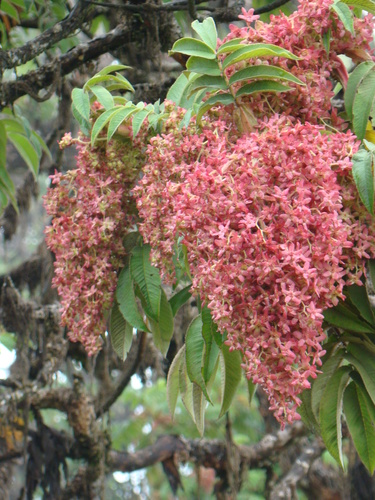
Hagenia abyssinica was the most preferred species for treating livestock diarrhoea in preference ranking.
- Taxon
- Hagenia abyssinica
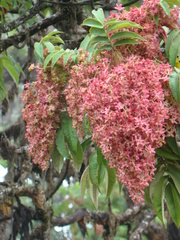 Hagenia abyssinicae0
- Outcome
- preference rankinge0
- Direction
- most preferrede0
- Qualifier
- for treating livestock diarrhoeae0
Organisms pictured · Representative pictures of the matched species, not figures from the paper.
Verbatim
e0“Preference ranking identified Hagenia abyssinica, Zingiber officinale, and Embelia schimperi as the most preferred species for treating livestock diarrhoea”
Claim · model-written summary
Zingiber officinale was among the most preferred species for treating livestock diarrhoea in preference ranking.
- Taxon
- Zingiber officinale
 Zingiber officinalee0
- Outcome
- preference rankinge0
- Direction
- most preferrede0
- Qualifier
- for treating livestock diarrhoeae0
Organisms pictured · Representative pictures of the matched species, not figures from the paper.

Verbatim
e0“Preference ranking identified Hagenia abyssinica, Zingiber officinale, and Embelia schimperi as the most preferred species for treating livestock diarrhoea”
Claim · model-written summary
Embelia schimperi was among the most preferred species for treating livestock diarrhoea in preference ranking.
- Taxon
- Embelia schimperiEmbelia schimperie0
- Outcome
- preference rankinge0
- Direction
- most preferrede0
- Qualifier
- for treating livestock diarrhoeae0
Verbatim
e0“Preference ranking identified Hagenia abyssinica, Zingiber officinale, and Embelia schimperi as the most preferred species for treating livestock diarrhoea”
Claim · model-written summary
Dependence on wild habitats combined with agricultural expansion and biomass extraction was identified as a major threat to long-term resource sustainability.
Verbatim
t0“Ethnoveterinary medicinal plants”
e0“dependence on wild habitats combined with agricultural expansion and biomass extraction was identified as a major threat to long-term resource sustainability”
Claim · model-written summary
Community-based conservation of ethnoveterinary medicinal plants is strongly recommended.
Verbatim
t0“Ethnoveterinary medicinal plants”
e1“Strengthening community-based conservation, systematic documentation of indigenous knowledge, and integration of validated ethnoveterinary practices into local livestock healthcare systems are strongly recommended”