Abstract
The present investigation was carried out to evaluate the parasitoids (Trichogramma raoi, T. chilonis), predator (Chrysoperla cornea) and biopesticides i.e. botanicals (neem based Gronim) / mocrobials (Bacillus thuringensis and Beauveria bassiana ) against five major insect pests viz. Polytela gloriosae, Anomis flava, Earias vitella, Dysdercus cingulatus and Aphis gossypi of important target species of medicinal plants- Abelmoschus moschatus, Gloriosa superba and Withania somnifera in forest nursery, Tropical Forest Research Institute, Jabalpur and Delakhari west Chhindwara forest division, Madhya Pradesh (India). The results revealed that Bacillus thuringensis 1% followed by neem based pesticide (Gronim) 1% was found to be most effective against defoliators Polytela gloriosae on G. superba, Anomis flava and shoot/fruit borer Earias vitella on A. moschatus. Neem based pesticide (Gronim) followed by Bt 1% was found to be most effective against red bug Dysdercus cingulatus on the fruits of A. moschatus and aphid, Aphis gossypi on W. somnifera. Predator, Chrysoperla cornea @ 500 per 100 sq m followed by parasitoid Trichogramma chilonis @1500 per 100 sq m was also found to be most effective for reduction of the larval population of defoliators P. gloriosae and A. flava.
Abstract from the paper’s OpenAlex record; open copy licensed cc-by. Read at the source ↗
The text the model read, with the source record’s inline markup (italics, sub- and superscripts) rendered and its character entities decoded; quote offsets refer to the raw text.
Claims 7
Claim · model-written summary
Bacillus thuringensis 1% was most effective against Polytela gloriosae on Gloriosa superba.
- Taxon
- G. superba
 Gloriosa superbae0
- Treatment
- Bacillus thuringensis 1%e0
- Interactor
- Polytela gloriosae
 Polytela gloriosaee0pest
- Second interactor
- Bacillus thuringensise0biocontrol_agent
- Outcome
- defoliators Polytela gloriosaee0
- Direction
- most effectivee0
- Comparator
- neem based pesticide (Gronim) 1%e0
Organisms pictured · Representative pictures of the matched species, not figures from the paper.


Verbatim
e0“Bacillus thuringensis 1% followed by neem based pesticide (Gronim) 1% was found to be most effective against defoliators Polytela gloriosae on G. superba”
Claim · model-written summary
Bacillus thuringensis 1% was most effective against Anomis flava on Abelmoschus moschatus.
- Taxon
- A. moschatus
 Abelmoschus moschatuse0
- Treatment
- Bacillus thuringensis 1%e0
- Interactor
- Anomis flava
 Anomis flavae0pest
- Second interactor
- Bacillus thuringensise0biocontrol_agent
- Outcome
- Anomis flavae0
- Direction
- most effectivee0
- Comparator
- neem based pesticide (Gronim) 1%e0
Organisms pictured · Representative pictures of the matched species, not figures from the paper.
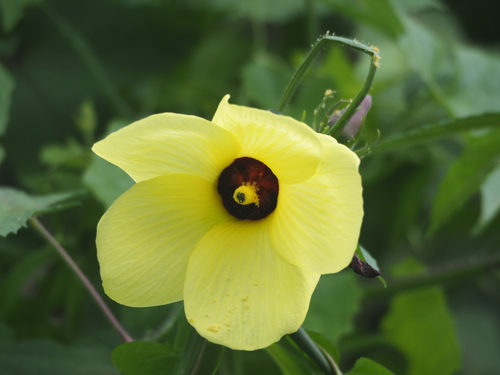

Verbatim
e0“Bacillus thuringensis 1% followed by neem based pesticide (Gronim) 1% was found to be most effective against defoliators Polytela gloriosae on G. superba, Anomis flava and shoot/fruit borer Earias vitella on A. moschatus”
Claim · model-written summary
Bacillus thuringensis 1% was most effective against Earias vitella on Abelmoschus moschatus.
- Taxon
- A. moschatusAbelmoschus moschatuse0
- Treatment
- Bacillus thuringensis 1%e0
- Interactor
- Earias vitella
 Earias vittellae0pest
- Second interactor
- Bacillus thuringensise0biocontrol_agent
- Outcome
- shoot/fruit borer Earias vitellae0
- Direction
- most effectivee0
- Comparator
- neem based pesticide (Gronim) 1%e0
Organisms pictured · Representative pictures of the matched species, not figures from the paper.

Verbatim
e0“Bacillus thuringensis 1% followed by neem based pesticide (Gronim) 1% was found to be most effective against defoliators Polytela gloriosae on G. superba, Anomis flava and shoot/fruit borer Earias vitella on A. moschatus”
Claim · model-written summary
Gronim was most effective against Dysdercus cingulatus on Abelmoschus moschatus fruit.
- Taxon
- A. moschatusAbelmoschus moschatuse0
- Organ / stage
- fruitse0
- Treatment
- Neem based pesticide (Gronim)e0
- Interactor
- Dysdercus cingulatus
 Dysdercus cingulatuse0pest
- Outcome
- red bug Dysdercus cingulatuse0
- Direction
- most effectivee0
- Comparator
- Bt 1%e0
Organisms pictured · Representative pictures of the matched species, not figures from the paper.

Verbatim
e0“Neem based pesticide (Gronim) followed by Bt 1% was found to be most effective against red bug Dysdercus cingulatus on the fruits of A. moschatus”
Claim · model-written summary
Gronim was most effective against Aphis gossypi on Withania somnifera.
- Taxon
- W. somnifera
 Withania somniferae0
- Treatment
- Neem based pesticide (Gronim)e0
- Interactor
- Aphis gossypie0pest
- Outcome
- aphid, Aphis gossypie0
- Direction
- most effectivee0
- Comparator
- Bt 1%e0
Organisms pictured · Representative pictures of the matched species, not figures from the paper.

Verbatim
e0“Neem based pesticide (Gronim) followed by Bt 1% was found to be most effective against red bug Dysdercus cingulatus on the fruits of A. moschatus and aphid, Aphis gossypi on W. somnifera”
Claim · model-written summary
Chrysoperla cornea at 500 per 100 sq m most effectively reduced Polytela gloriosae larvae.
- Taxon
- G. superbaGloriosa superbae1
- Treatment
- Chrysoperla cornea @ 500 per 100 sq me0
- Interactor
- P. gloriosaePolytela gloriosaee0pest
- Second interactor
- Chrysoperla corneae0biocontrol_agent
- Outcome
- larval population of defoliators P. gloriosaee0
- Direction
- reductione0
- Comparator
- Trichogramma chilonis @1500 per 100 sq me0
Organisms pictured · Representative pictures of the matched species, not figures from the paper.
Verbatim
e0“Predator, Chrysoperla cornea @ 500 per 100 sq m followed by parasitoid Trichogramma chilonis @1500 per 100 sq m was also found to be most effective for reduction of the larval population of defoliators P. gloriosae and A. flava”
e1“Polytela gloriosae on G. superba”
Claim · model-written summary
Chrysoperla cornea at 500 per 100 sq m most effectively reduced Anomis flava larvae.
- Taxon
- A. moschatusAbelmoschus moschatuse1
- Treatment
- Chrysoperla cornea @ 500 per 100 sq me0
- Interactor
- A. flavaAnomis flavae0pest
- Second interactor
- Chrysoperla corneae0biocontrol_agent
- Outcome
- larval population of defoliators P. gloriosae and A. flavae0
- Direction
- reductione0
- Comparator
- Trichogramma chilonis @1500 per 100 sq me0
Organisms pictured · Representative pictures of the matched species, not figures from the paper.
Verbatim
e0“Predator, Chrysoperla cornea @ 500 per 100 sq m followed by parasitoid Trichogramma chilonis @1500 per 100 sq m was also found to be most effective for reduction of the larval population of defoliators P. gloriosae and A. flava”
e1“Anomis flava and shoot/fruit borer Earias vitella on A. moschatus”