Abstract
This experiment was carried out to investigate occurrence ecology and control of soil-flakes in flood-direct seeded rice field. The occurrence of soil-flakes were inhibited in blue light of 450nm wave length and promoted in red light of 660nm wave length. The diatoms of Pinnularia spp. largely occurred in low fertilizer level and which much more increased when nitrogen was mixed with thinly soil depth. The diatoms of Pinnularia spp. were effectively controlled by carbamate and triazine herbicides when treated in pre-emergence of soil-flakes. Beside, triazine herbicides, simetryne, dimethametryn, prometryne 5g ai/10a showed high control effect in pre and post-emergence of soil-flakes. Expecially, In water-direct seeded rice pyrazosulfuron-methyl molinate simetryne 5.37% GR and dimepiperate bensulfuron dimethametryn 7.643% GR showed high control effect on the soil-flakes when treated at 10 days after seeding and didn't showed rice injury.
Abstract from the paper’s OpenAlex record, shown for indexing and research. Copyright remains with the authors or the publisher. Read at the source ↗
The text the model read, with the source record’s inline markup (italics, sub- and superscripts) rendered and its character entities decoded; quote offsets refer to the raw text.
Claims 6
Claim · model-written summary
Blue light inhibited soil-flake occurrence.
- Taxon
- Rice
 Oryza sativat0
- Treatment
- blue light of 450nm wave lengthe0
- Outcome
- occurrence of soil-flakese0
- Direction
- inhibitede0
Not reportedComparator
Organisms pictured · Representative pictures of the matched species, not figures from the paper.

Verbatim
e0“The occurrence of soil-flakes were inhibited in blue light of 450nm wave length”
t0“Rice”
Claim · model-written summary
Red light promoted soil-flake occurrence.
- Taxon
- RiceOryza sativat0
- Treatment
- red light of 660nm wave lengthe0
- Outcome
- Soil-flakest0
- Direction
- promotede0
Not reportedComparator
Organisms pictured · Representative pictures of the matched species, not figures from the paper.
Verbatim
e0“promoted in red light of 660nm wave length”
t0“Soil-flakes in Flood-direct Seeded Rice Field”
Claim · model-written summary
Pinnularia diatoms occurred largely at low fertilizer levels and increased with nitrogen at shallow soil depth.
- Taxon
- RiceOryza sativat0
- Interactor
- Pinnularia spp.
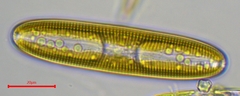 Pinnulariae0weed
- Outcome
- diatoms of Pinnularia spp.e0
- Direction
- increasede0
Organisms pictured · Representative pictures of the matched species, not figures from the paper.

Verbatim
e0“The diatoms of Pinnularia spp. largely occurred in low fertilizer level and which much more increased when nitrogen was mixed with thinly soil depth”
t0“Rice”
Claim · model-written summary
Pre-emergence carbamate and triazine herbicides effectively controlled Pinnularia diatoms.
- Taxon
- RiceOryza sativat0
- Treatment
- carbamate and triazine herbicidese0
- Interactor
- Pinnularia spp.Pinnulariae0weed
- Outcome
- diatoms of Pinnularia spp.e0
- Direction
- effectively controllede0
Not reportedComparator
Organisms pictured · Representative pictures of the matched species, not figures from the paper.
Verbatim
e0“The diatoms of Pinnularia spp. were effectively controlled by carbamate and triazine herbicides when treated in pre-emergence of soil-flakes”
t0“Rice”
Claim · model-written summary
Simetryne, dimethametryn and prometryne showed high soil-flake control before and after emergence.
- Taxon
- RiceOryza sativat0
- Treatment
- simetryne, dimethametryn, prometryne 5g ai/10ae0
- Outcome
- control effecte0
- Direction
- highe0
Not reportedComparator
Organisms pictured · Representative pictures of the matched species, not figures from the paper.
Verbatim
e0“simetryne, dimethametryn, prometryne 5g ai/10a showed high control effect in pre and post-emergence of soil-flakes”
t0“Rice”
Claim · model-written summary
The two herbicide granules gave high soil-flake control at 10 days after seeding without rice injury.
- Taxon
- RiceOryza sativat0
- Treatment
- pyrazosulfuron-methyl molinate simetryne 5.37% GR and dimepiperate bensulfuron dimethametryn 7.643% GRe0
- Outcome
- control effect on the soil-flakese0
- Direction
- highe0
- Qualifier
- didn't showed rice injurye0
Not reportedComparator
Organisms pictured · Representative pictures of the matched species, not figures from the paper.
Verbatim
e0“pyrazosulfuron-methyl molinate simetryne 5.37% GR and dimepiperate bensulfuron dimethametryn 7.643% GR showed high control effect on the soil-flakes when treated at 10 days after seeding and didn't showed rice injury”
t0“Rice”
The same questions in other papers
bensulfuron · control · Oryza sativa (rice)Positive and negative results
4 papers in the same direction as this paper · 1 in the opposite direction · 1 reporting no difference from an alternative
- negative
- no effect
- positive
3 papers more in this group
See all 7 papers →molinate · control · Oryza sativa (rice)Results agree
3 papers in the same direction as this paper
- positive
- positive
- positive
Claims are grouped by organism, treatment and what was measured or targeted. A paper counts as positive when any of its claims in the group is positive.