Abstract
The documentation of forest wealth in the Himalayas is of great importance because of biotic pressure on them. The applied system of management and conservation of forests is of immediate concern for the present and future generation. Such study is useful to known the type of plant community development through succession under single stand management system. The present study revealed the dominance of Cedrus deodara an endemic species of Indian Himalayas in all Periodic Blocks with maximum dominance in PB II. Among different PBs maximum diversity in species was found in PB IV with highest density of Quercus floribunda followed by Cedrus deodara and Pinus wallichiana. Among shrub species Berberis aristata showed maximum dominance in PB I, PB II and PB IV. However, Sarcococca saligna was dominant in PB III and as a next dominant species in PB I and PB II. It also showed highest density in PB I, PB II and PB III. While Berberis aristata indicated highest density in PB IV. Among herbaceous vegetation most dominant species was Eragrostis nutans in all periodic blocks. The maximum regeneration of Cedrus deodara was found in the decreasing trend as PBI >PB >PB >IV >PBIII >PBII. The maximum contribution to regeneration among various Periodic Blocks was of Cedrus deodara followed by Quercus floribunda, Pinus wallichiana and Quercus leucotrichophora.
Abstract from the paper’s OpenAlex record, shown for indexing and research. Copyright remains with the authors or the publisher. Read at the source ↗
The text the model read, with the source record’s inline markup (italics, sub- and superscripts) rendered and its character entities decoded; quote offsets refer to the raw text.
Claims 10
Claim · model-written summary
Cedrus deodara dominated every periodic block and peaked in PB II.
- Taxon
- Cedrus deodara
 Cedrus deodarae0
- Outcome
- dominancee0
- Direction
- maximume0
- Setting
- Indian Himalayase0
Organisms pictured · Representative pictures of the matched species, not figures from the paper.

Verbatim
e0“dominance of Cedrus deodara an endemic species of Indian Himalayas in all Periodic Blocks with maximum dominance in PB II”
Claim · model-written summary
Species diversity was highest in PB IV.
- Taxon
- Cedrus deodaraCedrus deodarat0
- Outcome
- diversity in speciese0
- Direction
- maximume0
- Setting
- PB IVe0
Organisms pictured · Representative pictures of the matched species, not figures from the paper.
Verbatim
e0“maximum diversity in species was found in PB IV”
t0“Cedrus deodara”
Claim · model-written summary
Quercus floribunda had the highest density in PB IV.
- Taxon
- Quercus floribunda
 Quercus floribundae0
- Outcome
- densitye0
- Direction
- higheste0
Organisms pictured · Representative pictures of the matched species, not figures from the paper.

Verbatim
e0“highest density of Quercus floribunda followed by Cedrus deodara and Pinus wallichiana”
Claim · model-written summary
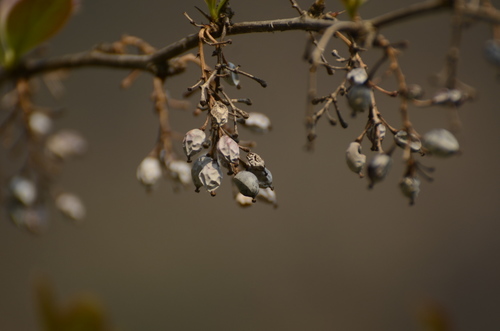
Berberis aristata had maximum shrub dominance in PB I, II and IV.
- Taxon
- Berberis aristata
 Berberis aristatae0
- Outcome
- dominancee0
- Direction
- maximume0
Organisms pictured · Representative pictures of the matched species, not figures from the paper.
Verbatim
e0“Berberis aristata showed maximum dominance in PB I, PB II and PB IV”
Claim · model-written summary
Sarcococca saligna was dominant in PB III and next dominant in PB I and II.
- Taxon
- Sarcococca saligna
 Sarcococca salignae0
- Outcome
- dominante0
- Setting
- PB IIIe0
Organisms pictured · Representative pictures of the matched species, not figures from the paper.

Verbatim
e0“Sarcococca saligna was dominant in PB III and as a next dominant species in PB I and PB II”
Claim · model-written summary
Sarcococca saligna had the highest density in PB I, II and III.
- Taxon
- Sarcococca salignaSarcococca salignat0
- Outcome
- densitye0
- Direction
- higheste0
Organisms pictured · Representative pictures of the matched species, not figures from the paper.
Verbatim
e0“It also showed highest density in PB I, PB II and PB III”
t0“However, Sarcococca saligna was dominant”
Claim · model-written summary
Berberis aristata had the highest density in PB IV.
- Taxon
- Berberis aristataBerberis aristatae0
- Outcome
- densitye0
- Direction
- higheste0
Organisms pictured · Representative pictures of the matched species, not figures from the paper.
Verbatim
e0“Berberis aristata indicated highest density in PB IV”
Claim · model-written summary
Eragrostis nutans was the dominant herb in all blocks.
- Taxon
- Eragrostis nutansEragrostis nutanse0
- Outcome
- most dominant speciese0
Verbatim
e0“most dominant species was Eragrostis nutans in all periodic blocks”
Claim · model-written summary
Cedrus deodara regeneration followed the stated block ranking.
- Taxon
- Cedrus deodaraCedrus deodarae0
- Outcome
- regeneration of Cedrus deodarae0
- Direction
- decreasinge0
- Qualifier
- PBI >PB >PB >IV >PBIII >PBIIe0
Organisms pictured · Representative pictures of the matched species, not figures from the paper.
Schema note from the model: Block ranking appears damaged in source text.
Verbatim
e0“maximum regeneration of Cedrus deodara was found in the decreasing trend as PBI >PB >PB >IV >PBIII >PBII”
Claim · model-written summary
Cedrus deodara made the largest contribution to regeneration.
- Taxon
- Cedrus deodaraCedrus deodarae0
- Outcome
- contribution to regeneratione0
- Direction
- maximume0
Organisms pictured · Representative pictures of the matched species, not figures from the paper.
Verbatim
e0“maximum contribution to regeneration among various Periodic Blocks was of Cedrus deodara followed by Quercus floribunda, Pinus wallichiana and Quercus leucotrichophora”