Abstract
Differential resistance to yellow sugarcane aphid, Sipha flava (Forbes), exists among Digitaria species. Differential resistance among species is expected on the basis of interspecific variation. Differential resistance to aphid damage exists among clones within species. Differences in insect resistance among clones within species are expected on the basis of intraspecific variation. Clones superior in insect resistance were delineated in this trial. The superior performance of phenotypes within species is masked by the average performance of the species. Significant negative correlations were found between insect resistance ratings and the number of rainy days and average temperature during a 28-day interval prior to rating. A model was calculated for the average behavior of species; it includes infestation expected on the basis of the number of rainy days and average temperature during the 28-day interval before rating. The model accounted for approximately 66 percent of the variability present.
Abstract from the paper’s OpenAlex record, shown for indexing and research. Copyright remains with the authors or the publisher. Read at the source ↗
The text the model read, with the source record’s inline markup (italics, sub- and superscripts) rendered and its character entities decoded; quote offsets refer to the raw text.
Claims 6
Claim · model-written summary
Digitaria species differ in resistance to yellow sugarcane aphid
- Interactor
- Sipha flava
 Sipha flavae1pest
- Outcome
- resistance to yellow sugarcane aphide1
 Digitaria
Organisms pictured · Representative pictures of the matched species, not figures from the paper.

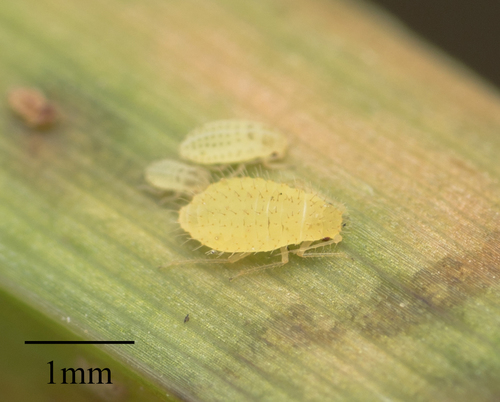
Verbatim
e1“Differential resistance to yellow sugarcane aphid, Sipha flava (Forbes), exists among Digitaria species”
Claim · model-written summary
Digitaria clones differ in resistance to aphid damage within species
- Material
- clonese2
- Interactor
- Sipha flavaSipha flavat0pest
- Outcome
- resistance to aphid damagee2
Organisms pictured · Representative pictures of the matched species, not figures from the paper.
Verbatim
e2“Differential resistance to aphid damage exists among clones within species”
t0“Resistance in Digitaria to Yellow Sugarcane Aphid, Sipha flava (Forbes)”
Claim · model-written summary
Superior Digitaria clones show higher insect resistance
Organisms pictured · Representative pictures of the matched species, not figures from the paper.
Verbatim
e3“Clones superior in insect resistance were delineated in this trial”
t0“Resistance in Digitaria to Yellow Sugarcane Aphid, Sipha flava (Forbes)”
Claim · model-written summary
Superior performance of phenotypes within Digitaria species is masked by species average performance
- Outcome
- superior performance of phenotypes within speciese4
- Qualifier
- masked by the average performance of the speciese4
Organisms pictured · Representative pictures of the matched species, not figures from the paper.
Verbatim
e4“The superior performance of phenotypes within species is masked by the average performance of the species”
t0“Resistance in Digitaria to Yellow Sugarcane Aphid, Sipha flava (Forbes)”
Claim · model-written summary
Insect resistance ratings of Digitaria are negatively correlated with rainy days and average temperature in the 28 days before rating
- Treatment
- the number of rainy days and average temperature during a 28-day interval prior to ratinge5
- Outcome
- insect resistance ratingse5
- Direction
- negativee5
Organisms pictured · Representative pictures of the matched species, not figures from the paper.
Verbatim
e5“Significant negative correlations were found between insect resistance ratings and the number of rainy days and average temperature during a 28-day interval prior to rating”
t0“Resistance in Digitaria to Yellow Sugarcane Aphid, Sipha flava (Forbes)”
Claim · model-written summary
The model of average species behaviour accounts for approximately 66 percent of the variability in aphid infestation
Verbatim
e6“The model accounted for approximately 66 percent of the variability present”