View: List Claim type Research area Organism Taxon as written Decade Paper Taxon: maize ✕
Taxon groups are the verbatim names found in the abstracts (case-insensitive), not normalised: maize, corn and Zea mays are separate groups here. The Organism view merges them through NCBI Taxonomy.
Observation observed original result measured Claim · model-written summary
Neutrality tests revealed a decrease in population size and/or balancing selection on the maize ZmBT1 locus.
population size and/or balancing selection e4 Verbatim
e4 “Neutrality tests revealed a decrease in population size and/or balancing selection on the maize ZmBT1 locus ”
✓ located verbatim in the source · abstract, characters 670–777 Other claims from this paper (3) Observation observed original result no effect not significant (as stated) measured Claim · model-written summary
About 93% of divergent regions showed no significant decrease in heterozygosity, suggesting they are not approaching fixation.
not approaching fixation e0 Verbatim
t0 “Maize ”
✓ located verbatim in the source · title, characters 50–55 e0 “Approximately 93% of the divergent regions do not demonstrate a significant decrease in heterozygosity, which suggests that they are not approaching fixation ”
✓ located verbatim in the source · abstract, characters 813–970 Other claims from this paper (5) Association observed original result projected Claim · model-written summary
Climate change is projected to decrease suitable areas for Dalbulus maidis
climate change e1 Verbatim
e0 “D. maidis is the main vector of three plant pathogens of maize crops
✓ located verbatim in the source · abstract, characters 136–204 e1 “climate change will lead to a decrease in suitable areas for D. maidis ”
✓ located verbatim in the source · abstract, characters 470–540 Other claims from this paper (5) Association observed original result projected Claim · model-written summary
In South America climate change is projected to decrease the areas suitable for the pest, especially in Brazil
climate change e2 areas suitable for the pest e2 Verbatim
e0 “D. maidis is the main vector of three plant pathogens of maize crops
✓ located verbatim in the source · abstract, characters 136–204 e1 “climate change will lead to a decrease in suitable areas for D. maidis ”
✓ located verbatim in the source · abstract, characters 470–540 e2 “In South America, climate change will decrease the areas suitable for the pest, especially in Brazil ”
✓ located verbatim in the source · abstract, characters 542–642 Other claims from this paper (5) Intervention effect observed original result negative measured Claim · model-written summary
Network complexity decrease d at N120.
network complexity e0 Not reported Comparator
Verbatim
t0 “maize ”
✓ located verbatim in the source · title, characters 71–76 e0 “a decrease in network complexity was observed at N120 ”
✓ located verbatim in the source · abstract, characters 1397–1450 Other claims from this paper (10) Observation observed original result measured Claim · model-written summary
Paired divergence FST between modern varieties and landraces decrease d over the same time frame.
paired divergence index (FST ) between MV-LR e0 Verbatim
e0 “a decrease in the paired divergence in dex (FST ) between MV-LR and MV-WR over the same time frame ”
✓ located verbatim in the source · abstract, characters 806–903 e1 “maize LRs ”
✓ located verbatim in the source · abstract, characters 479–488 Other claims from this paper (5) Intervention effect observed original result positive measured Claim · model-written summary
Ten generations of selection decrease d mean female flowering time by 26 days.
10 generations of directional selection e0 female-flowering time e0 Not reported Comparator
Verbatim
e0 “10 generations of directional selection, which resulted in a 26-day mean decrease in female-flowering time ”
✓ located verbatim in the source · abstract, characters 606–712 t0 “Maize ”
✓ located verbatim in the source · title, characters 74–79 Other claims from this paper (6) Observation observed original result measured Claim · model-written summary
Paired divergence FST between modern varieties and wild relatives decrease d over the same time frame.
paired divergence index (FST ) between MV-LR and MV-WR e0 Verbatim
e0 “a decrease in the paired divergence in dex (FST ) between MV-LR and MV-WR over the same time frame ”
✓ located verbatim in the source · abstract, characters 806–903 e1 “maize LRs ”
✓ located verbatim in the source · abstract, characters 479–488 Other claims from this paper (5) Observation observed original result measured Claim · model-written summary
The number of arable plant species in maize fields decrease d, in total and per relevé.
number of species e1 Verbatim
t0 “maize fields of Latium ”
✓ located verbatim in the source · title, characters 121–143 e1 “The results showed a relevant decrease in the number of species (both in the total number and in the mean number per relevé) ”
✓ located verbatim in the source · abstract, characters 460–584 Other claims from this paper (5) Association observed original result negative measured Claim · model-written summary
Advanced breeding cycles had fewer landraces with large contributions than ancestral lines.
lines from more advanced breeding cycles e1 number of landraces with a large contribution e1 ancestral lines directly derived from landraces e1 Verbatim
e0 “maize landraces ”
✓ located verbatim in the source · abstract, characters 322–337 e1 “Comparison of ancestral lines directly derived from landraces with lines from more advanced breeding cycles showed a decrease in the number of landraces with a large contribution ”
✓ located verbatim in the source · abstract, characters 1282–1460 Other claims from this paper (6) Lexical search (BM25). All words must match; if nothing does, any word. Organism names also match every spelling of the same organism. No semantic search yet.
 Zea mays
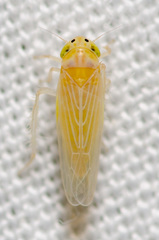 Dalbulus maidis