Claim · model-written summary
Reaumuria soongarica canopy size was positively related to distance from Allium polyrhizum.
- Taxon
- Reaumuria soongarica
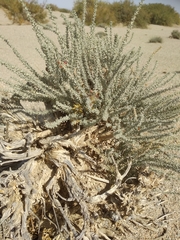 Reaumuria songaricat0
- Interactor
- A. polyrhizumAllium polyrhizume0other
- Outcome
- canopy size of R. soongaricae0
- Direction
- positively relatede0
Verbatim
t0“Reaumuria soongarica”
e0“the canopy size of R. soongarica was positively related to the distance from S. glareosa or A. polyrhizum”
Title
Chang-shun Wang; Hui-qing Wang; Wei Wang; et al. BMC Plant Biology 2022. doi:10.1186/s12870-022-03457-4
Other claims from this paper (10)
- Observation Reaumuria soongarica had the highest rhizosphere soil conductivity among the three species in five soil layers.
- Association High soil conductivity increased daily leaf salt secretion by Reaumuria soongarica.
- Association Reaumuria soongarica canopy size was positively related to distance from Stipa glareosa.
- Observation Reaumuria soongarica had significantly greater salt tolerance than Stipa glareosa.
- Observation Reaumuria soongarica had significantly greater salt tolerance than Allium polyrhizum.
- Observation Soil conductivity of 600 µS/cm marked a threshold for interspecific competition.
- Association Below 600 µS/cm, Reaumuria soongarica relative biomass increased as soil conductivity rose.
- Mechanism The authors conclude that efficient leaf salt secretion increases soil conductivity under the canopy.
- Mechanism The authors conclude that increased conductivity forms a saline island of Reaumuria soongarica.
- Mechanism The authors conclude that salt secretion and tolerance promote Reaumuria soongarica competitiveness and dominance in saline desert grassland.