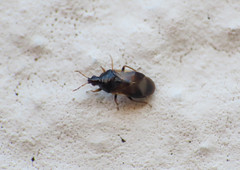
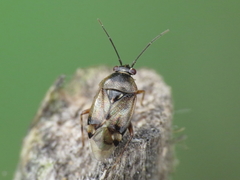
O. laevigatus 70 claims

Interactor role: biocontrol_agent, other

Literal values, not normalised. 183,098 distinct spellings cover 1,706,259 claims; only letter case and spacing are merged, so “maize”, “corn” and “Zea mays L.” are three separate entries here. The By interacting organism view merges spellings of one organism through NCBI Taxonomy.

Intervention effectobservedoriginal resultpositivemeasured

Claim · model-written summary

O. laevigatus reduced whitefly nymphs by 63.30%.

Treatment
O. laevigatuse0
Interactor
O. laevigatusOrius laevigatuse0biocontrol_agent
Outcome
nymphse0
Direction
reductione0
Value
63.30%e0

Not reportedComparator

Verbatim

e0

“O. laevigatus was slightly more effective against nymphs, with a 63.30% reduction.”

✓ located verbatim in the source · abstract, characters 760–842
t0

“Tomato Yield”

✓ located verbatim in the source · title, characters 104–116

Title

Synergistic Control of Bemisia tabaci Using Nesidiocoris tenuis and Orius laevigatus and Its Effects on Tomato Yield

Lassaad Mdallel; Abderrahman Mquitib; Abdallah Guerban; et al. Insects 2026. doi:10.3390/insects17060582

Other claims from this paper (9)
Intervention effectobservedoriginal resultpositivesignificant (as stated)measured

Claim · model-written summary

Orius laevigatus significantly reduced melon whitefly numbers.

Taxon
melonCucumis melot0
Treatment
O. laevigatuse2
Interactor
Bemisia tabaciBemisia tabacie1pest
Second interactor
O. laevigatusOrius laevigatuse2biocontrol_agente1
Outcome
whitefly numberse0
Direction
reducede0

Not reportedComparator

Verbatim

e0

“All three natural enemies independently significantly reduced whitefly numbers”

✓ located verbatim in the source · abstract, characters 864–942
t0

“Melons”

✓ located verbatim in the source · title, characters 111–117
e1

“Bemisia tabaci is a major pest of open-field melons in Mediterranean regions. Combining several species of natural enemies can improve pest control but it can give undesirable results when the species engage in antagonistic interactions. This study evaluated the effectiveness of Deraeocoris serenus, Orius laevigatus, and Eretmocerus eremicus as biological control agents and the interactions among the species.”

✓ located verbatim in the source · abstract, characters 0–412
e2

“O. laevigatus and E. eremicus achieved reductions of approximately 2.4-fold and 3.6-fold, respectively”

✓ located verbatim in the source · abstract, characters 1095–1197

Title

Intraguild Interactions Among Natural Enemies in the Trophic Web of Bemisia tabaci (Hemiptera: Aleyrodidae) on Melons

Elena López-Gallego; Luis Gabriel Perera-Fernández; María José Ramírez-Soria; et al. Insects 2025. doi:10.3390/insects16080838

Other claims from this paper (9)
Intervention effectobservedoriginal resultpositivemeasured

Claim · model-written summary

Orius laevigatus reduced whiteflies approximately 2.4-fold.

Taxon
melonCucumis melot0
Treatment
O. laevigatuse0
Interactor
Bemisia tabaciBemisia tabacie1pest
Second interactor
O. laevigatusOrius laevigatuse0biocontrol_agent
Outcome
reductionse0
Direction
reductionse0
Value
2.4-folde0

Not reportedComparator

Verbatim

e0

“O. laevigatus and E. eremicus achieved reductions of approximately 2.4-fold and 3.6-fold, respectively”

✓ located verbatim in the source · abstract, characters 1095–1197
t0

“Melons”

✓ located verbatim in the source · title, characters 111–117
e1

“Bemisia tabaci is a major pest of open-field melons in Mediterranean regions. Combining several species of natural enemies can improve pest control but it can give undesirable results when the species engage in antagonistic interactions. This study evaluated the effectiveness of Deraeocoris serenus, Orius laevigatus, and Eretmocerus eremicus as biological control agents and the interactions among the species.”

✓ located verbatim in the source · abstract, characters 0–412

Title

Intraguild Interactions Among Natural Enemies in the Trophic Web of Bemisia tabaci (Hemiptera: Aleyrodidae) on Melons

Elena López-Gallego; Luis Gabriel Perera-Fernández; María José Ramírez-Soria; et al. Insects 2025. doi:10.3390/insects16080838

Other claims from this paper (9)
Observationobservedoriginal resultmeasured

Claim · model-written summary

Deraeocoris serenus and Orius laevigatus mutually antagonized each other.

Taxon
melonCucumis melot0
Interactor
Deraeocoris serenusDeraeocoris serenuse0biocontrol_agent
Second interactor
O. laevigatusOrius laevigatuse0biocontrol_agent
Outcome
mutual antagonistic interactionse0

Verbatim

e0

“Deraeocoris serenus and O. laevigatus were found to engage in mutual antagonistic interactions”

✓ located verbatim in the source · abstract, characters 1316–1410
t0

“Melons”

✓ located verbatim in the source · title, characters 111–117

Title

Intraguild Interactions Among Natural Enemies in the Trophic Web of Bemisia tabaci (Hemiptera: Aleyrodidae) on Melons

Elena López-Gallego; Luis Gabriel Perera-Fernández; María José Ramírez-Soria; et al. Insects 2025. doi:10.3390/insects16080838

Other claims from this paper (9)
Observationobservedoriginal resultmeasured

Claim · model-written summary

The two predators interfered with the parasitoid.

Taxon
melonCucumis melot0
Interactor
Deraeocoris serenusDeraeocoris serenuse1biocontrol_agent
Second interactor
O. laevigatusOrius laevigatuse2biocontrol_agente1
Outcome
interfered with the parasitoide0

Verbatim

e0

“these two predators also interfered with the parasitoid”

✓ located verbatim in the source · abstract, characters 1416–1471
t0

“Melons”

✓ located verbatim in the source · title, characters 111–117
e1

“Bemisia tabaci is a major pest of open-field melons in Mediterranean regions. Combining several species of natural enemies can improve pest control but it can give undesirable results when the species engage in antagonistic interactions. This study evaluated the effectiveness of Deraeocoris serenus, Orius laevigatus, and Eretmocerus eremicus as biological control agents and the interactions among the species.”

✓ located verbatim in the source · abstract, characters 0–412
e2

“O. laevigatus and E. eremicus achieved reductions of approximately 2.4-fold and 3.6-fold, respectively”

✓ located verbatim in the source · abstract, characters 1095–1197

Title

Intraguild Interactions Among Natural Enemies in the Trophic Web of Bemisia tabaci (Hemiptera: Aleyrodidae) on Melons

Elena López-Gallego; Luis Gabriel Perera-Fernández; María José Ramírez-Soria; et al. Insects 2025. doi:10.3390/insects16080838

Other claims from this paper (9)
Observationobservedoriginal resultmeasured

Claim · model-written summary

O. laevigatus prefers young and tender chrysanthemum tissues for oviposition.

Taxon
chrysanthemumChrysanthemume2
Organ / stage
young and tender chrysanthemum tissuese2
Interactor
O. laevigatusOrius laevigatuse2other
Outcome
preferencee2

Verbatim

e2

“Our results show a preference of O. laevigatus for young and tender chrysanthemum tissues, where the survival of the nymphs was longer on a plant diet”

✓ located verbatim in the source · abstract, characters 585–735

Title

Differences in within‐plant oviposition preferences and immature survival between Orius predators and the importance of spatial availability of prey

Angelos Mouratidis; Christiaan Bootsma; Marcel Dicke; et al. Insect Science 2024. doi:10.1111/1744-7917.13465

Other claims from this paper (5)
Observationobservedoriginal resultmeasured

Claim · model-written summary

Nymphs of O. laevigatus survive longer on a plant diet of young chrysanthemum tissues.

Taxon
chrysanthemumChrysanthemume2
Organ / stage
young and tender chrysanthemum tissuese2
Interactor
O. laevigatusOrius laevigatuse2other
Outcome
survival of the nymphse2
Direction
longere2
Qualifier
on a plant diete2

Verbatim

e2

“Our results show a preference of O. laevigatus for young and tender chrysanthemum tissues, where the survival of the nymphs was longer on a plant diet”

✓ located verbatim in the source · abstract, characters 585–735

Title

Differences in within‐plant oviposition preferences and immature survival between Orius predators and the importance of spatial availability of prey

Angelos Mouratidis; Christiaan Bootsma; Marcel Dicke; et al. Insect Science 2024. doi:10.1111/1744-7917.13465

Other claims from this paper (5)
Intervention effectobservedoriginal resultmeasured

Claim · model-written summary

More eggs were laid in older chrysanthemum tissue when animal prey was offered lower on the plant.

Taxon
chrysanthemumChrysanthemume1
Organ / stage
older plant tissuee5
Treatment
animal prey was offered lower on the plante5
Interactor
O. laevigatusOrius laevigatuse6other
Outcome
eggs were laide5
Direction
moree5

Not reportedComparator

Verbatim

e1

“we assessed the oviposition and foraging preferences of O. laevigatus and O. majusculus on vegetative and flowering chrysanthemum plants”

✓ located verbatim in the source · abstract, characters 373–509
e5

“We found that more eggs were laid in older plant tissue when animal prey was offered lower on the plant”

✓ located verbatim in the source · abstract, characters 1205–1308
e6

“we tested the plasticity of the within-plant oviposition preferences of O. laevigatus”

✓ located verbatim in the source · abstract, characters 1046–1131

Title

Differences in within‐plant oviposition preferences and immature survival between Orius predators and the importance of spatial availability of prey

Angelos Mouratidis; Christiaan Bootsma; Marcel Dicke; et al. Insect Science 2024. doi:10.1111/1744-7917.13465

Other claims from this paper (5)
Observationobservedoriginal resultmeasured

Claim · model-written summary

All three Kalanchoe species were roughly equally suitable for Orius egg laying.

Taxon
KalanchoeKalanchoee0
Interactor
O. laevigatusOrius laevigatuse0biocontrol_agent
Outcome
suitable as substrates for egg-layinge0

Verbatim

e0

“all three Kalanchoe species are more or less equally suitable as substrates for egg-laying by O. laevigatus females”

✓ located verbatim in the source · abstract, characters 555–670

Title

Preference and performance of different Kalanchoe species for oviposition by females of a predatory bug Orius laevigatus (Fieber) (Heteroptera, Anthocoridae)

I. M. Pazyuk; S. Ya. Reznik; A. A. Razmyshlyaeva; et al. Энтомологическое обозрение 2024. doi:10.31857/s0367144524020011

Other claims from this paper (1)
Observationobservedoriginal resultpositivesignificant (as stated)measured

Claim · model-written summary

Among winter vegetables, substantial predators, chiefly O. laevigatus, were collected only from broad bean plants.

Taxon
broad bean plantsVicia fabae0
Interactor
O. laevigatusOrius laevigatuse0other
Outcome
number of predatorse0

Verbatim

e0

“Among winter vegetables, a significant number of predators, primarily O. laevigatus, were only collected from broad bean plants.”

✓ located verbatim in the source · abstract, characters 1172–1300

Title

Predatory insect species, and patterns of abundance of two common thrips species (Thysanoptera) and their predators on common crops

Ekrem Atakan Spanish Journal of Agricultural Research 2024. doi:10.5424/sjar/2024223-20899

Other claims from this paper (7)