Claim · model-written summary
Gnaphalium adnatum and Vernonia cinerea root biomass tended to rise in the nutrient-poor dry habitat.
- Taxon
- G. adnatum and V. cinerea
 Cyanthillium cinereum
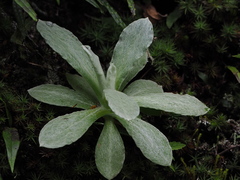 Pseudognaphalium adnatume0
- Outcome
- biomass of rootse0
- Direction
- increasing tendencye0
- Setting
- nutrient-poor and dry habitate0
Verbatim
e0“The biomass of roots of G. adnatum and V. cinerea in the nutrient-poor and dry habitat had an increasing tendency”
Title
Wang Ju-hon Shengtaixue zazhi 2014
Other claims from this paper (8)
- Observation Bidens pilosa stem biomass tended to rise in the nutrient-poor dry habitat.
- Observation Bidens pilosa leaf and capitulum biomass decreased there.
- Observation Conyza canadensis stem, leaf, capitulum and total biomass were greater in the nutrient-rich moist habitat.
- Observation Their stem and capitulum biomass decreased there.
- Observation Invasive plants regulated growth and biomass allocation in heterogeneous environments.
- Observation Module variation coefficients of three species exceeded those of Gnaphalium adnatum.
- Association Reproductive and nutritional modules showed a tendency toward allometry.
- Observation The authors inferred that the three species may have high phenotypic plasticity.