Claim · model-written summary
P. sorghina and C. sublineolum had the highest infection index in Maharashtra.
- Interactor
- P. sorghina
 Epicoccum sorghinume0pathogen
- Second interactor
- C. sublineolume0pathogen
- Outcome
- highest infection indexe0
- Setting
- Maharashtrae0
 Sorghum
Not reportedMaterialGeneCompoundOrgan / stageTreatmentComparatorDirectionValueQualifier
Organisms pictured · Representative pictures of the matched species, not figures from the paper.

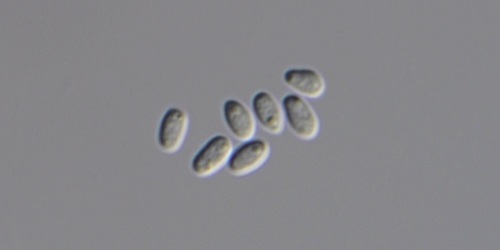
Verbatim
e0“A niger, C. lunata F. semitectum, P. sorghina and C. sublineolum were recorded with highest infection index from Maharashtra”
e2“seed-borne fungi of sorghum germplasm from seventeen states of India”
Title
Jameel Akhtar; Baleshwar Singh; Raj Kiran; et al. Indian Journal of Plant Genetic Resources 2020. doi:10.5958/0976-1926.2020.00047.9
Other claims from this paper (15)
- Observation A total of 43 fungal species in 23 genera were found on sorghum germplasm.
- Observation Fusarium verticillioides was a dominant seed-borne fungus causing grain mold of sorghum, with an average infection index of 26.27 ±20.96.
- Observation Alternaria alternata was a dominant seed-borne fungus causing grain mold of sorghum, with an average infection index of 19.30 ±15.05.
- Observation Aspergillus niger was a dominant seed-borne fungus causing grain mold of sorghum, with an average infection index of 14.40 ±7.42.
- Observation Fusarium semitectum was a dominant seed-borne fungus causing grain mold of sorghum, with an average infection index of 15.44 ±10.72%.
- Observation Aspergillus flavus was a dominant seed-borne fungus causing grain mold of sorghum, with an average infection index of 18.21 ±10.25.
- Observation Bipolaris sorghicola was a dominant seed-borne fungus causing grain mold of sorghum, with an average infection index of 16.68 ±9.51.
- Observation Curvularia lunata was a dominant seed-borne fungus causing grain mold of sorghum, with an average infection index of 11.51 ±8.49.
- Observation Colletotrichum sublineolum was a dominant seed-borne fungus causing grain mold of sorghum, with an average infection index of 15.81 ±9.26.
- Observation Phoma sorghina was a dominant seed-borne fungus causing grain mold of sorghum, with an average infection index of 14.51 ±12.99.
- Observation Fusarium verticillioides, Alternaria alternata and Exserohilum rostratum had the highest average infection index in Karnataka.
- Observation Aspergillus flavus had the highest average infection index in Telangana.
- Observation A. niger, C. lunata and F. semitectum had the highest infection index in Maharashtra.
- Association Seed-borne fungi significantly affected sorghum seed germination.
- Recommendation The findings may support long-term conservation, exploration, evaluation and characterization of sorghum germplasm.