Claim · model-written summary
Heavy Loranthus europaeus infestations can increase host mortality.
- Taxon
- Loranthus europaeus
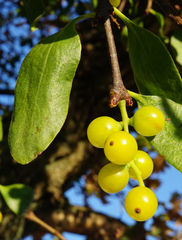 Loranthus europaeuse0
- Outcome
- mortalitye1
- Direction
- increasee1
 Quercus
Not reportedMaterialGeneCompoundOrgan / stageSecond interactorSecond interactor roleTreatmentComparatorSettingValueQualifier
Organisms pictured · Representative pictures of the matched species, not figures from the paper.
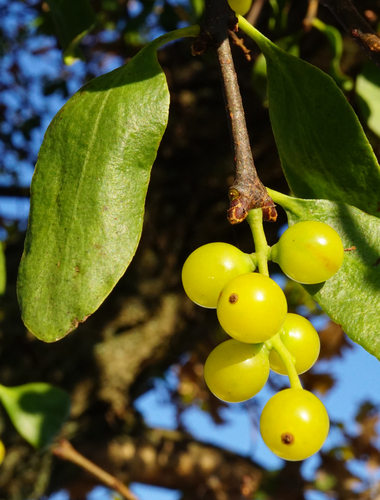

Verbatim
t0“International Biological Flora: Loranthus europaeus”
e0“Loranthus europaeus is a deciduous hemiparasite primarily infesting oaks ( Quercus spp.), although it can parasitize other deciduous trees”
e1“Heavy infestations can reduce host growth and vitality and increase mortality”
Title
International Biological Flora: Loranthus europaeus *
Roman Gebauer Journal of Ecology 2026. doi:10.1111/1365-2745.70311
Other claims from this paper (13)
- Association Heavy Loranthus europaeus infestations can reduce growth and vitality of oak hosts.
- Observation Loranthus europaeus exhibits high transpiration.
- Observation Loranthus europaeus has low water-use efficiency.
- Association Loranthus europaeus exacerbates host stress, particularly under drought conditions.
- Observation Loranthus europaeus is dioecious, with individual plants bearing either male or female flowers.
- Observation Seeds of Loranthus europaeus are dispersed by birds, especially thrushes.
- Association Germination and haustorial development of Loranthus europaeus depend on light and physical contact with the host.
- Association Distribution of Loranthus europaeus is influenced by climate, host availability and dispersal vectors.
- Observation Loranthus europaeus is distributed across southern, central and eastern Europe.
- Observation Loranthus europaeus prefers sun-exposed positions within the host crown.
- Observation Loranthus europaeus is rich in flavonoids, essential oils and fatty acids.
- Observation Loranthus europaeus plays an important ecological role in supporting biodiversity.
- Observation Loranthus europaeus poses a threat to forest health.