Claim · model-written summary
Tuft hair occurs on the adaxial leaf surfaces of O. affinis, O. corymbosa and O. diffusa.
- Taxon
- O. affinis, O. corymbosa, and O. diffusa
 Oldenlandia corymbosa
 Oldenlandia affinis
 Scleromitrion diffusume1
- Outcome
- Tuft haire1
- Qualifier
- adaxial leaf surfacese1
Not reportedMaterialGeneCompoundOrgan / stageInteractorInteractor roleSecond interactorSecond interactor roleTreatmentComparatorSettingDirectionValue
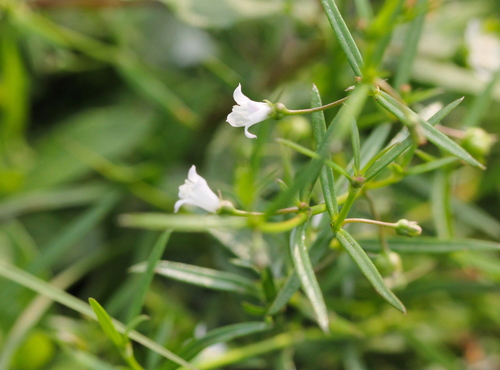
Organisms pictured · Representative pictures of the matched species, not figures from the paper.


Verbatim
e1“Tuft hair is absent in O. herbacea but occurred on the adaxial leaf surfaces of O. affinis, O. corymbosa, and O. diffusa”
Title
Chimezie Ekeke; Chinedum Alozie Oagzie; Josephine Agogbua Scientia Africana 2021. doi:10.4314/sa.v20i2.10
Other claims from this paper (10)
- Observation Epidermal cells of Oldenlandia are pentagonal to polygonal with straight, curved or wavy anticlinal walls.
- Observation Oldenlandia has paracytic stomata.
- Observation All Oldenlandia species have dorsiventral leaves with leaf vein vascular bundles embedded in the spongy mesophyll.
- Observation Midrib vascular bundles of Oldenlandia form an arc enclosed by parenchymatous endodermal cells.
- Observation O. herabcea is amphistomatic, while the other species are hypostomatic.
- Observation Raphide bundles occur only in the lamina of O. corymbosa.
- Observation Tuft hair is absent in O. herbacea.
- Observation The stem of O. diffusa is terete, while the other species have a quadrangular stem.
- Observation Papillae occur on the adaxial epidermis of O. affinis and O. corymbosa.
- Observation The stem pith thickness/cortical thickness ratio varied among the Oldenlandia species.