Claim · model-written summary
EUNI-2 had lower mean foliar necrosis severity than EUNI-1, though cluster-bootstrap support was weaker.
- Taxon
- Eucalyptus nitens
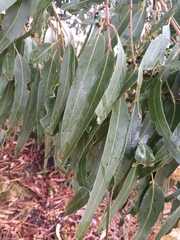 Eucalyptus nitenst0
- Material
- EUNI-2e0
- Outcome
- mean foliar necrosis severitye0
- Direction
- lowere0
- Value
- 18.67%e0
- Qualifier
- support for that contrast between seed lots was weaker under cluster-bootstrap inferencee0
- Comparator
- EUNI-1e0
Not reportedGeneCompoundOrgan / stageInteractorInteractor roleSecond interactorSecond interactor roleTreatmentSetting
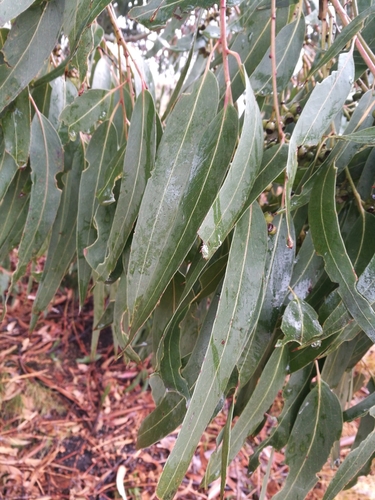
Organisms pictured · Representative pictures of the matched species, not figures from the paper.
Verbatim
e0“EUNI-2 also showed lower mean foliar necrosis severity than EUNI-1 (18.67% vs. 26.47%), but support for that contrast between seed lots was weaker under cluster-bootstrap inference”
t0“Eucalyptus nitens”
Title
Álvaro Benito-Delgado; Lucía Fernández; Carlos Tejedor; et al. Frontiers in Forests and Global Change 2026. doi:10.3389/ffgc.2026.1869817
Other claims from this paper (8)
- Association Lower planting density was associated with lower foliar necrosis severity.
- Association Lower planting density was associated with higher survival probability.
- Association Lower planting density was associated with greater post-2016 growth.
- Observation EUNI-2 survived more often than EUNI-1 through 2024: 92.5% versus 70.8%.
- Observation Leaf level sensitivity analysis indicated lower symptom intensity in EUNI-2.
- Association Leaf level sensitivity analysis indicated lower symptom intensity at the less dense end of the spacing gradient.
- Association Early foliar necrosis severity was not clearly associated with later growth.
- Method / resource A structured genetic trial can provide comparative host performance evidence for forest health surveillance and resource deployment.