Claim · model-written summary
Increasing invasion reduced nitrogen transformation rates in Poa rhizosphere.
- Taxon
- P. crymophila
 Poa crymophilae0
- Interactor
- E. jolkinii
 Euphorbia jolkiniie0weed
- Outcome
- transformation ratese0
- Direction
- reducede0
Not reportedMaterialGeneCompoundOrgan / stageSecond interactorSecond interactor roleTreatmentComparatorSettingValueQualifier
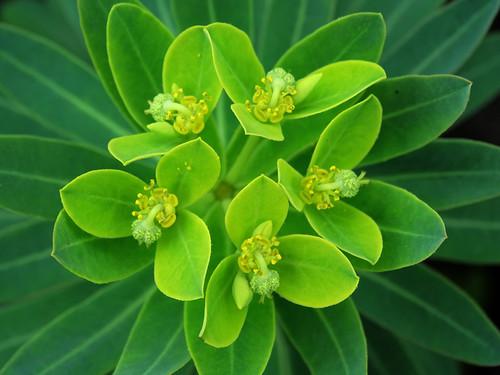
Organisms pictured · Representative pictures of the matched species, not figures from the paper.

Verbatim
e0“With E. jolkinii increasing invasion intensity, N accumulation and transformation rates were significantly reduced in the rhizosphere of P. crymophila but enhanced in that of E. jolkinii , particularly for AN”
Title
Xue Xiao; Qiongmei Niu; Kai Zhou; et al. Frontiers in Microbiology 2026. doi:10.3389/fmicb.2026.1757844
Other claims from this paper (7)
- Association Increasing Euphorbia invasion reduced nitrogen accumulation in Poa rhizosphere.
- Association Increasing invasion enhanced nitrogen accumulation in Euphorbia rhizosphere.
- Association Increasing invasion enhanced nitrogen transformation rates in Euphorbia rhizosphere.
- Observation Euphorbia invasion enriched N cycling genes in its rhizosphere microbial community.
- Association Invasion inhibited N transformation gene accumulation in Poa rhizosphere.
- Association Modeling identified Nitrospirota, Edaphobacter and Anaeromyxobacter as drivers of available nitrogen accumulation.
- Mechanism Authors interpret Euphorbia rhizosphere N accumulation as mediated by N transforming microbes and genes.