Claim · model-written summary
The HbPP2C6 gene showed a 33-fold increase in expression upon powdery mildew infection.
- Taxon
- Hevea brasiliensis
 Hevea brasiliensise0
- Treatment
- powdery mildew infectione7
- Interactor
- powdery mildewe7pathogen
- Gene
- HbPP2C6e7
- Outcome
- expressione7
- Direction
- remarkable 33-fold increasee7
- Value
- 33-folde7
Not reportedMaterialCompoundOrgan / stageSecond interactorSecond interactor roleComparatorSettingQualifier
Organisms pictured · Representative pictures of the matched species, not figures from the paper.
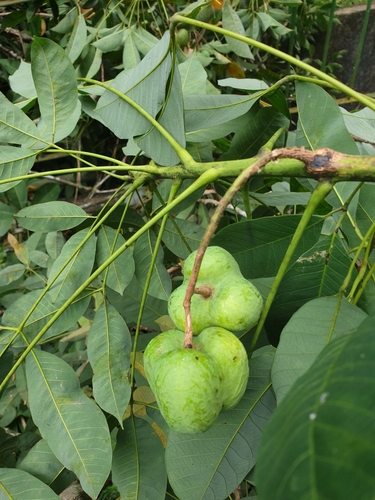
Verbatim
e0“rubber tree (Hevea brasiliensis)”
e7“the expression of A and F1 subfamily members was significantly upregulated upon powdery mildew infection, with the expression of the HbPP2C6 gene displaying a remarkable 33-fold increase”
Title
Qifeng Liu; Bi Qin; Dong Zhang; et al. International Journal of Molecular Sciences 2023. doi:10.3390/ijms242216061
Other claims from this paper (10)
- Observation The 60 PP2C family members in Hevea brasiliensis were identified and grouped into 13 subfamilies.
- Observation HbPP2C gene promoters contain multiple elements responsive to phytohormones and stresses.
- Observation The 40 HbPP2C genes showed their highest expression levels in branches.
- Observation HbPP2C genes showed their lowest expression in latex.
- Intervention effect A subfamily HbPP2C members significantly increased in expression in response to abscisic acid.
- Intervention effect A subfamily HbPP2C members significantly increased in expression in response to drought.
- Intervention effect A subfamily HbPP2C members significantly increased in expression in response to glyphosate treatment.
- Intervention effect A, B and D subfamily HbPP2C members notably increased in expression under temperature stress.
- Intervention effect F1 subfamily HbPP2C members notably increased in expression under temperature stress.
- Intervention effect A and F1 subfamily HbPP2C members were significantly upregulated upon powdery mildew infection.