Claim · model-written summary
Dollar spot occurred more frequently at the lowest nitrogen treatment.
- Taxon
- Bermudagrass
 Cynodon dactylont0
- Treatment
- lowest N treatmente0
- Interactor
- Moellerodiscus spp. and Lanzia spp.
 Lanzia
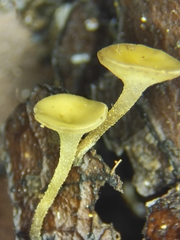 Moellerodiscuse0pathogen
- Outcome
- Dollar spote0
- Direction
- more frequentlye0
Not reportedMaterialGeneCompoundOrgan / stageSecond interactorSecond interactor roleComparatorSettingValueQualifier
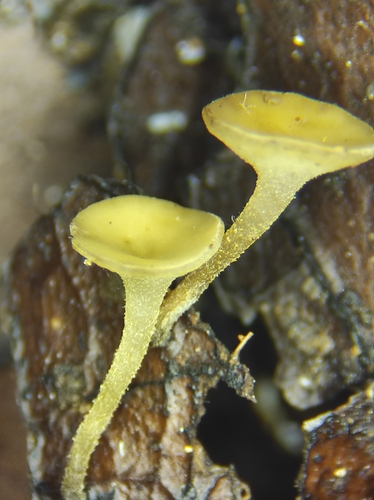
Organisms pictured · Representative pictures of the matched species, not figures from the paper.


Verbatim
e0“Dollar spot ( Moellerodiscus spp. and Lanzia spp.) disease occurred more frequently at the lowest N treatment.”
t0“Bermudagrass”
Title
Bermudagrass Turf Response to Mowing Practices and Fertilizer1
B. J. Johnson; R. N. Carrow; R. E. Burns Agronomy Journal 1987. doi:10.2134/agronj1987.00021962007900040019x
Other claims from this paper (8)
- Intervention effect Rotary mulching produced the highest bermudagrass turf quality.
- Observation Turf quality varied across study years.
- Intervention effect Returning clippings produced higher quality than removing them.
- Intervention effect Bermudagrass generally did not respond to nitrogen above 200 kg per hectare.
- Intervention effect Potassium at 50 kg per hectare gave turf quality and shoot density as good as higher rates.
- Intervention effect Fertilizer treatments did not affect thatch accumulation.
- Intervention effect Returning clippings did not affect thatch accumulation.
- Intervention effect Rotary mulching caused greater thatch accumulation than flail mowing.