Claim · model-written summary
Temporal ground-based NDVI was the most suitable index for studying quantitative drought in Beta vulgaris, with a significant effect.
- Taxon
- Beta vulgaris
 Beta vulgarise0
- Outcome
- quantitative droughte5
- Direction
- most currente5
Not reportedMaterialGeneCompoundOrgan / stageInteractorInteractor roleSecond interactorSecond interactor roleTreatmentComparatorSettingValueQualifier
Organisms pictured · Representative pictures of the matched species, not figures from the paper.
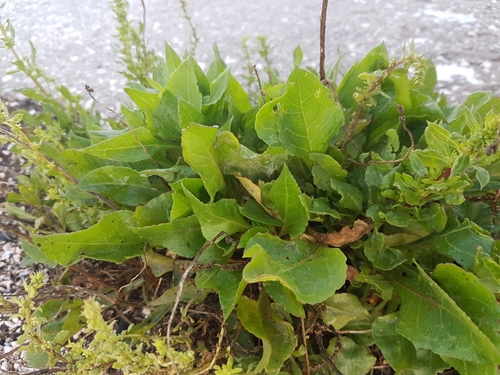
Verbatim
e0“two cultivars of Beta vulgaris L. (Farida and Sultan)”
e5“temporal ground-based NDVI was most current for studying the quantitative drought by a significant effect”
Title
Influence of Gibberellic Acid on Beta vulgaris L. Plants under Drought Conditions
enas azab; soad mahmoud; amal abd elmageed; et al. Egyptian Journal of Agronomy 2017. doi:10.21608/agro.2017.634.1057
Other claims from this paper (9)
- Intervention effect Gibberellic acid up to 150 mg/l increased fresh and dry root weight of Beta vulgaris under drought.
- Intervention effect Gibberellic acid up to 150 mg/l increased sucrose in Beta vulgaris under drought.
- Intervention effect Gibberellic acid up to 150 mg/l increased proline content of Beta vulgaris under drought.
- Intervention effect Gibberellic acid up to 150 mg/l increased stoma length in Beta vulgaris under drought.
- Intervention effect Gibberellic acid up to 150 mg/l increased stoma pore length in Beta vulgaris under drought.
- Association Farida was more drought tolerant than Sultan in Beta vulgaris.
- Association Beta vulgaris gave the highest yield under three water regimes at 150 mg/l GA3.
- Observation Genetic parameters PVC, GVC, GA and h2 showed increasing values for a number of shoot and root traits in Beta vulgaris.
- Recommendation The authors recommend using these genetic parameters for selection in successive breeding programs of Beta vulgaris.