Claim · model-written summary
Two natural enemies of the genera Tiphia and Micromeriella were found, uncommon for FAW.
- Second interactor
- Micromeriella
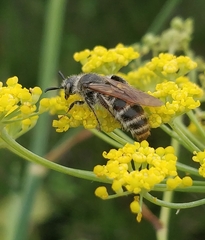 Micromeriellae1biocontrol_agent
- Outcome
- presence of two natural enemies belonging to the genus Tiphia and Micromeriellae1
- Qualifier
- uncommon to FAWe1
 Zea mays
 Tiphia
Not reportedMaterialGeneCompoundOrgan / stageTreatmentComparatorSettingDirectionValue
Organisms pictured · Representative pictures of the matched species, not figures from the paper.


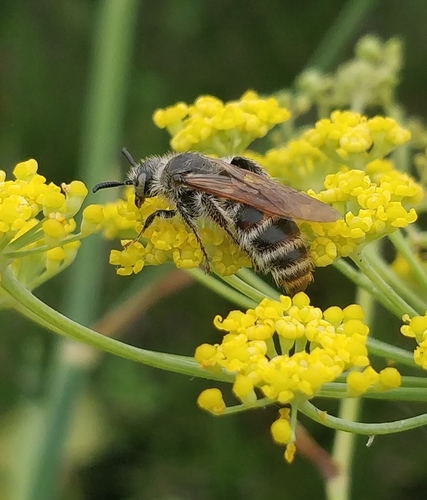
Verbatim
e1“Our study reveals the presence of two natural enemies belonging to the genus Tiphia and Micromeriella , uncommon to FAW”
e3“Significant differences in the number of parasitoids were observed in polycropping, with the highest recovery of 12 ± 10% from maize + cowpeas + pumpkin and watermelon mixed cropping”
Title
Gilson Chipabika; Philemon H. Sohati; Fathiya Mbarak Khamis; et al. Frontiers in Insect Science 2023. doi:10.3389/finsc.2023.1091084
Other claims from this paper (11)
- Observation Over 11 species of fall armyworm natural enemies were identified in Zambia.
- Observation Mean natural enemy number and species richness were higher in AER I and IIa.
- Observation Egg parasitism in AER I was 24.5%, the highest of the regions.
- Observation Egg parasitism in AER IIa was 12.2%, the highest of the regions.
- Observation Larvae parasitism in AER I was 4.8%, with no significant differences among regions.
- Observation Larvae parasitism in AER III was 1.9, with no significant differences among regions.
- Observation Drino sp. was the most abundant and widely distributed parasitoid.
- Observation Rhynocoris segmentarius and Belanogaster sp. were the most prevalent predators.
- Association Number of parasitoids differed significantly in polycropping.
- Observation The highest parasitoid recovery, 12 ± 10%, came from maize + cowpeas + pumpkin and watermelon mixed cropping.
- Association Higher rainfall was associated with a lower number of natural enemies recorded.