Claim · model-written summary
Orius showed no significant difference in egg laying preference, egg number, reproductive periods or female longevity among oviposition plants.
- Taxon
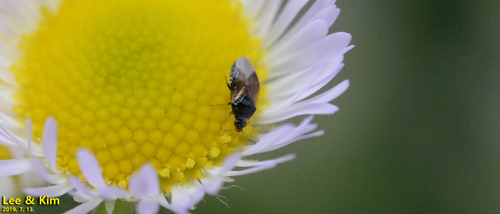
- Orius sauteri
 Orius sauterit0
- Outcome
- egg laying preference, number of eggs laid, preoviposition and oviposition periode0
- Direction
- No significant differencee0
Not reportedMaterialGeneCompoundOrgan / stageInteractorInteractor roleSecond interactorSecond interactor roleTreatmentComparatorSettingValueQualifier
Organisms pictured · Representative pictures of the matched species, not figures from the paper.
Verbatim
e0“No significant difference in egg laying preference, number of eggs laid, preoviposition and oviposition period and longevity of the female were observed between bugs oviposited on these plants”
t0“Orius sauteri (Hemiptera: Anthocoridae)”
Title
Fanghao Wan Journal of Biological Control 2001
Other claims from this paper (8)
- Observation With rice moth eggs or aphids as food, Orius had a 3.3 d preoviposition period.
- Observation With rice moth eggs or aphids as food, Orius laid 42.1 eggs in 9.7 d.
- Observation With rice moth eggs or aphids as food, Orius lived 15.0 d.
- Observation Orius eggs in kalanchoe had high hatching rate.
- Observation Orius eggs in kalanchoe could be stored safely for 13 d at 4-6℃.
- Observation Orius nymphs developed well on kalanchoe.
- Observation Kalanchoe was easier to cultivate than soybean sprouts and jade tree leaves.
- Recommendation The authors favored kalanchoe as an Orius oviposition plant for mass rearing.