Claim · model-written summary
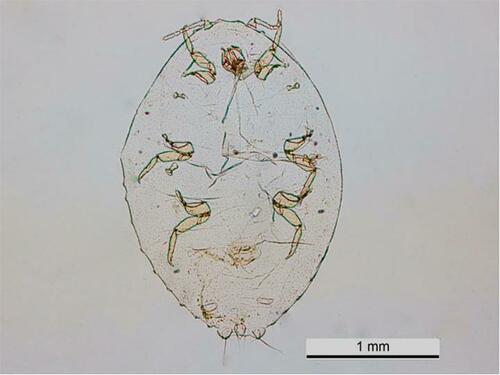
Rosemary n-hexane fraction had highest toxicity to P. lilacinus at LD50 1.46 µL/crawler.
- Taxon
- Rosmarinus officinalis L.
 Salvia rosmarinust0
- Interactor
- P. lilacinus
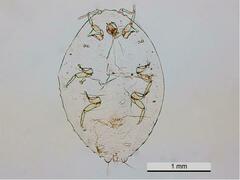 Planococcus lilacinuse0pest
- Outcome
- toxicitye0
- Direction
- higheste0
- Value
- 1.46 µL/crawlere0
Verbatim
e0“In P. lilacinus, n-hexane fraction displayed highest toxicity (LD50 = 1.46 µL/crawler)”
t0“Rosmarinus officinalis L.”
Title
Urvashi Kashyap; S. G. Eswara Reddy Chemical and Biological Technologies in Agriculture 2025. doi:10.1186/s40538-025-00761-7
Other claims from this paper (19)
- Observation The n-hexane fraction contained linolenic acid at 24.97%.
- Observation The n-hexane fraction contained 1,8-cineole at 14.26%.
- Observation The n-hexane fraction contained myrcene at 10.67%.
- Observation The n-hexane fraction contained hexadecenoic acid at 9.91%.
- Observation The n-hexane fraction contained camphene at 7.12%.
- Observation The rosemary extract contained four major metabolites.
- Observation Rosemary EAE killed A. craccivora with LD50 1.84 µL/nymph after 96 h.
- Observation Rosemary n-hexane fraction killed A. craccivora with LD50 2.22 µL/insect.
- Observation Rosemary ethyl acetate and n-butanol fractions had P. lilacinus LD50 values of 2.01–2.29 µL/crawler.
- Observation All rosemary EAE and fraction combinations had synergistic action.
- Observation Linolenic acid had A. craccivora LD50 0.59 µL/nymph.
- Observation Linolenic acid had P. lilacinus LD50 0.99 µL/crawler.
- Observation Rosemary EAE and fractions inhibited pest reproduction and deterred pests.
- Observation Rosemary EAE significantly inhibited three A. craccivora enzymes.
- Observation In P. lilacinus, rosemary EAE inhibited GST.
- Observation In P. lilacinus, rosemary EAE induced AChE and carboxylesterase.
- Observation A. craccivora ingestion of rosemary EAE caused structural aberrations.
- Intervention effect High dose rosemary EAE reduced A. craccivora on cowpea leaves by 82.28 to 89.36%.
- Intervention effect High dose rosemary EAE reduced A. craccivora on cowpea twigs by 70.68 to 85.72%.