Abstract
Soil ameliorants, botanicals, chemical insecticides and fungal bio-agents were screened against banana root mealybug, Geococcus spp. Among the soil ameliorants, application of sodium silicate and calcium oxide at the time of planting effectively reduced the population of root mealybug. Drenching of neem seed kernel extract (NSKE) @ 3 % at monthly intervals was superior to neem cake, neem oil and pongamia oil. The entomopathogenic fungus, Cephalosporium lecanii Zimmerman was the best among the three fungi screened. At five months after planting, C. lecanii recorded 1.95 colonies per sample followed by Hirsutella sp. (2.25 / sample) and the control recorded 5.70 per sample. Among the synthetic chemicals, drenching chlorpyriphos (0.05%) at monthly intervals @ 2.5 ml l-1 effectively reduced the root mealybug population and was found to be the best treatment. Field experiment conducted with the best treatment in each of the category and their combinations revealed that, almost all treatment combinations containing chlorpyriphos caused maximum reduction of root mealybug. Among the combinations without synthetic insecticides, sodium silicate (S) alone and its combination with NSKE and C. lecanii (SNV) were effective in reducing the mealybug population at sixth and seventh month of the crop. Application of chlorpyriphos gave the highest benefit cost ratio of 2.46 followed by sodium silicate (2.30).
Abstract from the paper’s OpenAlex record, shown for indexing and research. Copyright remains with the authors or the publisher. Read at the source ↗
The text the model read, with the source record’s inline markup (italics, sub- and superscripts) rendered and its character entities decoded; quote offsets refer to the raw text.
Claims 11
Claim · model-written summary
Sodium silicate and calcium oxide reduced mealybug population.
- Taxon
- BANANAt0
- Treatment
- sodium silicate and calcium oxidee0
- Interactor
- root mealybuge0pest
- Outcome
- population of root mealybuge0
- Direction
- reducede0
Not reportedComparator
Verbatim
e0“application of sodium silicate and calcium oxide at the time of planting effectively reduced the population of root mealybug.”
t0“BANANA CV. NENDRAN”
Claim · model-written summary
Monthly NSKE drenching surpassed neem cake, neem oil and pongamia oil.
Verbatim
e0“Drenching of neem seed kernel extract (NSKE) @ 3 % at monthly intervals was superior to neem cake, neem oil and pongamia oil.”
t0“BANANA CV. NENDRAN”
Claim · model-written summary
Cephalosporium lecanii was best among screened fungi.
- Taxon
- BANANAt0
- Treatment
- Cephalosporium lecanii Zimmermane0
- Interactor
- Cephalosporium lecanii Zimmerman
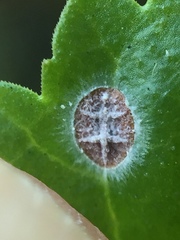 Akanthomyces lecaniie0biocontrol_agent
- Outcome
- beste0
- Direction
- beste0
- Comparator
- three fungi screenede0
Organisms pictured · Representative pictures of the matched species, not figures from the paper.
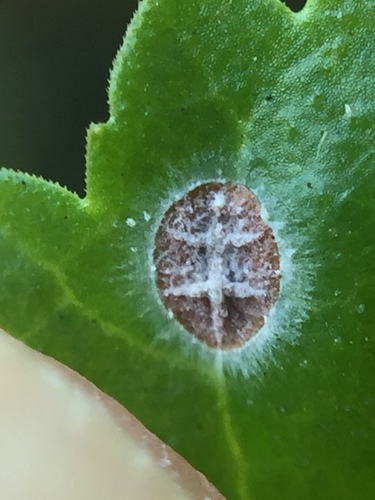
Verbatim
e0“The entomopathogenic fungus, Cephalosporium lecanii Zimmerman was the best among the three fungi screened.”
t0“BANANA CV. NENDRAN”
Claim · model-written summary
C. lecanii yielded 1.95 colonies per sample at five months.
- Taxon
- BANANAt0
- Treatment
- C. lecaniie0
- Interactor
- C. lecaniiAkanthomyces lecaniie0biocontrol_agent
- Outcome
- colonies per samplee0
- Value
- 1.95 colonies per samplee0
- Comparator
- controle0
Not reportedDirection
Organisms pictured · Representative pictures of the matched species, not figures from the paper.
Verbatim
e0“At five months after planting, C. lecanii recorded 1.95 colonies per sample followed by Hirsutella sp. (2.25 / sample) and the control recorded 5.70 per sample.”
t0“BANANA CV. NENDRAN”
Claim · model-written summary
Hirsutella had 2.25 colonies per sample.
- Taxon
- BANANAt0
- Treatment
- Hirsutella sp.e0
- Interactor
- Hirsutella sp.
 Hirsutellae0biocontrol_agent
- Outcome
- colonies per samplee1
- Value
- 2.25 / samplee0
- Comparator
- controle0
Not reportedDirection
Organisms pictured · Representative pictures of the matched species, not figures from the paper.

Verbatim
e0“Hirsutella sp. (2.25 / sample) and the control recorded 5.70 per sample.”
t0“BANANA CV. NENDRAN”
e1“At five months after planting, C. lecanii recorded 1.95 colonies per sample followed by Hirsutella sp. (2.25 / sample) and the control recorded 5.70 per sample.”
Claim · model-written summary
Monthly chlorpyriphos reduced mealybugs and was best among chemicals.
- Taxon
- BANANAt0
- Treatment
- drenching chlorpyriphos (0.05%) at monthly intervals @ 2.5 ml l-1e0
- Interactor
- root mealybuge0pest
- Outcome
- root mealybug populatione0
- Direction
- reducede0
Not reportedComparator
Verbatim
e0“drenching chlorpyriphos (0.05%) at monthly intervals @ 2.5 ml l-1 effectively reduced the root mealybug population and was found to be the best treatment.”
t0“BANANA CV. NENDRAN”
Claim · model-written summary
Most chlorpyriphos combinations maximally reduced mealybugs.
- Taxon
- BANANAt0
- Treatment
- treatment combinations containing chlorpyriphose0
- Interactor
- root mealybuge0pest
- Outcome
- root mealybuge0
- Direction
- reductione0
Not reportedComparator
Verbatim
e0“almost all treatment combinations containing chlorpyriphos caused maximum reduction of root mealybug.”
t0“BANANA CV. NENDRAN”
Claim · model-written summary
Sodium silicate alone reduced mealybugs at months six and seven.
- Taxon
- BANANAt0
- Treatment
- sodium silicate (S) alonee0
- Interactor
- mealybuge0pest
- Outcome
- mealybug populatione0
- Direction
- reducinge0
Not reportedComparator
Verbatim
e0“sodium silicate (S) alone and its combination with NSKE and C. lecanii (SNV) were effective in reducing the mealybug population at sixth and seventh month of the crop.”
t0“BANANA CV. NENDRAN”
Claim · model-written summary
Sodium silicate with NSKE and C. lecanii reduced mealybugs at months six and seven.
- Taxon
- BANANAt0
- Treatment
- combination with NSKE and C. lecanii (SNV)e0
- Interactor
- mealybuge0pest
- Second interactor
- C. lecaniiAkanthomyces lecaniie0biocontrol_agent
- Outcome
- mealybug populatione0
- Direction
- reducinge0
Not reportedComparator
Organisms pictured · Representative pictures of the matched species, not figures from the paper.
Verbatim
e0“its combination with NSKE and C. lecanii (SNV) were effective in reducing the mealybug population at sixth and seventh month of the crop.”
t0“BANANA CV. NENDRAN”
Claim · model-written summary
Chlorpyriphos gave a benefit cost ratio of 2.46.
Verbatim
e0“Application of chlorpyriphos gave the highest benefit cost ratio of 2.46 followed by sodium silicate (2.30).”
t0“BANANA CV. NENDRAN”
Claim · model-written summary
Sodium silicate gave a benefit cost ratio of 2.30.
Verbatim
e0“Application of chlorpyriphos gave the highest benefit cost ratio of 2.46 followed by sodium silicate (2.30).”
t0“BANANA CV. NENDRAN”
The same questions in other papers
chlorpyrifos · yield · MusaResults agree
1 paper in the same direction as this paper
- positive
Azadirachta indica · pest · MusaResults agree
2 papers in the same direction as this paper
- positive
- positive
chlorpyrifos · pest · MusaResults agree
3 papers in the same direction as this paper
- positive
- positive
- positive
application · pest · MusaPositive and negative results
7 papers in the same direction as this paper · 1 reporting no difference from an alternative
- no effect
- positive
- positive
5 papers more in this group
See all 9 papers →botanical · pest · MusaPositive and negative results
4 papers in the same direction as this paper · 2 in the opposite direction · 2 reporting no difference from an alternative
- no effect
- negative
- no effect
5 papers more in this group
See all 9 papers →Claims are grouped by organism, treatment and what was measured or targeted. A paper counts as positive when any of its claims in the group is positive.