Abstract
"To determine clomazone tolerance of cucurbit crops, at differentrates (0.3, 0.45, 0.6 and 0.9 kg ai ha−1) and to evaluate weedcontrol efficacy of those treatments, six field studies wereconducted in the 1998-1999 season. Clomazone at 0.45 kg ai ha−1provided an excellent weed control (>90%) compared with theuntreated plots. Yield and number of fruit per plot in all cropswere not affected (p≤0.05) by clomazone treatment regardless ofthe rate used, except in honeydew (Cucumis melo L. var. inodorusNaud). As for leaf injury, with the exception of zucchini (Cucurbitapepo L.) and winter squash (C. maxima Duch, Ex. Poiret), all othercrops [cucumber (Cucumis sativus L.), honeydew (Cucumis meloL. var. inodorus Naud), watermelon (Citrullus lanatus Thunb.Matsumara and Nakai) and cantaloupe (Cucumis melo L. var.reticulatus Naud), exhibited leaf bleaching 10 d after treatment;cantaloupe and watermelon were the least tolerant crops.However, the bleaching effect was transient and did not affectyield. Clomazone can be used selectively as a preemergenceherbicide on winter squash, zucchini and cucumber at ratesranging from 0.3 to 0.9 kg ai ha−1; and on honeydew, watermelonand cantaloupe from 0.3 to 0.6 kg ia ha−1."
Abstract from the paper’s OpenAlex record, shown for indexing and research. Copyright remains with the authors or the publisher. Read at the source ↗
The text the model read, with the source record’s inline markup (italics, sub- and superscripts) rendered and its character entities decoded; quote offsets refer to the raw text.
Claims 12
Claim · model-written summary
Clomazone at 0.45 kg ai ha−1 controlled more than 90% of weeds compared with untreated plots.
Verbatim
e0“Clomazone at 0.45 kg ai ha−1provided an excellent weed control (>90%) compared with theuntreated plots.”
t0“cucurbit crops”
Claim · model-written summary
Clomazone did not affect yield or fruit number in crops other than honeydew.
- Taxon
- cucurbit cropst0
- Treatment
- clomazone treatmente0
- Outcome
- Yield and number of fruit per plote0
- Direction
- not affectede0
- Qualifier
- except in honeydewe0
Not reportedComparator
Verbatim
e0“Yield and number of fruit per plot in all cropswere not affected (p≤0.05) by clomazone treatment regardless ofthe rate used, except in honeydew (Cucumis melo L. var. inodorusNaud).”
t0“cucurbit crops”
Claim · model-written summary
Cucumber showed leaf bleaching after treatment.
- Taxon
- cucumber (Cucumis sativus L.)
 Cucumis sativuse0
- Outcome
- leaf bleachinge0
- Qualifier
- 10 d after treatmente0
Organisms pictured · Representative pictures of the matched species, not figures from the paper.

Verbatim
e0“crops [cucumber (Cucumis sativus L.), honeydew (Cucumis meloL. var. inodorus Naud), watermelon (Citrullus lanatus Thunb.Matsumara and Nakai) and cantaloupe (Cucumis melo L. var.reticulatus Naud), exhibited leaf bleaching 10 d after treatment”
Claim · model-written summary
Honeydew showed leaf bleaching after treatment.
- Taxon
- honeydew (Cucumis meloL. var. inodorus Naud)
 Cucumis melo var. inodoruse0
- Outcome
- leaf bleachinge0
- Qualifier
- 10 d after treatmente0
Organisms pictured · Representative pictures of the matched species, not figures from the paper.

Verbatim
e0“crops [cucumber (Cucumis sativus L.), honeydew (Cucumis meloL. var. inodorus Naud), watermelon (Citrullus lanatus Thunb.Matsumara and Nakai) and cantaloupe (Cucumis melo L. var.reticulatus Naud), exhibited leaf bleaching 10 d after treatment”
Claim · model-written summary
Watermelon showed leaf bleaching after treatment.
- Taxon
- watermelon (Citrullus lanatus Thunb.Matsumara and Nakai)
 Citrullus lanatuse0
- Outcome
- leaf bleachinge0
- Qualifier
- 10 d after treatmente0
Organisms pictured · Representative pictures of the matched species, not figures from the paper.

Verbatim
e0“crops [cucumber (Cucumis sativus L.), honeydew (Cucumis meloL. var. inodorus Naud), watermelon (Citrullus lanatus Thunb.Matsumara and Nakai) and cantaloupe (Cucumis melo L. var.reticulatus Naud), exhibited leaf bleaching 10 d after treatment”
Claim · model-written summary
Cantaloupe showed leaf bleaching after treatment.
- Taxon
- cantaloupe (Cucumis melo L. var.reticulatus Naud)
 Cucumis meloe0
- Outcome
- leaf bleachinge0
- Qualifier
- 10 d after treatmente0
Organisms pictured · Representative pictures of the matched species, not figures from the paper.

Verbatim
e0“crops [cucumber (Cucumis sativus L.), honeydew (Cucumis meloL. var. inodorus Naud), watermelon (Citrullus lanatus Thunb.Matsumara and Nakai) and cantaloupe (Cucumis melo L. var.reticulatus Naud), exhibited leaf bleaching 10 d after treatment”
Claim · model-written summary
Cantaloupe was among the least tolerant crops.
- Taxon
- cantaloupe
 Cucumis melo var. cantalupoe0
- Outcome
- least tolerant cropse0
- Direction
- least tolerante0
Organisms pictured · Representative pictures of the matched species, not figures from the paper.

Verbatim
e0“cantaloupe and watermelon were the least tolerant crops.”
Claim · model-written summary
Watermelon was among the least tolerant crops.
- Taxon
- watermelonCitrullus lanatuse0
- Outcome
- least tolerant cropse0
- Direction
- least tolerante0
Organisms pictured · Representative pictures of the matched species, not figures from the paper.
Verbatim
e0“cantaloupe and watermelon were the least tolerant crops.”
Claim · model-written summary
The leaf bleaching was transient.
Verbatim
e0“However, the bleaching effect was transient and did not affectyield.”
t0“cucurbit crops”
Claim · model-written summary
Leaf bleaching did not affect yield.
Verbatim
e0“However, the bleaching effect was transient and did not affectyield.”
t0“cucurbit crops”
Claim · model-written summary
The authors recommend clomazone at 0.3 to 0.9 kg ai ha−1 for winter squash, zucchini and cucumber.
- Taxon
- winter squash, zucchini and cucumberCucumis sativus
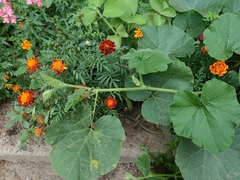 Cucurbita maxima
 Cucurbita pepo subsp. pepoe0
- Treatment
- 0.3 to 0.9 kg ai ha−1e0
- Outcome
- Clomazone can be used selectivelye0
Organisms pictured · Representative pictures of the matched species, not figures from the paper.


Verbatim
e0“Clomazone can be used selectively as a preemergenceherbicide on winter squash, zucchini and cucumber at ratesranging from 0.3 to 0.9 kg ai ha−1”
Claim · model-written summary
The authors recommend clomazone at 0.3 to 0.6 kg ia ha−1 for honeydew, watermelon and cantaloupe.
Verbatim
e0“and on honeydew, watermelonand cantaloupe from 0.3 to 0.6 kg ia ha−1.”