Abstract
Gomesa bifolia (Orchidaceae, Cymbidieae, Oncidiinae) is an epiphytic orchid that presents showy yellow flowers with brown markings on sepals and petals, fragranceless and with oil as reward. The floral biology of this species was studied in cultivated individuals to describe phenology, flower longevity, reproductive system (using manipulative treatment of cross-pollination vs. self-pollination) and floral pollinators. Moreover, direct observations were made on plants exposed outdoors to identify pollinators, describing their foraging behavior and the duration of visits. The results showed that G. bifolia is a mainly self-incompatible, non-autogamous and pollinator-dependent species. The fruit set in manually cross-pollination flowers (100 percent) was higher than the manually self-pollinated flowers (30.8 percent), whereas the control flowers did not set fruits. Females of Centris trigonoides (Apidae, Centridini) were the exclusive pollinators, and the visit rate was low. Several Neotropical orchids of the subtribe Oncidiinae offer floral oils to the pollinators, like the Malpighiaceae familiy. Our results allow inferring that both groups of plants would be part of a guild of species pollinated by oil-collecting bees and that the deceit/pollination syndrome should not be applied to all Oncidiinae flowers.
Abstract from the paper’s OpenAlex record; open copy licensed other-oa. Read at the source ↗
The text the model read, with the source record’s inline markup (italics, sub- and superscripts) rendered and its character entities decoded; quote offsets refer to the raw text.
Claims 8
Claim · model-written summary
Gomesa bifolia was mainly self-incompatible, non-autogamous and pollinator-dependent.
- Taxon
- Gomesa bifolia
 Gomesa bifoliae1
- Outcome
- mainly self-incompatible, non-autogamous and pollinator-dependente0
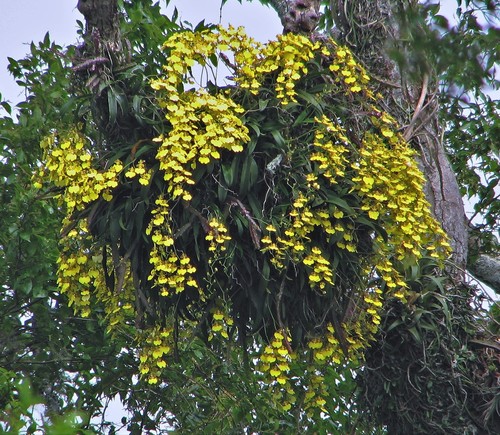
Organisms pictured · Representative pictures of the matched species, not figures from the paper.
Verbatim
e0“G. bifolia is a mainly self-incompatible, non-autogamous and pollinator-dependent species”
e1“Gomesa bifolia (Orchidaceae, Cymbidieae, Oncidiinae)”
Claim · model-written summary
Manual cross-pollination had 100 percent fruit set, higher than self-pollination.
- Taxon
- Gomesa bifoliaGomesa bifoliae1
- Treatment
- manually cross-pollinatione0
- Outcome
- fruit sete0
- Direction
- highere0
- Value
- 100 percente0
- Qualifier
- 30.8 percente0
- Comparator
- manually self-pollinated flowerse0
Organisms pictured · Representative pictures of the matched species, not figures from the paper.
Verbatim
e0“The fruit set in manually cross-pollination flowers (100 percent) was higher than the manually self-pollinated flowers (30.8 percent)”
e1“Gomesa bifolia (Orchidaceae, Cymbidieae, Oncidiinae)”
Claim · model-written summary
Manual self-pollination had 30.8 percent fruit set.
- Taxon
- Gomesa bifoliaGomesa bifoliae1
- Treatment
- manually self-pollinatede0
- Outcome
- flowerse0
- Value
- 30.8 percente0
Organisms pictured · Representative pictures of the matched species, not figures from the paper.
Verbatim
e0“manually self-pollinated flowers (30.8 percent)”
e1“Gomesa bifolia (Orchidaceae, Cymbidieae, Oncidiinae)”
Claim · model-written summary
Control flowers did not set fruit.
- Taxon
- Gomesa bifoliaGomesa bifoliae1
- Outcome
- control flowers did not set fruitse0
Not reportedDirection
Organisms pictured · Representative pictures of the matched species, not figures from the paper.
Verbatim
e0“the control flowers did not set fruits”
e1“Gomesa bifolia (Orchidaceae, Cymbidieae, Oncidiinae)”
Claim · model-written summary
Centris trigonoides females were the exclusive pollinators.
- Taxon
- Gomesa bifoliaGomesa bifoliae1
- Interactor
- Centris trigonoides
 Centris trigonoidese0pollinator
- Outcome
- exclusive pollinatorse0
Organisms pictured · Representative pictures of the matched species, not figures from the paper.

Verbatim
e0“Females of Centris trigonoides (Apidae, Centridini) were the exclusive pollinators”
e1“Gomesa bifolia (Orchidaceae, Cymbidieae, Oncidiinae)”
Claim · model-written summary
Pollinator visit rate was low.
- Taxon
- Gomesa bifoliaGomesa bifoliae1
- Outcome
- visit ratee0
- Direction
- lowe0
Organisms pictured · Representative pictures of the matched species, not figures from the paper.
Verbatim
e0“the visit rate was low”
e1“Gomesa bifolia (Orchidaceae, Cymbidieae, Oncidiinae)”
Claim · model-written summary
The authors infer an oil-collecting-bee pollination guild involving both plant groups.
- Taxon
- Gomesa bifoliaGomesa bifoliae1
- Outcome
- guild of species pollinated by oil-collecting beese0
- Qualifier
- both groups of plantse0
Organisms pictured · Representative pictures of the matched species, not figures from the paper.
Verbatim
e0“both groups of plants would be part of a guild of species pollinated by oil-collecting bees”
e1“Gomesa bifolia (Orchidaceae, Cymbidieae, Oncidiinae)”
Claim · model-written summary
The authors conclude that the deceit/pollination syndrome should not apply to all Oncidiinae flowers.
- Taxon
- OncidiinaeOncidiinaee0
- Outcome
- deceit/pollination syndrome should not be applied to all Oncidiinae flowerse0
Verbatim
e0“the deceit/pollination syndrome should not be applied to all Oncidiinae flowers”