Abstract
Chromobacterium sp. strain C61 displays antifungal activities in vitro and has been used successfully for the biocontrol of plant diseases under field conditions. In this study, the roles of extracellular chitinase and an antifungal compound produced by strain C61 were investigated to elucidate their contributions to biological control activity. The bacterium possessed a locus chi54 encoding an extracellular chitinase, and mutation of chi54 eliminated chitinase production. Production of the extracellular enzyme and expression of the chi54 transcript were increased in the wild-type strain when chitin was added to the culture medium. In vitro assays showed that purified chitinase inhibited spore germination of multiple pathogens. However, the in planta biocontrol activity of filtrates of cultures grown in the presence of chitin was lower than that of filtrates grown without chitin, indicating that correlation between chitinase and biocontrol activity was lacking. The analysis of C61 culture filtrates revealed an antifungal cyclic lipopeptide, chromobactomycin, whose structure contained a unique nonameric peptide ring. The purified chromobactomycin inhibited the growth of several phytopathogenic fungi in vitro, and plant application significantly reduced disease severity for several pathogens. Furthermore, the production of chromobactomycin was reduced in cultures amended with chitin. These data suggest that the production of both the extracellular chitinase Chi54 and the newly identified antibiotic chromobactomycin can contribute, in an interconnected way, to the suppression of plant disease by Chromobacterium sp. strain C61.
Abstract from the paper’s OpenAlex record, shown for indexing and research. Copyright remains with the authors or the publisher. Read at the source ↗
The text the model read, with the source record’s inline markup (italics, sub- and superscripts) rendered and its character entities decoded; quote offsets refer to the raw text.
Claims 9
Claim · model-written summary
Mutation of the chi54 locus eliminated chitinase production in Chromobacterium sp. strain C61.
- Taxon
- Chromobacterium sp. strain C61
 Chromobacterium sp.e0
- Treatment
- mutation of chi54e1
- Gene
- chi54e1
- Outcome
- chitinase productione1
- Direction
- eliminatede1
Not reportedComparator
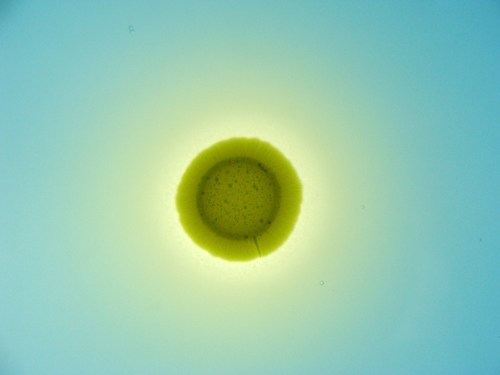
Organisms pictured · Representative pictures of the matched species, not figures from the paper.
Verbatim
e0“Chromobacterium sp. strain C61 displays”
e1“mutation of chi54 eliminated chitinase production”
Claim · model-written summary
Adding chitin to the culture medium increased extracellular enzyme production and chi54 transcript expression in the wild-type strain.
- Taxon
- Chromobacterium sp. strain C61Chromobacterium sp.e0
- Material
- wild-type straine1
- Treatment
- chitin was added to the culture mediume1
- Gene
- chi54e1
- Outcome
- Production of the extracellular enzyme and expression of the chi54 transcripte1
- Direction
- increasede1
Not reportedComparator
Organisms pictured · Representative pictures of the matched species, not figures from the paper.
Verbatim
e0“Chromobacterium sp. strain C61 displays”
e1“Production of the extracellular enzyme and expression of the chi54 transcript were increased in the wild-type strain when chitin was added to the culture medium”
Claim · model-written summary
In vitro, purified chitinase inhibited spore germination of multiple pathogens.
- Treatment
- purified chitinasee1
- Interactor
- multiple pathogense1pathogen
- Outcome
- spore germinatione1
- Direction
- inhibitede1
- Setting
- In vitroe1
Not reportedTaxonComparator
Verbatim
e1“In vitro assays showed that purified chitinase inhibited spore germination of multiple pathogens”
Claim · model-written summary
In planta biocontrol activity of filtrates from cultures grown with chitin was lower than that of filtrates grown without chitin.
- Treatment
- filtrates of cultures grown in the presence of chitine1
- Outcome
- in planta biocontrol activitye1
- Direction
- lowere1
- Comparator
- filtrates grown without chitine1
Not reportedTaxon
Verbatim
e1“the in planta biocontrol activity of filtrates of cultures grown in the presence of chitin was lower than that of filtrates grown without chitin”
Claim · model-written summary
Analysis of C61 culture filtrates revealed an antifungal cyclic lipopeptide, chromobactomycin, whose structure contained a unique nonameric peptide ring.
Verbatim
e1“The analysis of C61 culture filtrates revealed an antifungal cyclic lipopeptide, chromobactomycin, whose structure contained a unique nonameric peptide ring”
Claim · model-written summary
Purified chromobactomycin inhibited the growth of several phytopathogenic fungi in vitro.
- Treatment
- purified chromobactomycine1
- Interactor
- several phytopathogenic fungie1pathogen
- Outcome
- growthe1
- Direction
- inhibitede1
- Setting
- in vitroe1
Not reportedTaxonComparator
Verbatim
e1“The purified chromobactomycin inhibited the growth of several phytopathogenic fungi in vitro”
Claim · model-written summary
Plant application significantly reduced disease severity for several pathogens.
- Treatment
- plant applicatione1
- Interactor
- several pathogense1pathogen
- Outcome
- disease severitye1
- Direction
- reducede1
Not reportedTaxonComparator
Verbatim
e1“plant application significantly reduced disease severity for several pathogens”
Claim · model-written summary
Chromobactomycin production was reduced in cultures amended with chitin.
Not reportedTaxonComparator
Verbatim
e1“the production of chromobactomycin was reduced in cultures amended with chitin”
Claim · model-written summary
The authors suggest that production of both extracellular chitinase Chi54 and chromobactomycin can contribute, in an interconnected way, to suppression of plant disease by strain C61.
- Taxon
- Chromobacterium sp. strain C61Chromobacterium sp.e1
- Gene
- Chi54e1
- Compound
- chromobactomycine1
- Outcome
- suppression of plant diseasee1
Organisms pictured · Representative pictures of the matched species, not figures from the paper.
Verbatim
e1“the production of both the extracellular chitinase Chi54 and the newly identified antibiotic chromobactomycin can contribute, in an interconnected way, to the suppression of plant disease by Chromobacterium sp. strain C61”